智能物业协同管理平台:基于SSM架构的数字化转型实践
在传统物业管理模式中,信息孤岛、流程繁琐、响应迟缓等问题长期困扰着行业的发展。随着数字化时代的到来,构建一个高效、透明、协同的物业管理平台成为行业刚需。本文介绍的智能物业协同管理平台正是基于这一背景应运而生,采用成熟的SSM(Spring+Spring MVC+MyBatis)技术栈,为中小型物业企业提供全方位的数字化解决方案。
系统架构与技术栈深度解析
该平台采用经典的三层架构设计,每一层都充分发挥了相应技术框架的优势。表现层基于Spring MVC框架,通过注解驱动的控制器简化了Web请求处理流程。以下是一个典型的控制器实现:
@Controller
public class PropertyController {

    @Autowired
    private PropertyService propertyService;

    @RequestMapping("/properties")
    public String listProperties(Model model) {
        List<Property> properties = propertyService.findAll();
        model.addAttribute("properties", properties);
        return "property/list";
    }

    @PostMapping("/properties")
    public String createProperty(@Valid Property property, BindingResult result) {
        if (result.hasErrors()) {
            return "property/form";
        }
        propertyService.save(property);
        return "redirect:/properties";
    }
}
业务层基于Spring框架的强大IoC容器和AOP支持,实现了依赖注入和声明式事务管理:
@Service
@Transactional
public class PropertyServiceImpl implements PropertyService {

    @Autowired
    private PropertyRepository propertyRepository;

    @Override
    public Property findById(Long id) {
        return propertyRepository.findById(id)
                .orElseThrow(() -> new ResourceNotFoundException("Property not found"));
    }

    @Override
    public List<Property> findByStatus(String status) {
        return propertyRepository.findByStatusOrderByCreateTimeDesc(status);
    }
}
持久层采用MyBatis框架,通过XML配置实现灵活的SQL映射:
<!-- PropertyMapper.xml -->
<mapper namespace="com.jingxin.mapper.PropertyMapper">
    <resultMap id="PropertyResultMap" type="Property">
        <id property="id" column="id"/>
        <result property="name" column="name"/>
        <result property="address" column="address"/>
        <result property="createTime" column="create_time"/>
    </resultMap>

    <select id="selectByStatus" resultMap="PropertyResultMap">
        SELECT * FROM properties
        WHERE status = #{status}
        ORDER BY create_time DESC
    </select>
</mapper>
数据库设计亮点分析
费用管理表设计优化
费用表(cost)的设计体现了业务需求的细致考量:
CREATE TABLE `cost` (
  `id` int(11) NOT NULL AUTO_INCREMENT COMMENT '主键ID',
  `month` varchar(64) DEFAULT NULL COMMENT '月份',
  `project` varchar(64) DEFAULT NULL COMMENT '项目名称',
  `money` int(11) DEFAULT NULL COMMENT '金额',
  `unid` int(11) DEFAULT NULL COMMENT '关联ID',
  PRIMARY KEY (`id`)
) ENGINE=InnoDB AUTO_INCREMENT=3 DEFAULT CHARSET=utf8 COLLATE=utf8_general_ci COMMENT='费用表'
设计亮点分析:
- 月份字段优化:采用varchar(64)类型存储月份数据,支持灵活的格式如"2024-01"或"2024年1月",便于按时间段统计和查询
- 金额字段选择:使用int类型存储金额,以分为单位避免浮点数精度问题,同时通过应用程序层进行格式化显示
- 关联设计:unid字段建立了与业主或房屋的关联关系,支持一对多的费用关系管理
- 索引策略:建议对month和unid字段添加复合索引,提升按月份和用户查询的性能
维修工单表的事务完整性
维修表(fix)的设计确保了维修流程的完整追踪:
CREATE TABLE `fix` (
  `fixid` int(11) NOT NULL AUTO_INCREMENT COMMENT '维修ID',
  `comtime` datetime DEFAULT NULL COMMENT '完成时间',
  `content` varchar(64) DEFAULT NULL COMMENT '维修内容',
  `idnumber` varchar(64) DEFAULT NULL COMMENT '身份证号',
  `state` varchar(64) DEFAULT NULL COMMENT '维修状态',
  PRIMARY KEY (`fixid`)
) ENGINE=InnoDB AUTO_INCREMENT=2 DEFAULT CHARSET=utf8 COLLATE=utf8_general_ci COMMENT='维修表'
状态管理设计:
- 流程状态追踪:state字段记录维修工单的完整生命周期(待受理、处理中、已完成、已评价)
- 时间戳管理:comtime字段精确记录完成时间,便于统计维修效率和 SLA 达标率
- 身份关联:通过idnumber与业主信息关联,建立完整的责任追溯链条
消息交互表的双向通信设计
消息表(message)支持业主与物业之间的高效沟通:
CREATE TABLE `message` (
  `id` int(11) NOT NULL AUTO_INCREMENT COMMENT '主键ID',
  `title` varchar(255) DEFAULT NULL COMMENT '消息标题',
  `content` varchar(255) DEFAULT NULL COMMENT '消息内容',
  `issuetime` datetime DEFAULT NULL COMMENT '发布时间',
  `replycontent` varchar(255) DEFAULT NULL COMMENT '回复内容',
  `replytime` datetime DEFAULT NULL COMMENT '回复时间',
  PRIMARY KEY (`id`)
) ENGINE=InnoDB AUTO_INCREMENT=2 DEFAULT CHARSET=utf8 COLLATE=utf8_general_ci COMMENT='消息表'
交互设计优势:
- 完整的对话记录:通过issuetime和replytime分别记录提问和回复时间,形成完整的沟通历史
- 内容长度优化:varchar(255)长度适中,既满足大部分消息需求,又避免过度存储浪费
- 时效性管理:通过时间字段可以计算响应时长,评估服务质量
核心功能实现深度解析
智能报修管理子系统
报修功能是物业管理的核心场景,系统实现了从报修提交到完工评价的全流程管理。业主可以通过简洁的界面提交报修需求:
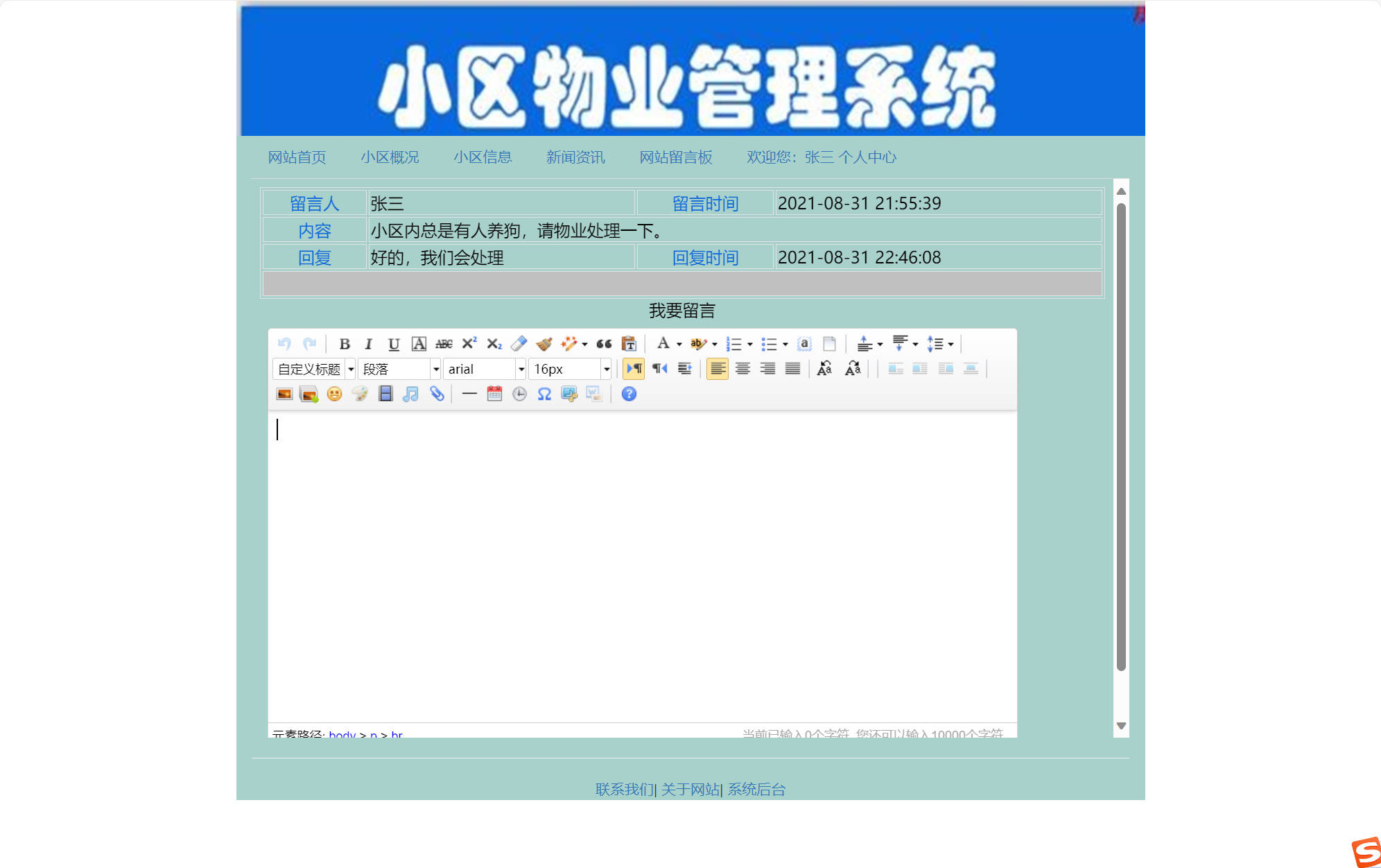
后端控制器处理报修请求的核心逻辑:
@Controller
@RequestMapping("/repair")
public class RepairController {

    @Autowired
    private RepairService repairService;

    @PostMapping("/submit")
    public String submitRepair(@ModelAttribute Repair repair,
                             HttpSession session) {
        // 从session获取当前用户信息
        User currentUser = (User) session.getAttribute("currentUser");
        repair.setUserId(currentUser.getId());
        repair.setSubmitTime(new Date());
        repair.setStatus("pending");

        repairService.saveRepair(repair);
        return "redirect:/repair/history";
    }

    @GetMapping("/history")
    public String repairHistory(Model model, HttpSession session) {
        User currentUser = (User) session.getAttribute("currentUser");
        List<Repair> repairs = repairService.findByUserId(currentUser.getId());
        model.addAttribute("repairs", repairs);
        return "repair/history";
    }
}
维修状态跟踪的业务逻辑实现:
@Service
public class RepairServiceImpl implements RepairService {

    @Autowired
    private RepairMapper repairMapper;

    @Override
    @Transactional
    public void updateRepairStatus(Long repairId, String status, String processor) {
        Repair repair = repairMapper.selectById(repairId);
        if (repair != null) {
            repair.setStatus(status);
            repair.setProcessor(processor);
            repair.setUpdateTime(new Date());

            if ("completed".equals(status)) {
                repair.setCompleteTime(new Date());
            }

            repairMapper.update(repair);
        }
    }

    @Override
    public List<Repair> findPendingRepairs() {
        return repairMapper.selectByStatus("pending");
    }
}
费用管理透明化引擎
费用管理模块实现了账单生成、查询、催缴的全流程自动化:
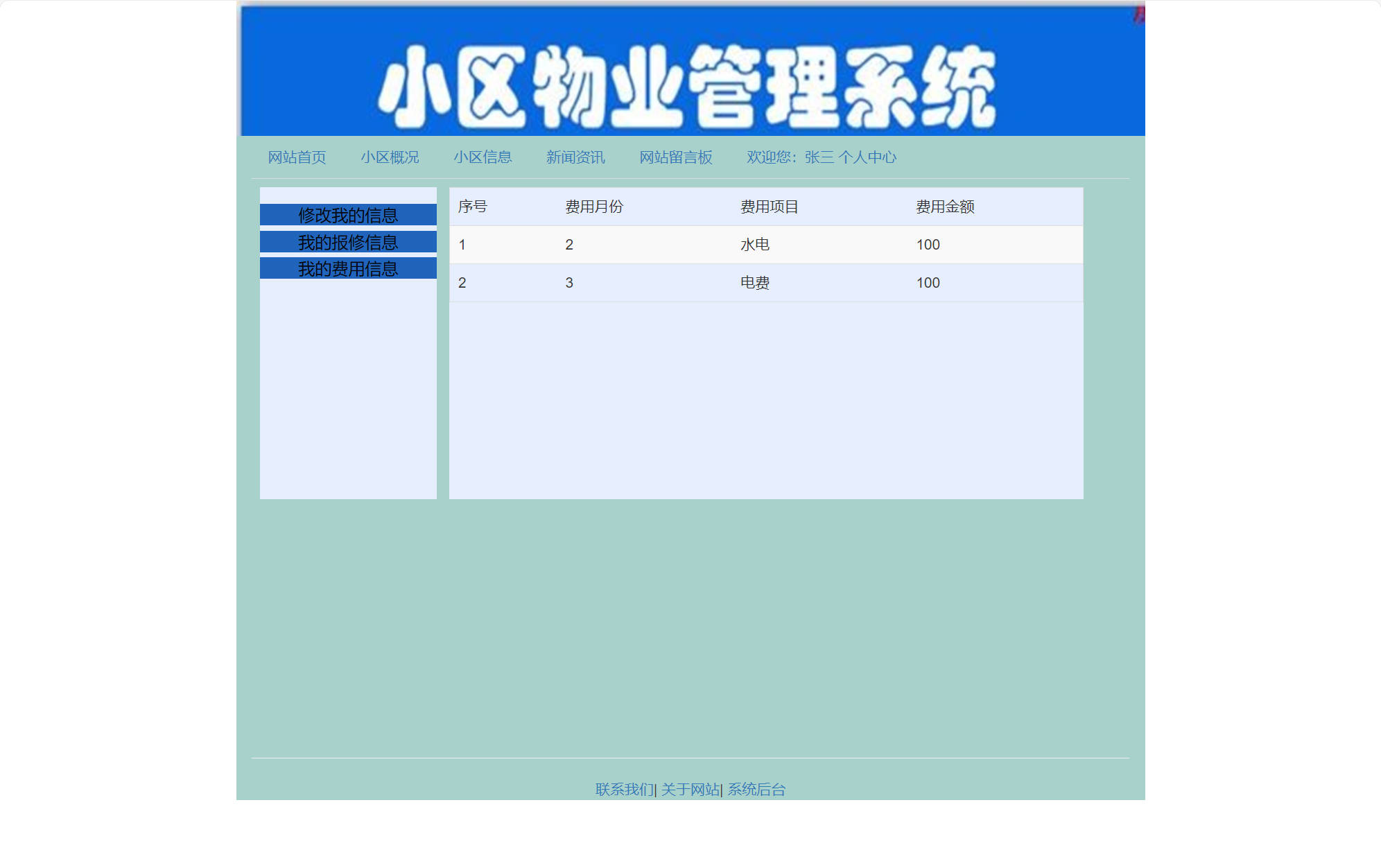
费用计算和生成的业务逻辑:
@Service
public class CostServiceImpl implements CostService {

    @Autowired
    private CostMapper costMapper;

    @Autowired
    private PropertyMapper propertyMapper;

    @Override
    @Transactional
    public void generateMonthlyCost(String month) {
        // 获取所有需要生成费用的房产
        List<Property> properties = propertyMapper.findAllActive();

        for (Property property : properties) {
            Cost cost = new Cost();
            cost.setMonth(month);
            cost.setPropertyId(property.getId());
            cost.setProject("物业管理费");
            cost.setMoney(calculatePropertyFee(property));
            cost.setStatus("unpaid");
            cost.setGenerateTime(new Date());

            costMapper.insert(cost);
        }
    }

    private int calculatePropertyFee(Property property) {
        // 根据房产面积、类型等计算费用
        double area = property.getArea();
        String type = property.getType();

        double rate = "住宅".equals(type) ? 2.5 : 3.5; // 元/平方米
        return (int) (area * rate * 100); // 转换为分存储
    }
}
费用查询接口实现:
@RestController
@RequestMapping("/api/cost")
public class CostApiController {

    @Autowired
    private CostService costService;

    @GetMapping("/user/{userId}")
    public ResponseEntity<List<Cost>> getUserCosts(
            @PathVariable Long userId,
            @RequestParam(required = false) String status) {

        List<Cost> costs;
        if (status != null) {
            costs = costService.findByUserIdAndStatus(userId, status);
        } else {
            costs = costService.findByUserId(userId);
        }

        return ResponseEntity.ok(costs);
    }

    @GetMapping("/statistics/{userId}")
    public ResponseEntity<CostStatistics> getCostStatistics(@PathVariable Long userId) {
        CostStatistics statistics = costService.getUserCostStatistics(userId);
        return ResponseEntity.ok(statistics);
    }
}
消息通知与公告管理
系统内置了完善的消息通知机制,支持物业公告发布和业主消息互动:
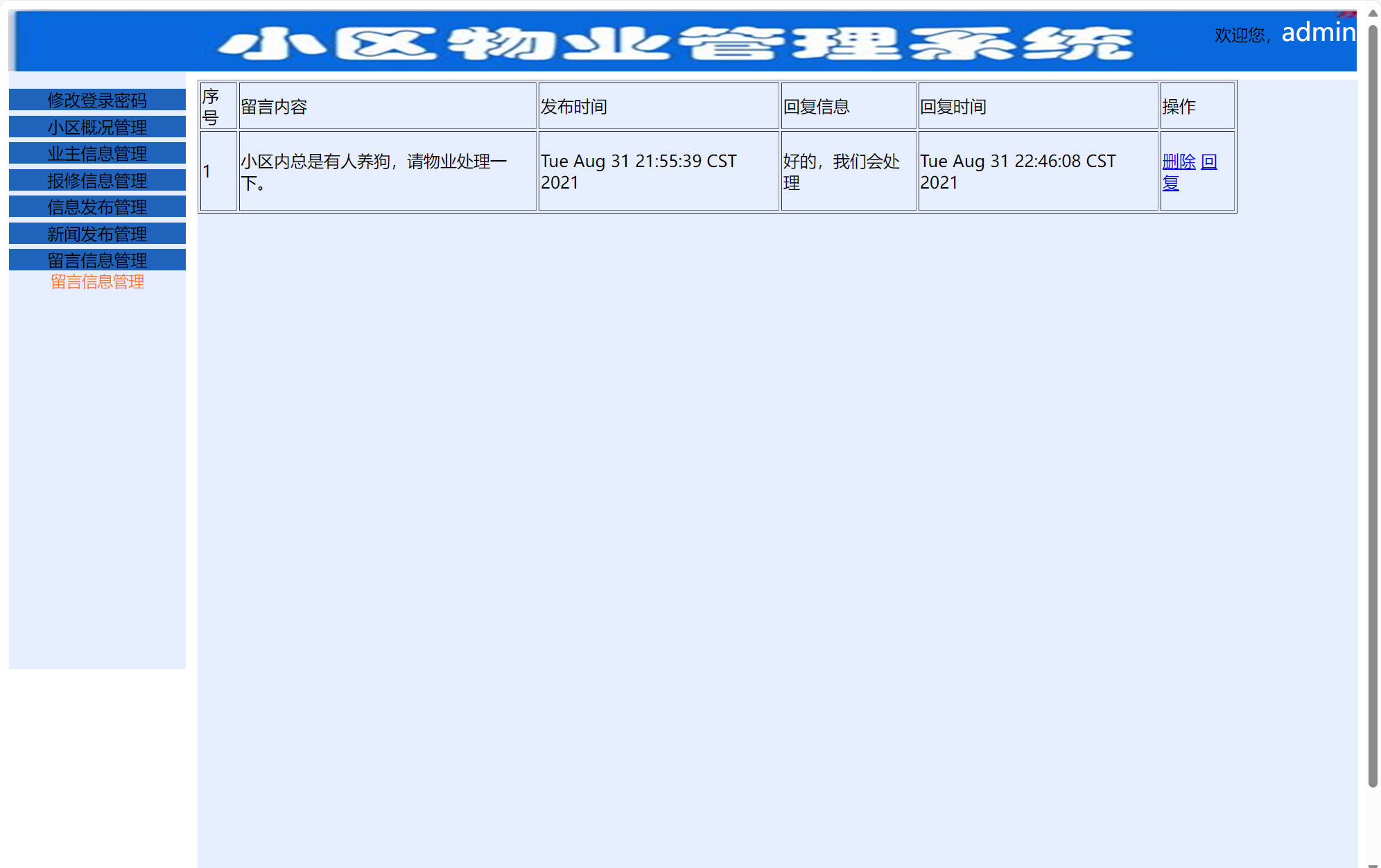
消息服务的核心实现:
@Service
public class MessageServiceImpl implements MessageService {

    @Autowired
    private MessageMapper messageMapper;

    @Override
    public void publishNews(News news) {
        news.setPublishTime(new Date());
        news.setStatus("published");
        messageMapper.insertNews(news);

        // 记录发布日志
        SystemLog log = new SystemLog();
        log.setAction("PUBLISH_NEWS");
        log.setContent("发布新闻:" + news.getTitle());
        log.setOperator(getCurrentUser());
        logService.saveLog(log);
    }

    @Override
    public void replyMessage(Long messageId, String replyContent) {
        Message message = messageMapper.selectById(messageId);
        if (message != null) {
            message.setReplyContent(replyContent);
            message.setReplyTime(new Date());
            message.setStatus("replied");

            messageMapper.update(message);
        }
    }

    @Override
    public List<Message> getUnrepliedMessages() {
        return messageMapper.selectByStatus("unreplied");
    }
}
实体模型设计与业务逻辑
核心实体关系建模
系统基于领域驱动设计(DDD)理念,建立了清晰的实体模型:
// 业主实体
@Entity
@Table(name = "owner")
public class Owner {
    @Id
    @GeneratedValue(strategy = GenerationType.IDENTITY)
    private Long id;

    private String name;
    private String idNumber;
    private String phone;
    private String email;

    @OneToMany(mappedBy = "owner")
    private List<Property> properties;

    @OneToMany(mappedBy = "owner")
    private List<Repair> repairs;

    // getters and setters
}

// 房产实体
@Entity
@Table(name = "property")
public class Property {
    @Id
    @GeneratedValue(strategy = GenerationType.IDENTITY)
    private Long id;

    private String address;
    private Double area;
    private String type;

    @ManyToOne
    @JoinColumn(name = "owner_id")
    private Owner owner;

    @OneToMany(mappedBy = "property")
    private List<Cost> costs;

    // getters and setters
}
业务规则引擎实现
系统内置了可配置的业务规则引擎,支持灵活的物业管理策略:
@Component
public class BusinessRuleEngine {

    @Autowired
    private RuleConfigRepository ruleConfigRepository;

    public boolean validateRepair(Repair repair) {
        // 获取维修相关规则
        List<RuleConfig> rules = ruleConfigRepository.findByType("REPAIR");

        for (RuleConfig rule : rules) {
            if (!applyRule(repair, rule)) {
                return false;
            }
        }
        return true;
    }

    public CostCalculationResult calculateCost(Property property, String costType) {
        // 根据房产属性和费用类型计算费用
        RuleConfig rule = ruleConfigRepository.findByCostType(costType);
        return applyCostRule(property, rule);
    }

    private boolean applyRule(Repair repair, RuleConfig rule) {
        // 应用具体业务规则
        switch (rule.getKey()) {
            case "MAX_REPAIR_FREQUENCY":
                return checkRepairFrequency(repair, rule.getValue());
            case "REPAIR_TIME_RESTRICTION":
                return checkRepairTime(repair, rule.getValue());
            default:
                return true;
        }
    }
}
功能展望与系统优化方向
1. 智能化运维与预测分析
实现思路:引入机器学习算法,基于历史维修数据预测设备故障周期,实现预防性维护。
@Service
public PredictiveMaintenanceService {

    public MaintenancePrediction predictMaintenance(String equipmentType) {
        // 基于历史数据分析设备故障模式
        List<MaintenanceRecord> records = maintenanceRepository
            .findByEquipmentTypeOrderByDateDesc(equipmentType);

        return analysisService.analyzeFailurePattern(records);
    }

    public void generateMaintenancePlan() {
        // 自动生成维护计划
        List<Equipment> equipments = equipmentRepository.findAll();
        for (Equipment equipment : equipments) {
            MaintenancePrediction prediction = predictMaintenance(equipment.getType());
            if (prediction.getRiskLevel() > 0.7) {
                createMaintenanceTask(equipment, prediction);
            }
        }
    }
}
2. 微服务架构改造
架构优化:将单体应用拆分为认证服务、报修服务、费用服务等微服务,提升系统可扩展性。
# 微服务配置示例
spring:
  application:
    name: property-service
  cloud:
    nacos:
      discovery:
        server-addr: localhost:8848

server:
  port: 8081

# 报修服务独立配置
repair:
  service:
    queue-size: 1000
    timeout: 30000
3. 移动端适配与PWA支持
技术方案:采用响应式设计 + PWA技术,实现移动端原生应用体验。
// 服务工作者实现离线功能
self.addEventListener('install', (event) => {
  event.waitUntil(
    caches.open('property-v1').then((cache) => {
      return cache.addAll([
        '/',
        '/static/css/main.css',
        '/static/js/app.js',
        '/api/repair/templates'
      ]);
    })
  );
});

// 实现消息推送功能
registration.showNotification('新报修通知', {
  body: '您有一个新的维修工单需要处理',
  icon: '/icons/icon-192x192.png',
  actions: [
    {action: 'view', title: '查看详情'}
  ]
});
4. 大数据分析与可视化
实现路径:集成ELK栈或ClickHouse,构建物业管理数据中台。
@Service
public class DataAnalysisService {

    public PropertyManagementReport generateMonthlyReport(String month) {
        // 综合数据分析
        RepairAnalysis repairAnalysis = analyzeRepairData(month);
        CostAnalysis costAnalysis = analyzeCostData(month);
        SatisfactionAnalysis satisfactionAnalysis = analyzeSatisfaction(month);

        return reportGenerator.generateReport(
            repairAnalysis, costAnalysis, satisfactionAnalysis);
    }

    public List<TrendAnalysis> analyzeBusinessTrends(DateRange range) {
        // 趋势分析
        return trendAnalyzer.analyze(range);
    }
}
5. 物联网集成与智能监控
技术整合:通过MQTT协议接入智能门禁、监控设备等IoT设备。
@Component
public class IotDeviceIntegration {

    @Autowired
    private MqttTemplate mqttTemplate;

    public void monitorEquipmentStatus() {
        mqttTemplate.subscribe("property/equipment/status", (message) -> {
            EquipmentStatus status = parseStatusMessage(message);
            alertService.checkAbnormalStatus(status);
        });
    }

    public void controlAccessControl(String deviceId, String command) {
        mqttTemplate.publish("property/access/" + deviceId + "/control", command);
    }
}
总结
该智能物业协同管理平台通过SSM技术栈的深度应用,构建了一个稳定、高效、可扩展的数字化管理系统。系统不仅解决了传统物业管理中的核心痛点,更为未来的智能化升级奠定了坚实的技术基础。从数据库设计的精细优化到业务逻辑的严谨实现,再到面向未来的架构规划,每一个环节都体现了工程实践的成熟思考。
平台的成功实践证明了SSM框架在企业级应用开发中的持续价值,同时也展示了传统行业数字化转型的技术路径。随着物联网、大数据、人工智能等新技术的不断融入,物业管理行业将迎来更加智能化和服务化的未来发展方向。