在当前教育信息化快速发展的背景下,各类考试组织工作面临着前所未有的挑战。传统线下报名方式存在信息传递效率低、人工审核工作繁重、数据易出错等问题,严重制约了考试工作的效率和质量。针对这一痛点,基于SSM(Spring+Spring MVC+MyBatis)框架的智能化考试管理平台应运而生,为教育机构、认证中心和企业人力资源部门提供了全流程的数字化解决方案。
该平台采用经典的三层架构设计,后端以Spring框架为核心,通过依赖注入(DI)和面向切面编程(AOP)实现业务逻辑的解耦,Spring MVC负责Web请求的路由和控制,MyBatis作为持久层框架处理数据库交互。前端采用JSP结合jQuery的技术组合,实现了响应式用户界面。系统支持多角色协同工作,包括系统管理员、考务管理员和考生,每个角色都有专门的功能模块和操作权限。
数据库架构设计亮点
系统的数据库设计体现了高度的规范化和业务逻辑的完整性。共包含10个核心数据表,通过外键关联构建了完整的业务数据模型。其中考生信息表(students)和考试安排表(exam_arrangements)的设计尤为值得关注。
考生信息表采用复合索引优化查询性能:
CREATE TABLE students (
    student_id VARCHAR(20) PRIMARY KEY,
    name VARCHAR(50) NOT NULL,
    gender ENUM('男','女') NOT NULL,
    college_id INT,
    class_id INT,
    password VARCHAR(100) NOT NULL,
    phone VARCHAR(15),
    email VARCHAR(50),
    created_time DATETIME DEFAULT CURRENT_TIMESTAMP,
    INDEX idx_college_class (college_id, class_id),
    INDEX idx_phone (phone),
    FOREIGN KEY (college_id) REFERENCES colleges(college_id),
    FOREIGN KEY (class_id) REFERENCES classes(class_id)
);
考试安排表设计了复杂的约束条件确保数据一致性:
CREATE TABLE exam_arrangements (
    arrangement_id INT AUTO_INCREMENT PRIMARY KEY,
    exam_id INT NOT NULL,
    room_id INT NOT NULL,
    student_id VARCHAR(20) NOT NULL,
    seat_number INT NOT NULL,
    exam_time DATETIME NOT NULL,
    status ENUM('已安排','已考试','缺考') DEFAULT '已安排',
    UNIQUE KEY uk_exam_room_seat (exam_id, room_id, seat_number),
    UNIQUE KEY uk_exam_student (exam_id, student_id),
    FOREIGN KEY (exam_id) REFERENCES exams(exam_id),
    FOREIGN KEY (room_id) REFERENCES exam_rooms(room_id),
    FOREIGN KEY (student_id) REFERENCES students(student_id)
);
这种设计不仅保证了数据的完整性和一致性,还通过合理的索引策略优化了系统在高并发场景下的查询性能。特别是考试安排表中的唯一约束,有效防止了考场座位分配冲突和考生重复安排的问题。
核心功能模块深度解析
1. 智能考场分配算法
考场分配是系统的核心技术难点,需要综合考虑考场容量、考试科目、时间冲突等多个因素。系统实现了基于贪心算法的智能分配机制:
@Service
public class ExamArrangementService {

    @Autowired
    private ExamArrangementMapper arrangementMapper;

    public void autoArrangeExamSeats(Exam exam) {
        List<Student> applicants = exam.getApplicants();
        List<ExamRoom> availableRooms = exam.getAvailableRooms();

        // 按考场容量排序,优先使用大容量考场
        availableRooms.sort((r1, r2) ->
            Integer.compare(r2.getCapacity(), r1.getCapacity()));

        int studentIndex = 0;
        for (ExamRoom room : availableRooms) {
            int seatsArranged = 0;
            while (seatsArranged < room.getCapacity() &&
                   studentIndex < applicants.size()) {

                Student student = applicants.get(studentIndex);
                ExamArrangement arrangement = new ExamArrangement();
                arrangement.setExamId(exam.getExamId());
                arrangement.setRoomId(room.getRoomId());
                arrangement.setStudentId(student.getStudentId());
                arrangement.setSeatNumber(++seatsArranged);
                arrangement.setExamTime(exam.getExamTime());

                arrangementMapper.insert(arrangement);
                studentIndex++;
            }
        }
    }
}
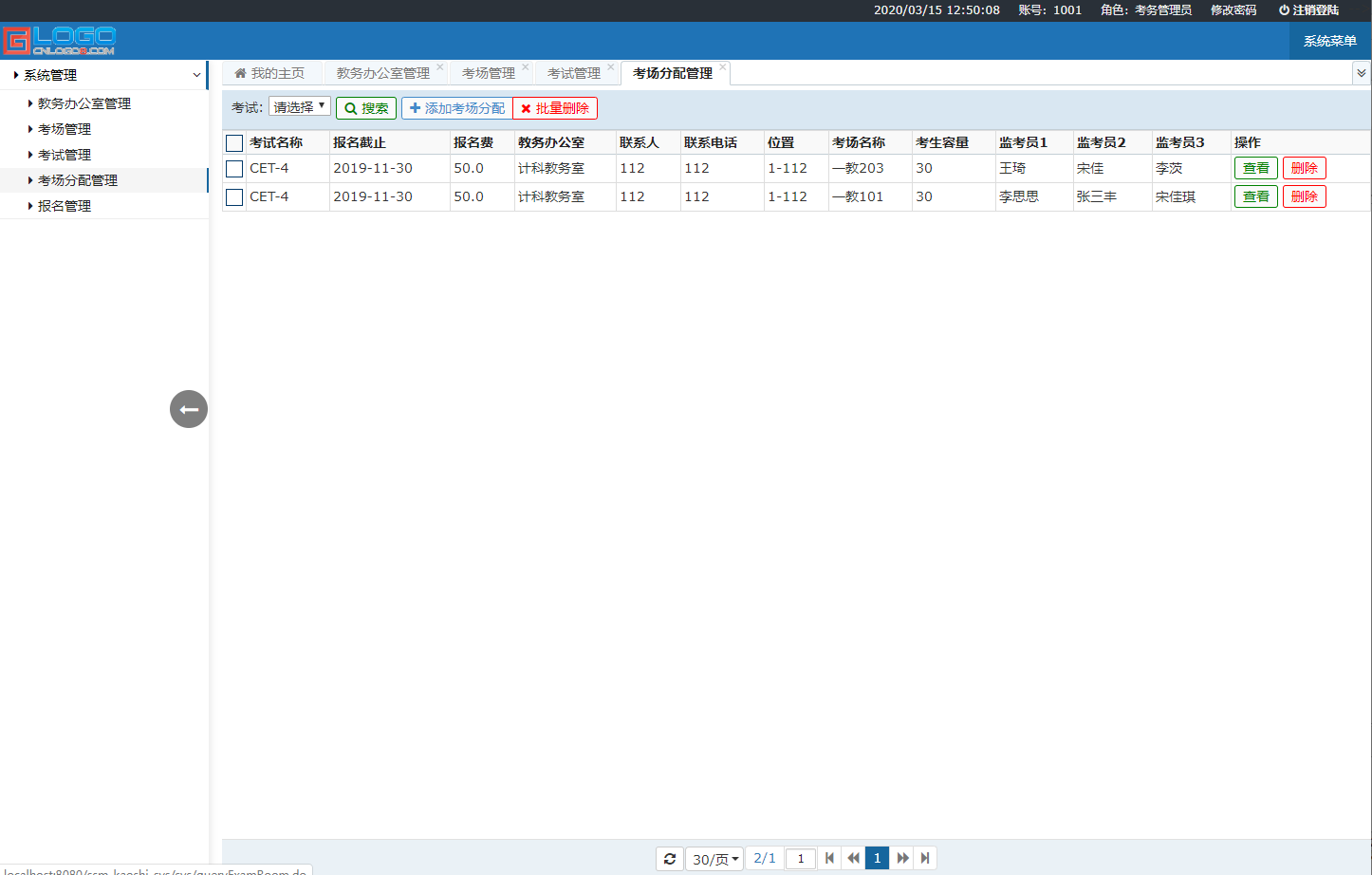
该算法通过优化考场资源利用率,显著提高了分配效率。系统支持手动调整功能,考务管理员可以根据实际情况对自动分配结果进行微调。
2. 多层级权限管理体系
系统采用基于角色的访问控制(RBAC)模型,实现了精细化的权限管理。通过Spring Security集成,确保各角色只能访问授权资源:
@Configuration
@EnableWebSecurity
public class SecurityConfig extends WebSecurityConfigurerAdapter {

    @Override
    protected void configure(HttpSecurity http) throws Exception {
        http.authorizeRequests()
            .antMatchers("/admin/**").hasRole("ADMIN")
            .antMatchers("/exam-admin/**").hasRole("EXAM_ADMIN")
            .antMatchers("/student/**").hasRole("STUDENT")
            .antMatchers("/login", "/register").permitAll()
            .anyRequest().authenticated()
            .and()
            .formLogin()
            .loginPage("/login")
            .successHandler(customAuthenticationSuccessHandler())
            .and()
            .logout()
            .logoutSuccessUrl("/login");
    }

    @Bean
    public AuthenticationSuccessHandler customAuthenticationSuccessHandler() {
        return (request, response, authentication) -> {
            Collection<? extends GrantedAuthority> authorities =
                authentication.getAuthorities();

            if (authorities.stream()
                .anyMatch(a -> a.getAuthority().equals("ROLE_ADMIN"))) {
                response.sendRedirect("/admin/dashboard");
            } else if (authorities.stream()
                .anyMatch(a -> a.getAuthority().equals("ROLE_EXAM_ADMIN"))) {
                response.sendRedirect("/exam-admin/dashboard");
            } else {
                response.sendRedirect("/student/dashboard");
            }
        };
    }
}

3. 在线支付与报名状态跟踪
系统集成第三方支付接口,为考生提供便捷的在线支付体验。支付状态实时更新,确保报名流程的完整性:
@Controller
@RequestMapping("/payment")
public class PaymentController {

    @Autowired
    private PaymentService paymentService;

    @PostMapping("/create")
    @ResponseBody
    public ResponseEntity<Map<String, Object>> createPayment(
            @RequestParam String examId,
            HttpSession session) {

        Student student = (Student) session.getAttribute("currentUser");
        Payment payment = paymentService.createPayment(student.getStudentId(), examId);

        Map<String, Object> result = new HashMap<>();
        result.put("paymentId", payment.getPaymentId());
        result.put("amount", payment.getAmount());
        result.put("paymentUrl", generatePaymentUrl(payment));

        return ResponseEntity.ok(result);
    }

    @PostMapping("/callback")
    public String paymentCallback(@RequestParam Map<String, String> params) {
        String paymentId = params.get("payment_id");
        String status = params.get("status");

        if ("SUCCESS".equals(status)) {
            paymentService.confirmPayment(paymentId);
            // 更新报名状态
            enrollmentService.confirmEnrollment(paymentId);
        }

        return "redirect:/student/enrollments";
    }
}
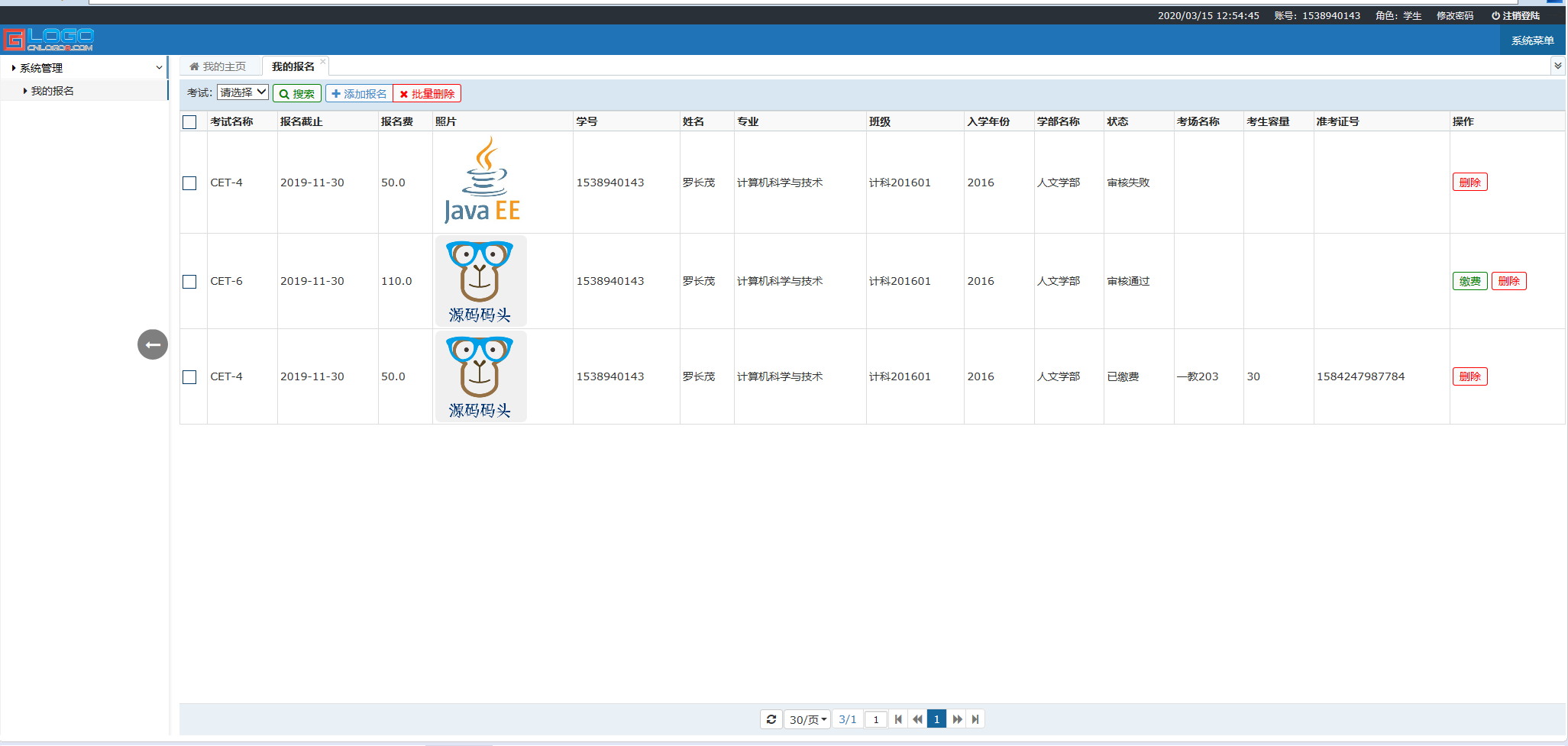
4. 动态条件查询与分页处理
系统在处理大量数据查询时,采用MyBatis的动态SQL和分页插件,确保查询效率:
<!-- 考试信息动态查询 -->
<select id="selectExamsByCondition" parameterType="map" resultMap="ExamResultMap">
    SELECT * FROM exams
    <where>
        <if test="examName != null and examName != ''">
            AND exam_name LIKE CONCAT('%', #{examName}, '%')
        </if>
        <if test="collegeId != null">
            AND college_id = #{collegeId}
        </if>
        <if test="startTime != null">
            AND exam_time >= #{startTime}
        </if>
        <if test="endTime != null">
            AND exam_time <= #{endTime}
        </if>
        <if test="status != null">
            AND status = #{status}
        </if>
    </where>
    ORDER BY created_time DESC
    LIMIT #{offset}, #{pageSize}
</select>
对应的Java服务层实现:
@Service
public class ExamService {

    public PageInfo<Exam> getExamsByPage(int pageNum, int pageSize,
                                        Map<String, Object> conditions) {
        PageHelper.startPage(pageNum, pageSize);
        List<Exam> exams = examMapper.selectExamsByCondition(conditions);
        return new PageInfo<>(exams);
    }
}
实体模型与业务逻辑
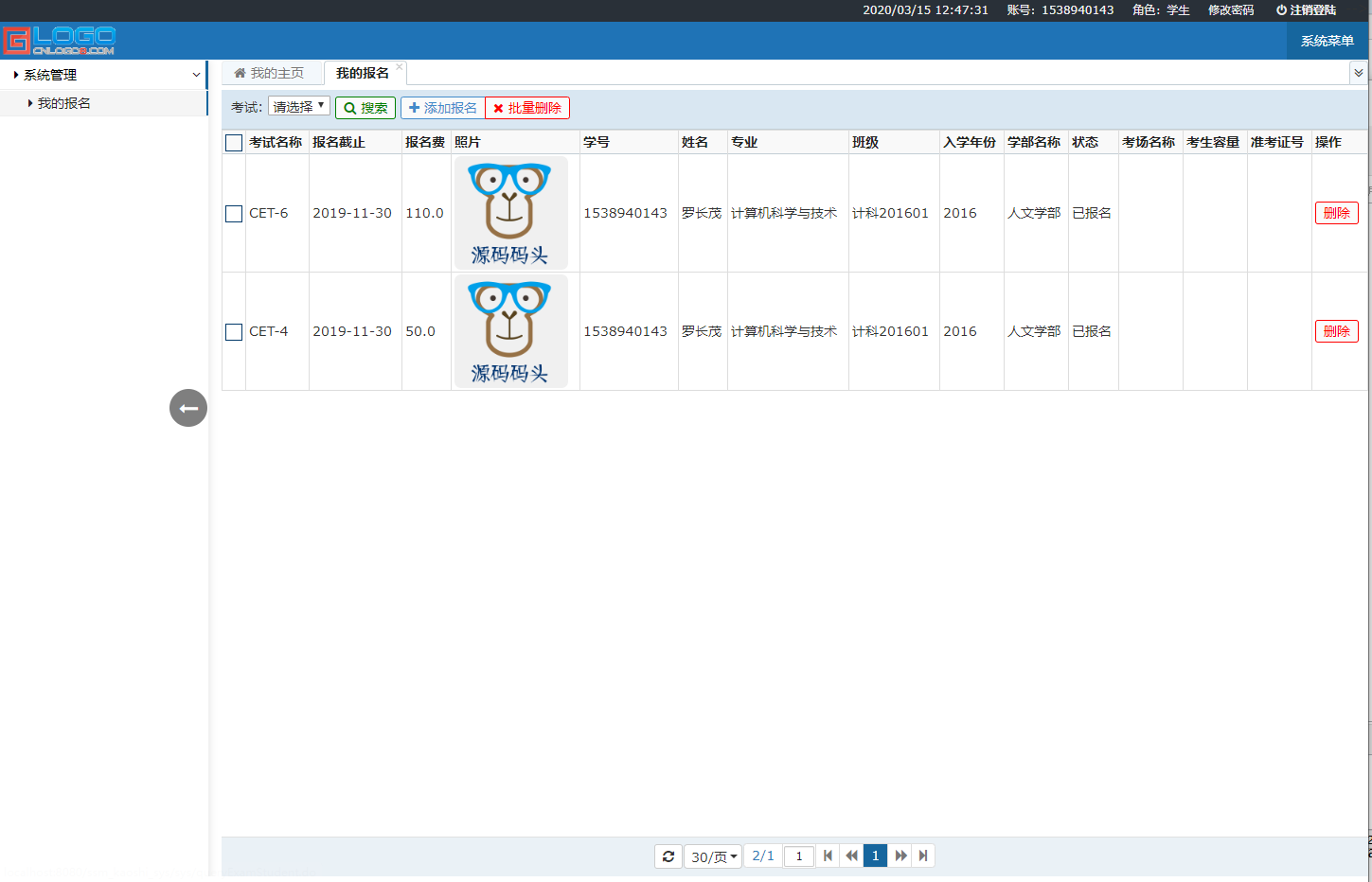
系统核心实体模型体现了丰富的业务语义,通过领域驱动设计(DDD)思想组织代码结构。以考试报名业务为例:
@Entity
@Table(name = "enrollments")
public class Enrollment {
    @Id
    @GeneratedValue(strategy = GenerationType.IDENTITY)
    private Long enrollmentId;

    @ManyToOne
    @JoinColumn(name = "student_id")
    private Student student;

    @ManyToOne
    @JoinColumn(name = "exam_id")
    private Exam exam;

    private EnrollmentStatus status;
    private Date applyTime;
    private Date auditTime;
    private String auditRemark;

    public enum EnrollmentStatus {
        PENDING,    // 待审核
        APPROVED,   // 已通过
        REJECTED,   // 已拒绝
        PAID,       // 已支付
        CANCELLED   // 已取消
    }
}
性能优化与安全考量
系统在性能优化方面采取了多项措施。数据库连接池使用HikariCP,配置了合理的连接参数:
# 数据库连接池配置
spring.datasource.hikari.maximum-pool-size=20
spring.datasource.hikari.minimum-idle=5
spring.datasource.hikari.idle-timeout=300000
spring.datasource.hikari.connection-timeout=20000
在安全方面,系统实现了完整的密码加密和会话管理机制:
@Component
public class PasswordEncoder {

    public String encode(String rawPassword) {
        return BCrypt.hashpw(rawPassword, BCrypt.gensalt());
    }

    public boolean matches(String rawPassword, String encodedPassword) {
        return BCrypt.checkpw(rawPassword, encodedPassword);
    }
}
技术挑战与解决方案
在系统开发过程中,主要面临以下几个技术挑战:
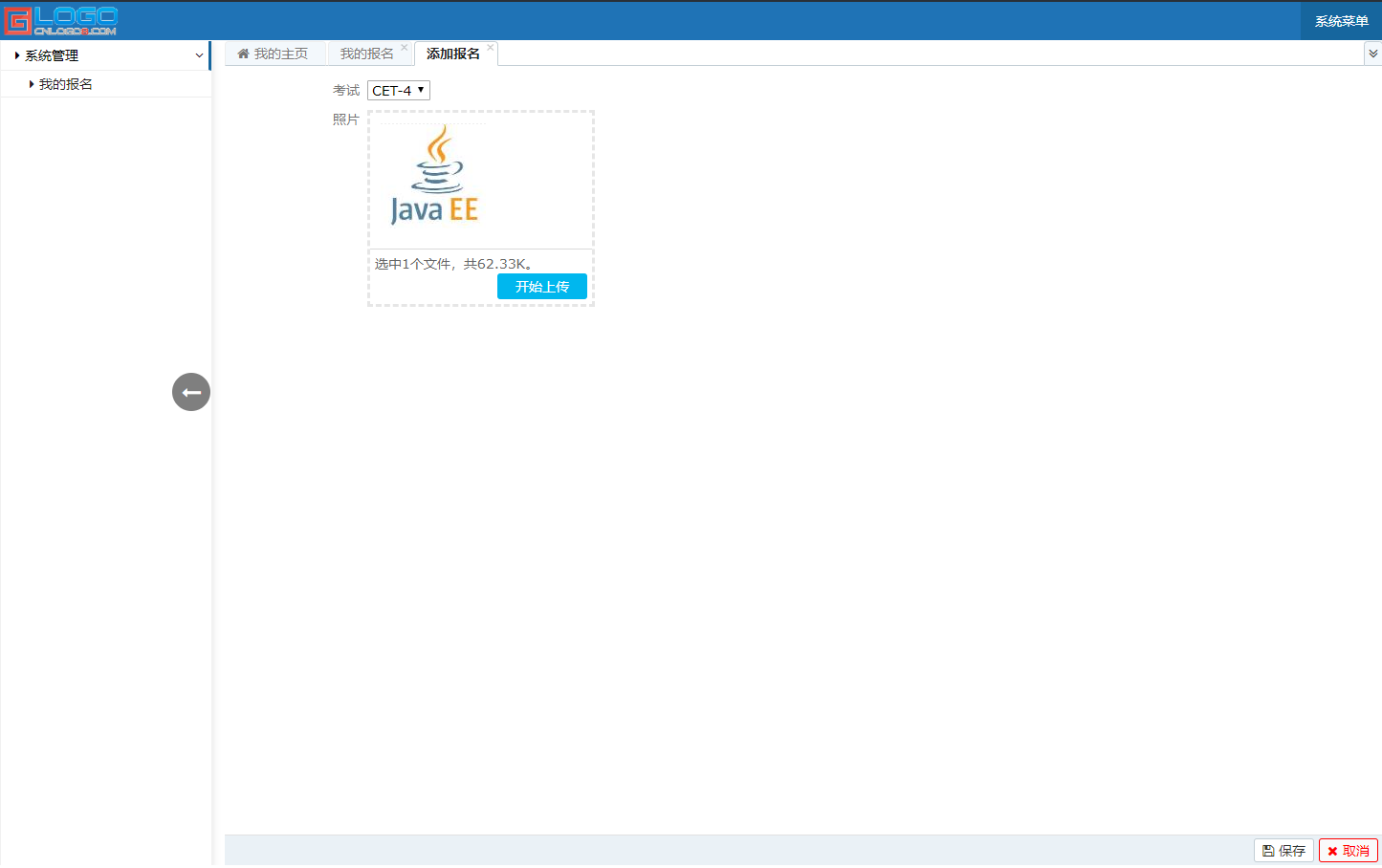
高并发报名场景:采用Redis缓存热门考试信息,使用分布式锁控制报名名额的原子性操作。
复杂业务事务:通过Spring的声明式事务管理,确保报名、支付、座位分配等操作的原子性。
数据一致性:使用数据库事务和乐观锁机制,防止超卖和重复报名等问题。
系统扩展性与维护性
系统的模块化设计使得功能扩展变得相对容易。新增考试类型或报名流程时,只需要实现相应的接口和配置:
public interface ExamPlugin {
    boolean supports(ExamType examType);
    ValidationResult validate(Student student, Exam exam);
    ProcessResult processEnrollment(Enrollment enrollment);
}
这种插件化架构允许系统在不修改核心代码的情况下支持新的业务场景。
未来优化方向
基于当前系统架构和业务需求,提出以下优化建议:
微服务架构迁移:将单体应用拆分为用户服务、考试服务、支付服务等微服务,提高系统可扩展性和部署灵活性。
大数据分析集成:引入Elasticsearch进行日志分析,使用Kibana构建实时监控看板,为管理决策提供数据支持。
移动端适配:开发React Native或Flutter移动应用,提供更好的移动端报名体验。
人工智能应用:集成机器学习算法,实现智能监考、自动阅卷等高级功能。
区块链存证:利用区块链技术存储重要考试数据,确保数据的不可篡改性和可追溯性。

该智能化考试管理平台通过系统化的架构设计和精细化的功能实现,为各类考试组织工作提供了完整的数字化解决方案。系统在保持技术先进性的同时,充分考虑了实际业务需求,在性能、安全、可用性等方面达到了较高水平。随着教育信息化的深入发展,该系统具有良好的应用前景和扩展空间。