随着教育信息化进程的加速,传统纸质考试模式在组织效率、资源消耗和数据处理方面的局限性日益凸显。数字化考试平台应运而生,旨在通过技术手段重构考试流程,实现从命题到成绩分析的全链条自动化管理。该系统采用成熟的SSM(Spring+SpringMVC+MyBatis)技术栈构建,为教育机构和企业培训部门提供高效、规范的在线考试解决方案。
系统架构采用经典的三层设计模式,确保各层级职责分离。Spring框架作为核心容器,通过控制反转(IoC)和面向切面编程(AOP)机制管理业务对象依赖和事务控制,显著提升代码的可维护性和模块化程度。SpringMVC框架负责Web请求的分发与处理,其拦截器机制实现统一的权限验证和日志记录。数据持久层选用MyBatis框架,通过XML映射文件实现Java对象与关系数据库的灵活映射,特别适合处理复杂的考试业务数据关系。前端采用JSP结合jQuery的技术组合,实现动态页面渲染和异步交互功能。
数据库架构设计精要
系统数据库包含16个核心表,涵盖用户管理、试题库、考试流程和成绩分析等模块。其中试题表(question)、试卷表(exam_paper)和考试记录表(exam_record)的设计最具代表性,体现了业务逻辑与数据完整性的高度统一。
试题表采用多类型题目统一存储的设计模式,通过question_type字段区分单选题、多选题和判断题等类型,correct_answer字段根据题型动态存储答案格式。这种设计既保证数据结构的规范性,又支持题型的灵活扩展。
CREATE TABLE question (
    id INT PRIMARY KEY AUTO_INCREMENT,
    question_type TINYINT NOT NULL COMMENT '题目类型:1单选 2多选 3判断',
    content TEXT NOT NULL COMMENT '题目内容',
    options JSON COMMENT '选项列表',
    correct_answer VARCHAR(500) COMMENT '正确答案',
    analysis TEXT COMMENT '题目解析',
    subject_id INT NOT NULL COMMENT '所属科目',
    difficulty TINYINT DEFAULT 1 COMMENT '难度等级',
    create_time DATETIME DEFAULT CURRENT_TIMESTAMP
);
试卷表采用动态组卷机制,question_ids字段以JSON格式存储题目ID序列,scores字段对应保存每题分值。这种非规范化设计优化了组卷性能,避免频繁的表连接操作,同时支持试卷版本的灵活管理。
CREATE TABLE exam_paper (
    id INT PRIMARY KEY AUTO_INCREMENT,
    title VARCHAR(200) NOT NULL COMMENT '试卷名称',
    question_ids JSON NOT NULL COMMENT '题目ID列表',
    scores JSON NOT NULL COMMENT '对应题目分值',
    total_score INT NOT NULL COMMENT '试卷总分',
    suggest_time INT COMMENT '建议时长(分钟)',
    status TINYINT DEFAULT 1 COMMENT '试卷状态',
    create_time DATETIME DEFAULT CURRENT_TIMESTAMP
);
考试记录表的设计重点解决并发提交和成绩计算的原子性问题。通过submit_status字段跟踪提交状态,auto_correct_status标记自动批改进度,结合事务控制确保数据一致性。
CREATE TABLE exam_record (
    id INT PRIMARY KEY AUTO_INCREMENT,
    user_id INT NOT NULL COMMENT '考生ID',
    exam_paper_id INT NOT NULL COMMENT '试卷ID',
    answers JSON COMMENT '考生答案',
    submit_status TINYINT DEFAULT 0 COMMENT '提交状态',
    auto_correct_status TINYINT DEFAULT 0 COMMENT '自动批改状态',
    objective_score INT COMMENT '客观题得分',
    subjective_score INT COMMENT '主观题得分',
    total_score INT COMMENT '最终得分',
    start_time DATETIME COMMENT '开始时间',
    submit_time DATETIME COMMENT '提交时间'
);
核心业务逻辑实现
1. 智能组卷算法
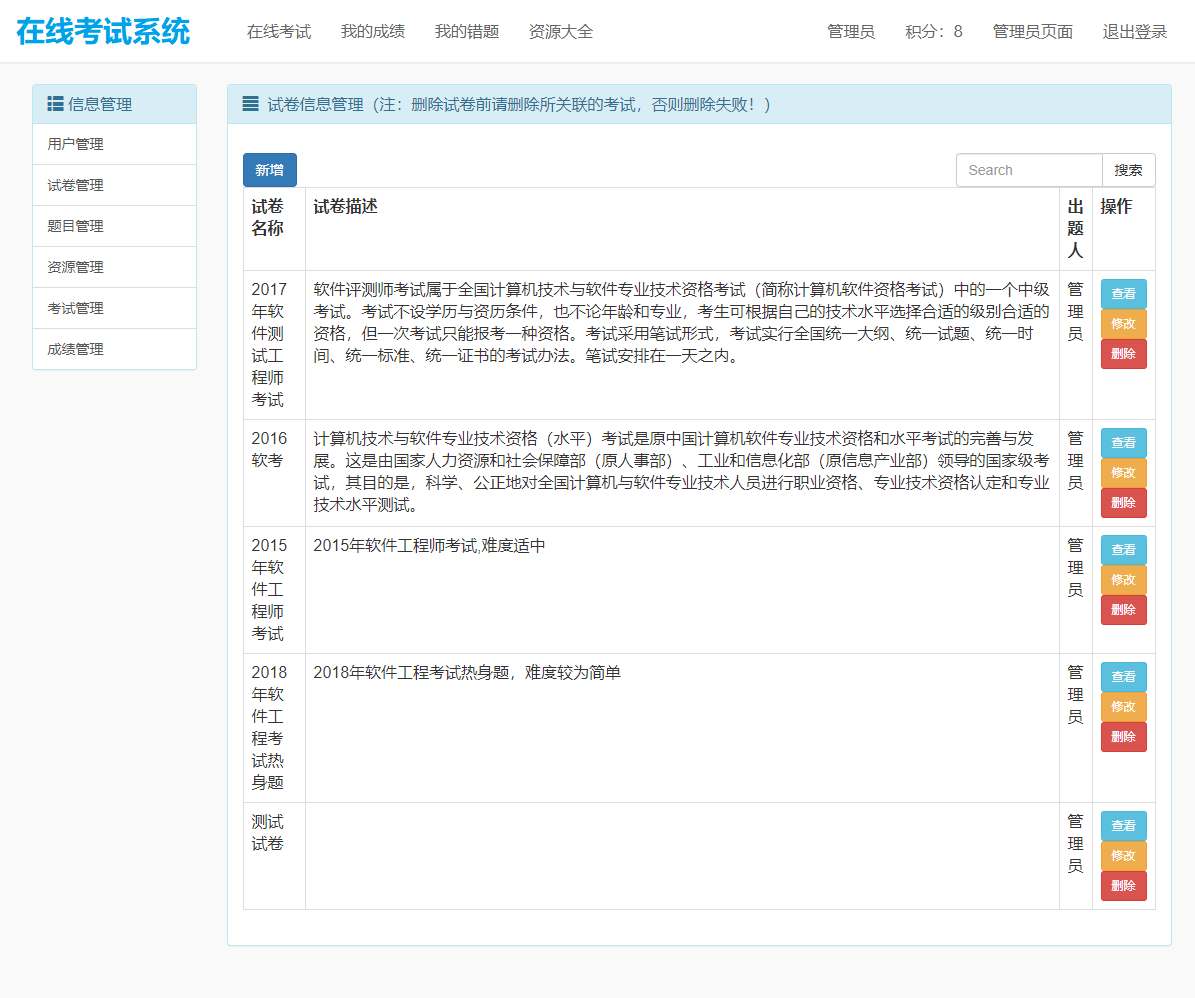
系统实现基于难度系数的智能组卷功能,通过Service层业务逻辑动态计算题目分布。PaperGenerateService类封装组卷核心算法,根据科目、难度比例等参数从题库中随机抽题。
@Service
public class PaperGenerateService {

    @Autowired
    private QuestionMapper questionMapper;

    public ExamPaper generatePaper(PaperGenerateForm form) {
        List<Question> questionList = new ArrayList<>();
        Map<Integer, Integer> difficultyDistribution = calculateDistribution(form);

        for (Map.Entry<Integer, Integer> entry : difficultyDistribution.entrySet()) {
            Integer difficulty = entry.getKey();
            Integer count = entry.getValue();
            List<Question> questions = questionMapper.selectByDifficulty(
                form.getSubjectId(), difficulty, count);
            questionList.addAll(questions);
        }

        return buildExamPaper(questionList, form);
    }

    private Map<Integer, Integer> calculateDistribution(PaperGenerateForm form) {
        // 根据难度系数计算各难度题目数量
        int total = form.getQuestionCount();
        Map<Integer, Integer> distribution = new HashMap<>();
        distribution.put(1, (int) (total * form.getEasyRatio()));
        distribution.put(2, (int) (total * form.getMediumRatio()));
        distribution.put(3, total - distribution.get(1) - distribution.get(2));
        return distribution;
    }
}
2. 实时考试引擎
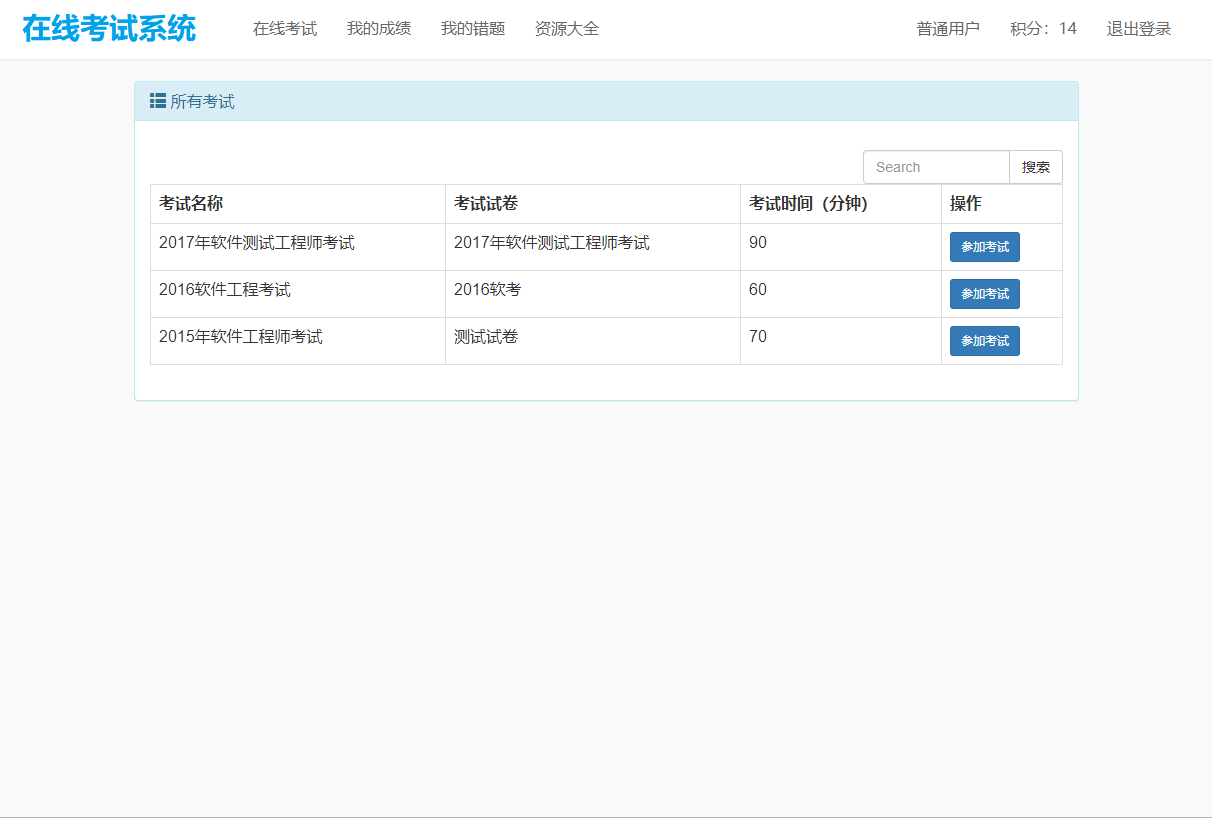
考试界面实现严格的计时控制和自动保存机制。前端通过JavaScript定时器与后端协同工作,确保考试过程的稳定性和公平性。
class ExamTimer {
    constructor(duration, onUpdate, onTimeout) {
        this.duration = duration * 60; // 转换为秒
        this.remaining = this.duration;
        this.onUpdate = onUpdate;
        this.onTimeout = onTimeout;
        this.timer = null;
    }

    start() {
        this.timer = setInterval(() => {
            this.remaining--;
            this.onUpdate(this.formatTime());

            if (this.remaining <= 0) {
                this.stop();
                this.onTimeout();
            }
        }, 1000);
    }

    formatTime() {
        const minutes = Math.floor(this.remaining / 60);
        const seconds = this.remaining % 60;
        return `${minutes}:${seconds.toString().padStart(2, '0')}`;
    }

    stop() {
        if (this.timer) {
            clearInterval(this.timer);
        }
    }
}

// 答案自动保存功能
function autoSaveAnswers(paperId, answers) {
    $.ajax({
        url: '/exam/auto-save',
        type: 'POST',
        contentType: 'application/json',
        data: JSON.stringify({
            paperId: paperId,
            answers: answers
        }),
        success: function(response) {
            console.log('答案自动保存成功');
        }
    });
}
3. 自动批改系统
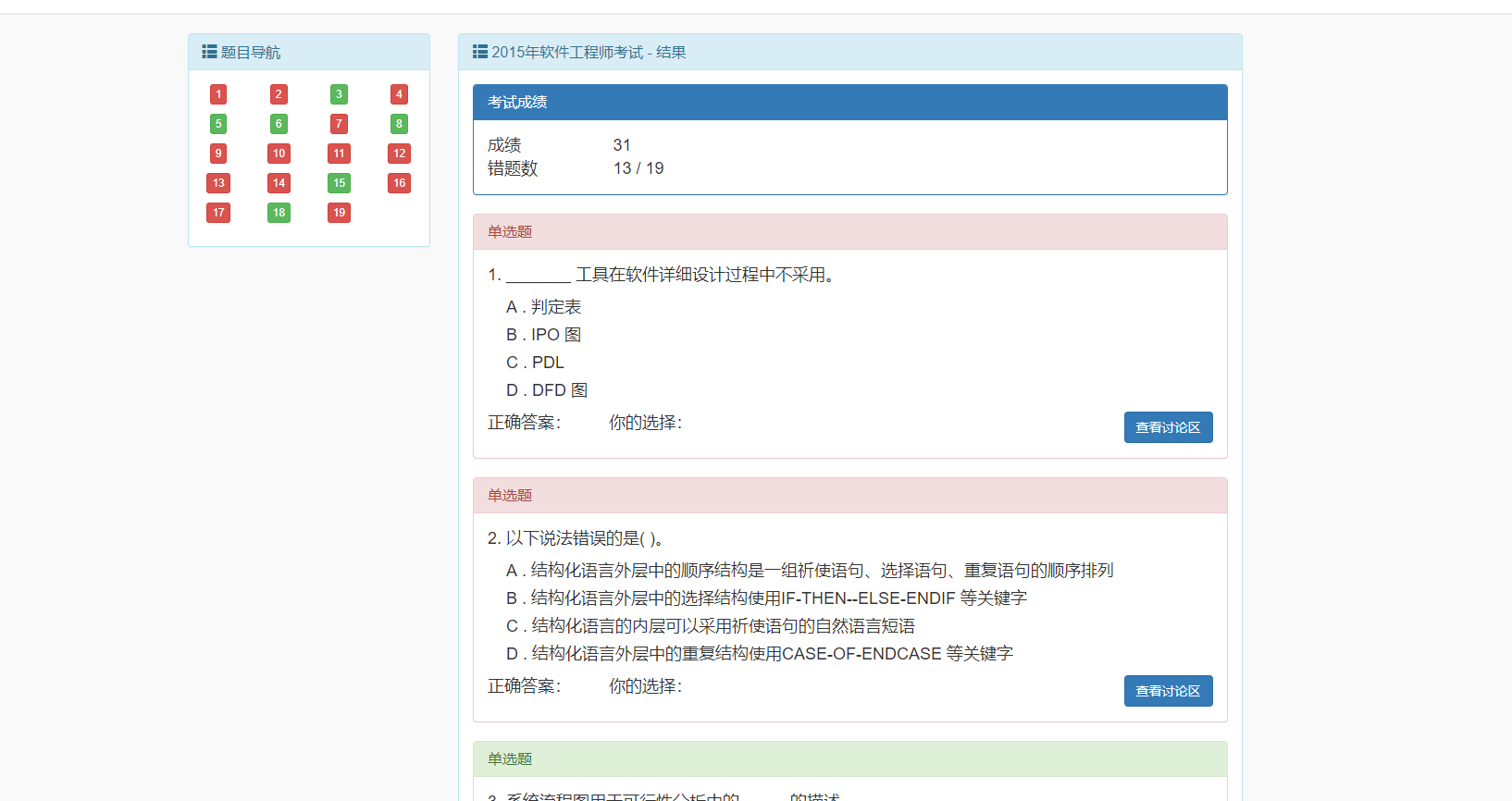
客观题批改模块采用规则引擎设计,支持多种题型的自动评分。AutoCorrectService实现高效的成绩计算逻辑,通过批量处理提升系统性能。
@Service
@Transactional
public class AutoCorrectService {

    public void correctObjectiveQuestions(ExamRecord record) {
        ExamPaper paper = examPaperMapper.selectById(record.getExamPaperId());
        JSONArray questionIds = paper.getQuestionIds();
        JSONArray standardScores = paper.getScores();
        JSONArray userAnswers = record.getAnswers();

        int totalScore = 0;
        JSONArray resultDetails = new JSONArray();

        for (int i = 0; i < questionIds.size(); i++) {
            Integer questionId = questionIds.getInteger(i);
            Question question = questionMapper.selectById(questionId);
            String userAnswer = userAnswers.getString(i);
            Integer standardScore = standardScores.getInteger(i);

            CorrectResult result = correctSingleQuestion(question, userAnswer);
            if (result.isCorrect()) {
                totalScore += standardScore;
            }

            resultDetails.add(buildResultDetail(questionId, result, standardScore));
        }

        updateExamRecord(record, totalScore, resultDetails);
    }

    private CorrectResult correctSingleQuestion(Question question, String userAnswer) {
        switch (question.getQuestionType()) {
            case 1: // 单选题
                return correctSingleChoice(question, userAnswer);
            case 2: // 多选题
                return correctMultipleChoice(question, userAnswer);
            case 3: // 判断题
                return correctJudgment(question, userAnswer);
            default:
                throw new IllegalStateException("不支持的题型");
        }
    }
}
4. 权限管理与安全控制
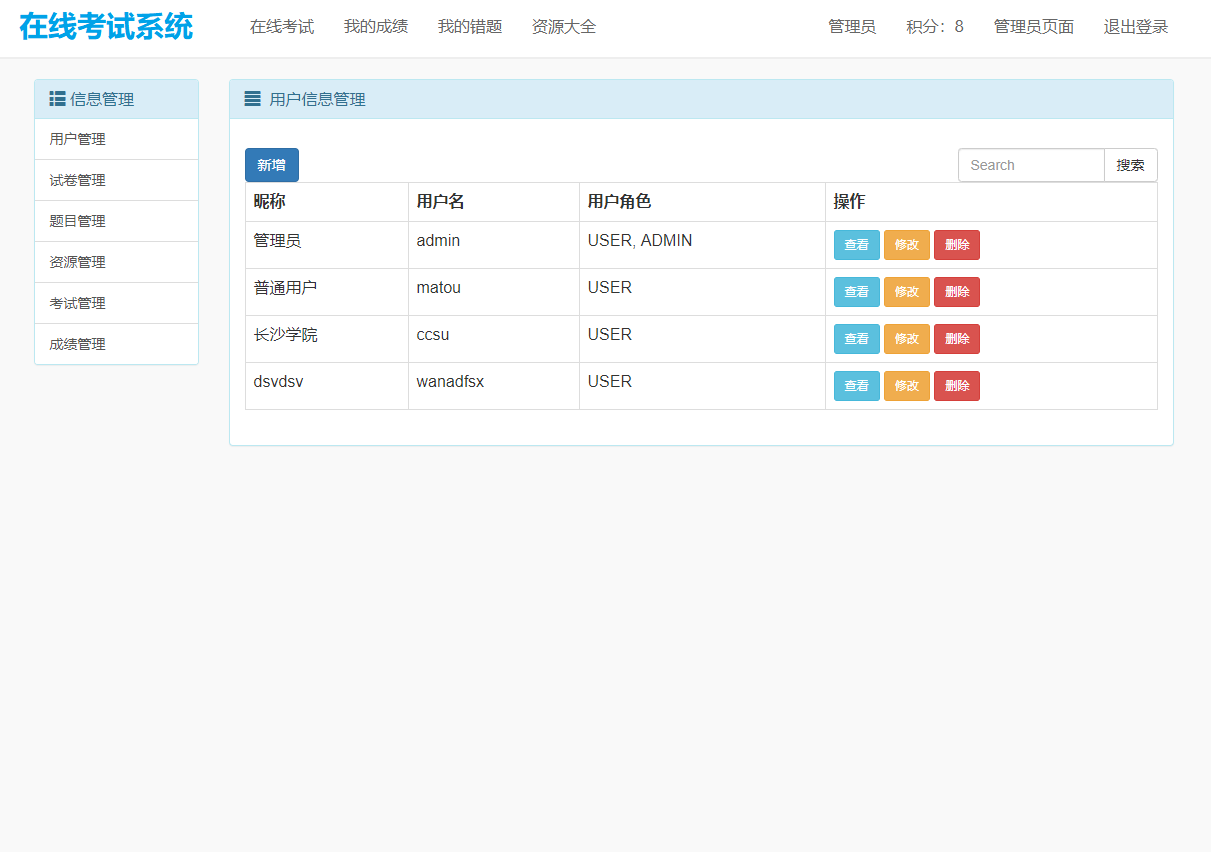
系统通过Spring拦截器实现细粒度的权限控制,确保不同角色用户只能访问授权资源。AuthInterceptor验证用户登录状态和权限级别。
@Component
public class AuthInterceptor implements HandlerInterceptor {

    @Override
    public boolean preHandle(HttpServletRequest request,
                           HttpServletResponse response, Object handler) throws Exception {
        HttpSession session = request.getSession();
        User user = (User) session.getAttribute("currentUser");

        if (user == null) {
            response.sendRedirect("/login");
            return false;
        }

        // 检查接口权限
        if (!hasPermission(user, request.getRequestURI())) {
            response.sendError(403, "权限不足");
            return false;
        }

        return true;
    }

    private boolean hasPermission(User user, String requestURI) {
        if (user.getRole() == Role.ADMIN) {
            return true;
        }

        // 学生角色权限检查
        Set<String> allowedPaths = getStudentAllowedPaths();
        return allowedPaths.contains(requestURI);
    }
}
实体模型与业务关系
系统核心实体模型围绕考试业务流程构建,形成清晰的领域驱动设计结构。User实体作为聚合根,与ExamRecord形成一对多关系。Question实体通过ExamPaper实现多对多关联,体现试卷组成的动态特性。值对象如Score、Answer等封装业务规则,确保模型的一致性和完整性。
实体间的关系通过MyBatis的关联映射实现高效查询。例如,查询考试记录时通过<collection>标签一次性加载相关的试卷信息和题目详情,避免N+1查询问题。
<resultMap id="ExamRecordDetailMap" type="ExamRecordVO">
    <id column="id" property="id"/>
    <result column="start_time" property="startTime"/>
    <result column="submit_time" property="submitTime"/>
    <result column="total_score" property="totalScore"/>
    <association property="examPaper" javaType="ExamPaper">
        <id column="ep_id" property="id"/>
        <result column="ep_title" property="title"/>
        <result column="ep_total_score" property="totalScore"/>
    </association>
    <collection property="questionResults" ofType="QuestionResultVO">
        <id column="qr_id" property="id"/>
        <result column="q_content" property="questionContent"/>
        <result column="user_answer" property="userAnswer"/>
        <result column="correct_answer" property="correctAnswer"/>
        <result column="is_correct" property="correct"/>
    </collection>
</resultMap>
性能优化与实践
系统针对高并发考试场景进行了多项优化。数据库层面采用读写分离架构,考试记录写入使用主库,查询操作路由到从库。Redis缓存热点数据,如题目信息、试卷结构等静态数据。异步处理机制将自动批改任务放入消息队列,避免阻塞用户请求。
监控体系集成Spring Boot Actuator,实时追踪系统性能指标。日志系统记录详细的操作轨迹,便于问题排查和审计追踪。
@Slf4j
@Aspect
@Component
public class PerformanceMonitor {

    @Around("execution(* com.exam.service..*(..))")
    public Object monitorPerformance(ProceedingJoinPoint joinPoint) throws Throwable {
        long startTime = System.currentTimeMillis();
        String methodName = joinPoint.getSignature().getName();

        try {
            Object result = joinPoint.proceed();
            long duration = System.currentTimeMillis() - startTime;

            if (duration > 1000) { // 记录慢查询
                log.warn("方法 {} 执行耗时: {}ms", methodName, duration);
            }

            return result;
        } catch (Exception e) {
            log.error("方法 {} 执行异常: {}", methodName, e.getMessage());
            throw e;
        }
    }
}
扩展方向与技术演进
基于当前系统架构,未来可从以下几个方向进行功能扩展和性能提升:
智能监考系统:集成WebRTC技术实现实时视频监控,结合AI行为分析检测异常考试行为。通过开源媒体服务器搭建监控平台,使用TensorFlow.js实现前端行为识别。
自适应学习路径:基于考试结果数据构建知识图谱,为每位学生生成个性化的学习建议和练习计划。采用协同过滤算法推荐薄弱知识点的强化题目。
移动端深度适配:开发React Native跨平台移动应用,支持离线答题和同步功能。利用PWA技术实现Web应用的移动端原生体验。
大数据分析平台:集成Apache Spark进行考试数据挖掘,可视化展示班级成绩分布、知识点掌握情况等分析结果。使用ECharts构建交互式数据看板。
微服务架构改造:将单体应用拆分为用户服务、考试服务、题目服务等微服务单元。采用Spring Cloud生态实现服务治理、配置管理和链路追踪。
系统通过持续的技术迭代和功能优化,不断提升用户体验和管理效率,为教育信息化建设提供坚实的技术支撑。