随着教育信息化进程的加速,传统纸质考试模式在效率、成本和数据分析方面的局限性日益凸显。数字化考核平台应运而生,成为现代教育机构和企业培训部门提升考评效能的关键工具。本文将深入剖析一个采用SSM(Spring+SpringMVC+MyBatis)框架构建的企业级智能考评管理平台,从架构设计、数据模型到核心功能实现进行全方位技术解析。
系统架构与技术栈选型
该平台采用经典的三层架构模式,展现层使用JSP结合jQuery实现动态页面渲染和异步交互,控制层由SpringMVC框架负责请求路由和参数绑定,业务层通过Spring的IoC容器管理服务依赖,数据持久层则采用MyBatis操作MySQL数据库。这种分层架构确保了系统的高内聚、低耦合特性。
技术栈配置通过Maven进行依赖管理,关键配置如下:
<dependencies>
    <!-- Spring核心框架 -->
    <dependency>
        <groupId>org.springframework</groupId>
        <artifactId>spring-webmvc</artifactId>
        <version>5.2.8.RELEASE</version>
    </dependency>

    <!-- MyBatis集成 -->
    <dependency>
        <groupId>org.mybatis</groupId>
        <artifactId>mybatis-spring</artifactId>
        <version>2.0.6</version>
    </dependency>

    <!-- 数据库连接池 -->
    <dependency>
        <groupId>com.mchange</groupId>
        <artifactId>c3p0</artifactId>
        <version>0.9.5.5</version>
    </dependency>
</dependencies>
Spring Security提供了完善的身份认证和授权机制,确保不同角色用户(管理员、教师、考生)只能访问其权限范围内的功能模块。
数据库设计亮点分析
用户表(et_user)的精细化设计
CREATE TABLE `et_user` (
  `id` int(11) NOT NULL AUTO_INCREMENT COMMENT 'PK',
  `username` varchar(20) NOT NULL COMMENT '账号',
  `truename` varchar(10) DEFAULT NULL COMMENT '真实姓名',
  `password` char(40) NOT NULL COMMENT '密码',
  `email` varchar(40) NOT NULL COMMENT '邮箱',
  `phone` varchar(20) DEFAULT NULL COMMENT '电话',
  `add_date` timestamp NOT NULL DEFAULT current_timestamp() ON UPDATE current_timestamp(),
  `expire_date` timestamp NULL DEFAULT NULL COMMENT '过期日期',
  `add_by` int(11) DEFAULT NULL COMMENT '创建人',
  `enabled` tinyint(1) DEFAULT 0 COMMENT '激活状态:0-未激活 1-激活',
  `field_id` int(10) NOT NULL COMMENT '专业领域ID',
  `last_login_time` timestamp NULL DEFAULT NULL COMMENT '最后登录时间',
  `login_time` timestamp NULL DEFAULT NULL COMMENT '登录时间',
  `province` varchar(20) DEFAULT NULL COMMENT '省份',
  `company` varchar(40) DEFAULT NULL COMMENT '公司',
  `department` varchar(40) DEFAULT NULL COMMENT '部门',
  PRIMARY KEY (`id`),
  UNIQUE KEY `username` (`username`)
) ENGINE=InnoDB AUTO_INCREMENT=11 DEFAULT CHARSET=utf8 COLLATE=utf8_general_ci COMMENT='用户表'
该表设计体现了多个优化考量:username字段设置唯一索引确保账号唯一性;password采用char(40)固定长度存储SHA-1加密后的密码;expire_date支持账户有效期管理;enabled字段实现账户激活状态控制;last_login_time和login_time分别记录历史登录和当前登录时间,支持登录行为分析。外键field_id关联专业领域,实现用户分类管理。
考试历史表(et_user_exam_history)的高效存储
CREATE TABLE `et_user_exam_history` (
  `id` int(10) NOT NULL AUTO_INCREMENT COMMENT '历史记录ID',
  `user_id` int(10) NOT NULL COMMENT '用户ID',
  `exam_paper_id` int(10) NOT NULL COMMENT '试卷ID',
  `content` mediumtext DEFAULT NULL COMMENT '考试内容',
  `create_time` timestamp NOT NULL DEFAULT current_timestamp() ON UPDATE current_timestamp(),
  `answer_sheet` mediumtext DEFAULT NULL COMMENT '答题卡',
  `duration` int(10) NOT NULL COMMENT '考试时长',
  `point_get` float(10,1) NOT NULL DEFAULT 0.0 COMMENT '得分',
  `submit_time` timestamp NULL DEFAULT NULL COMMENT '提交时间',
  PRIMARY KEY (`id`)
) ENGINE=InnoDB AUTO_INCREMENT=3 DEFAULT CHARSET=utf8 COLLATE=utf8_general_ci COMMENT='用户考试历史表'
该表设计针对大规模考试数据存储进行了优化:content和answer_sheet字段使用mediumtext类型,支持存储大量的试题内容和答题信息;point_get字段采用float(10,1)精确到小数点后一位的浮点数存储得分;duration以秒为单位记录考试时长;create_time和submit_time分别记录考试开始和提交时间,支持考试过程分析。
标签表(et_tag)的灵活扩展设计
CREATE TABLE `et_tag` (
  `tag_id` int(11) NOT NULL AUTO_INCREMENT COMMENT '标签ID',
  `tag_name` varchar(100) NOT NULL COMMENT '标签名称',
  `create_time` timestamp NOT NULL DEFAULT current_timestamp() ON UPDATE current_timestamp(),
  `creator` int(11) NOT NULL COMMENT '创建者',
  `is_private` tinyint(1) NOT NULL DEFAULT 0 COMMENT '是否私有',
  `memo` varchar(500) DEFAULT NULL COMMENT '备注',
  PRIMARY KEY (`tag_id`),
  KEY `fk_tag_creator` (`creator`),
  CONSTRAINT `fk_tag_creator` FOREIGN KEY (`creator`) REFERENCES `et_user` (`id`) ON DELETE CASCADE
) ENGINE=InnoDB AUTO_INCREMENT=8 DEFAULT CHARSET=utf8 COLLATE=utf8_general_ci COMMENT='标签表'
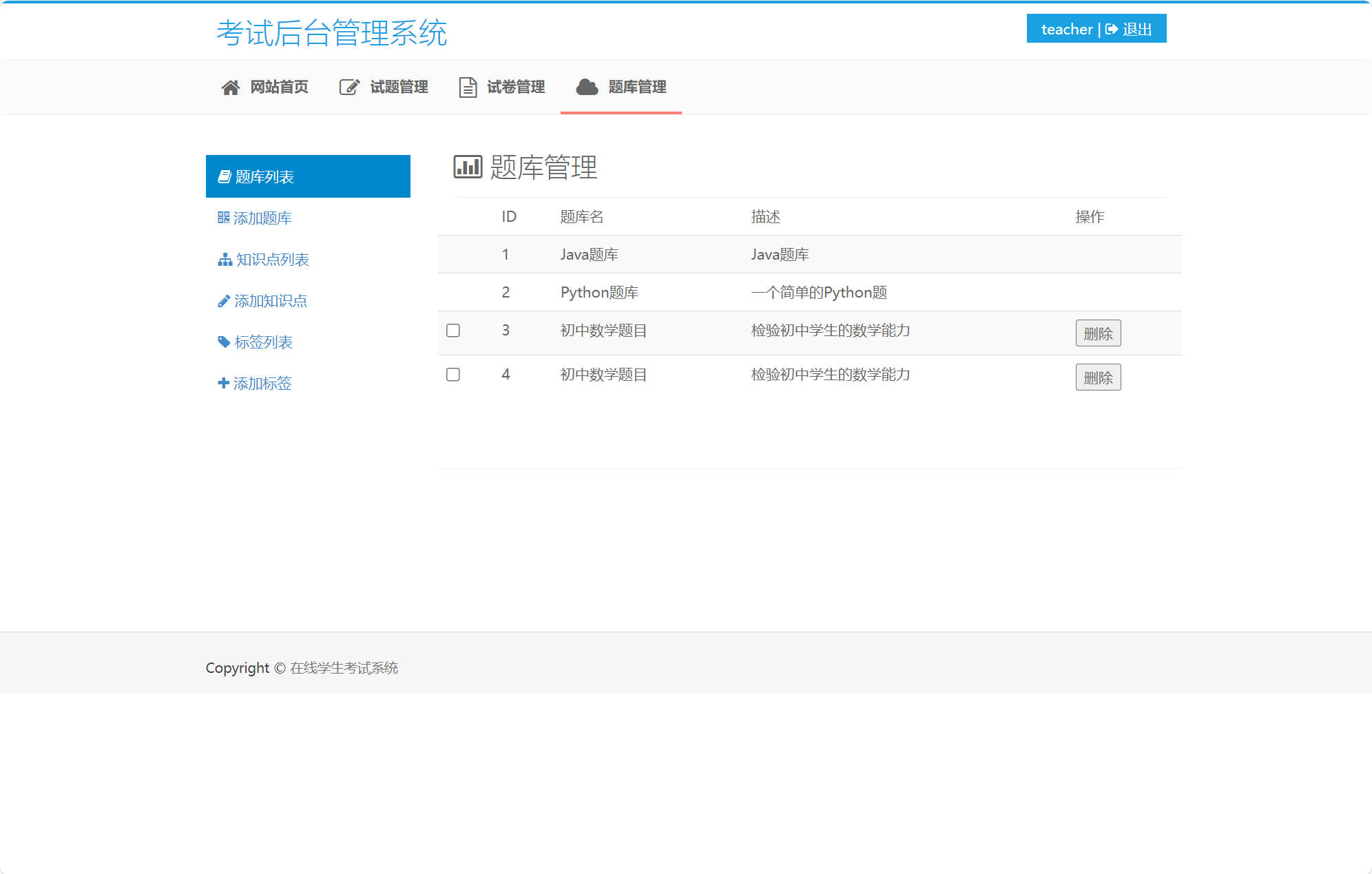
标签系统支持试题的多维度分类:is_private字段区分公有和私有标签,memo字段提供详细的标签说明,外键约束确保数据完整性,ON DELETE CASCADE实现级联删除。
核心功能实现深度解析
1. 智能组卷与试卷管理
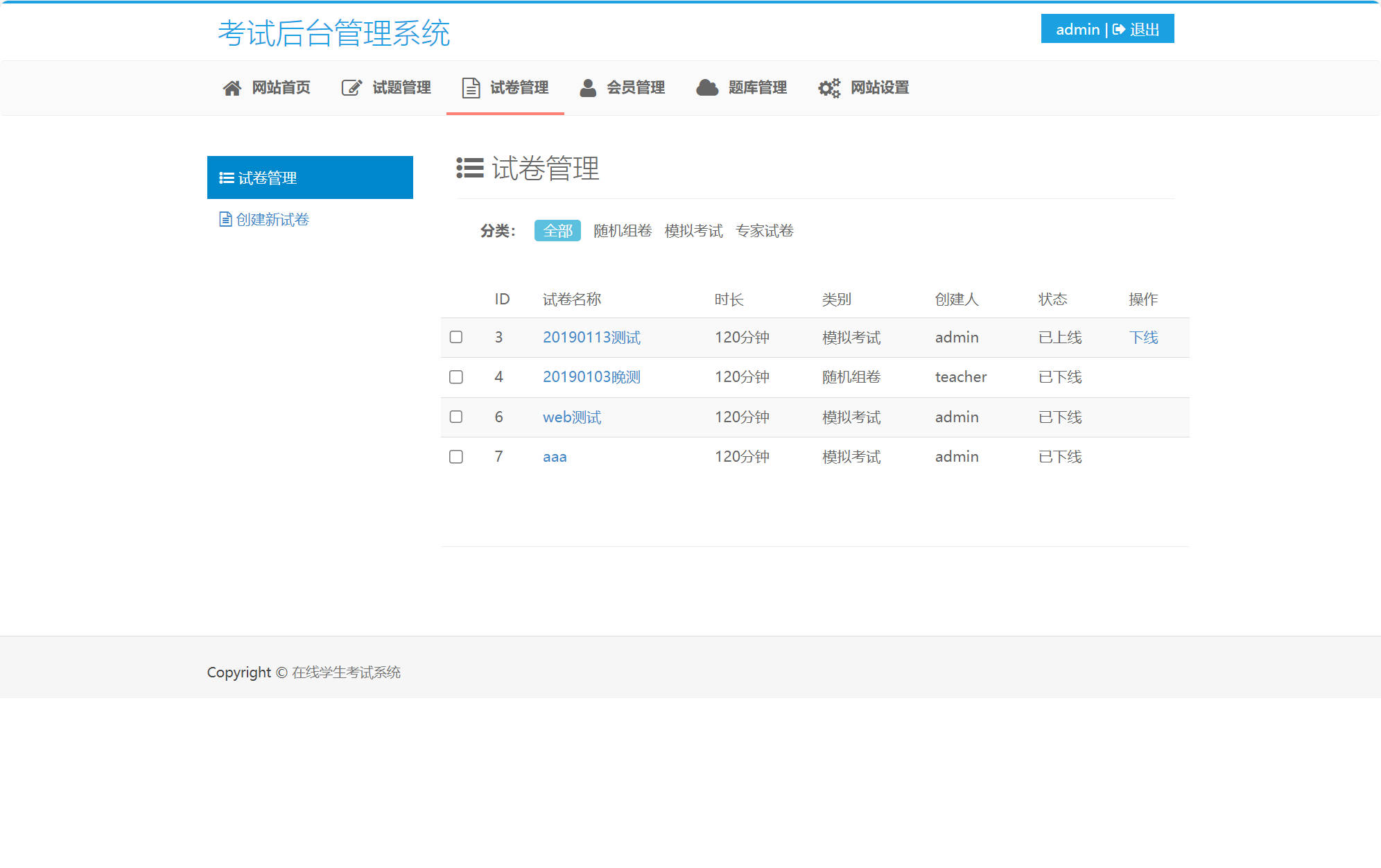
系统支持多种组卷策略,包括随机抽题、按知识点比例组卷、手动组卷等。ExamPaper实体类封装了试卷的核心属性:
@Entity
@Table(name = "et_exam_paper")
public class ExamPaper {
    private Integer id;
    private String name;
    private String description;
    private Integer totalPoint;
    private Integer passPoint;
    private Integer totalTime;
    private Date createTime;
    private Integer creator;
    private Integer status; // 0-未发布 1-已发布 2-已归档

    // 试卷题目关联
    private List<ExamPaperQuestion> questions;

    @OneToMany(cascade = CascadeType.ALL, fetch = FetchType.LAZY)
    @JoinColumn(name = "exam_paper_id")
    public List<ExamPaperQuestion> getQuestions() {
        return questions;
    }
}
组卷控制器实现智能题目分配算法:
@Controller
@RequestMapping("/exam/paper")
public class ExamPaperController {

    @Autowired
    private ExamPaperService examPaperService;

    @RequestMapping(value = "/generate", method = RequestMethod.POST)
    @ResponseBody
    public ResponseEntity<Map<String, Object>> generateExamPaper(
            @RequestParam Integer questionCount,
            @RequestParam Integer difficulty,
            @RequestParam Integer knowledgePointId) {

        Map<String, Object> result = new HashMap<>();
        try {
            // 根据难度和知识点筛选题目
            List<Question> candidateQuestions =
                questionService.findByDifficultyAndKnowledgePoint(difficulty, knowledgePointId);

            // 随机选择指定数量的题目
            Collections.shuffle(candidateQuestions);
            List<Question> selectedQuestions = candidateQuestions.subList(0,
                Math.min(questionCount, candidateQuestions.size()));

            ExamPaper examPaper = new ExamPaper();
            examPaper.setQuestions(convertToExamPaperQuestions(selectedQuestions));
            examPaperService.saveExamPaper(examPaper);

            result.put("success", true);
            result.put("paperId", examPaper.getId());
        } catch (Exception e) {
            result.put("success", false);
            result.put("message", "组卷失败: " + e.getMessage());
        }

        return ResponseEntity.ok(result);
    }
}
2. 实时考试会话控制
考试过程管理是系统的核心功能,涉及考试时间控制、答案实时保存、防作弊检测等关键技术:
@Service
public class ExamSessionService {

    private final Map<Integer, ExamSession> activeSessions = new ConcurrentHashMap<>();

    /**
     * 开始考试会话
     */
    public ExamSession startSession(Integer userId, Integer examPaperId) {
        ExamSession session = new ExamSession(userId, examPaperId);
        session.setStartTime(new Date());
        session.setRemainingTime(getExamDuration(examPaperId));

        activeSessions.put(userId, session);

        // 启动定时器,每秒更新剩余时间
        startTimer(session);

        return session;
    }

    /**
     * 保存答题进度
     */
    public void saveAnswer(Integer userId, Integer questionId, String answer) {
        ExamSession session = activeSessions.get(userId);
        if (session != null) {
            session.getAnswers().put(questionId, answer);
            session.setLastSaveTime(new Date());

            // 异步持久化到数据库
            asyncSaveToDatabase(userId, questionId, answer);
        }
    }

    /**
     * 自动保存任务
     */
    @Scheduled(fixedRate = 30000) // 每30秒自动保存
    public void autoSave() {
        for (ExamSession session : activeSessions.values()) {
            if (session.needsAutoSave()) {
                saveSessionToDatabase(session);
            }
        }
    }
}
答题卡数据模型设计支持多种题型:
@XmlRootElement
public class AnswerSheetItem implements Serializable {
    private static final long serialVersionUID = -2368220520552357878L;
    private float point;
    private int questionTypeId;
    private String answer;
    private Integer questionId;
    private boolean correct;

    // 选择题答案处理
    public void setChoiceAnswer(List<Integer> choiceIds) {
        this.answer = StringUtils.join(choiceIds, ",");
    }

    public List<Integer> getChoiceAnswer() {
        if (StringUtils.isNotEmpty(answer)) {
            return Arrays.stream(answer.split(","))
                    .map(Integer::parseInt)
                    .collect(Collectors.toList());
        }
        return new ArrayList<>();
    }
}
3. 智能评分与成绩分析
系统支持自动评分和人工评卷相结合的模式,针对不同题型采用不同的评分策略:
@Service
public class ScoringService {

    /**
     * 自动评分主逻辑
     */
    public ScoringResult autoScore(AnswerSheet answerSheet, ExamPaper examPaper) {
        ScoringResult result = new ScoringResult();
        float totalScore = 0;

        for (AnswerSheetItem item : answerSheet.getAnswerSheetItems()) {
            Question question = findQuestionById(item.getQuestionId());
            float itemScore = calculateItemScore(item, question);
            totalScore += itemScore;

            result.addItemResult(item.getQuestionId(), itemScore, item.isCorrect());
        }

        result.setTotalScore(totalScore);
        result.setPassed(totalScore >= examPaper.getPassPoint());

        return result;
    }

    /**
     * 根据题型计算得分
     */
    private float calculateItemScore(AnswerSheetItem item, Question question) {
        switch (question.getQuestionType()) {
            case SINGLE_CHOICE:
            case MULTI_CHOICE:
                return scoreChoiceQuestion(item, question);

            case TRUE_FALSE:
                return scoreTrueFalseQuestion(item, question);

            case FILL_BLANK:
                return scoreFillBlankQuestion(item, question);

            case ESSAY:
                // 问答题需要人工评阅,返回0分等待后续处理
                return 0;

            default:
                return 0;
        }
    }

    /**
     * 选择题评分
     */
    private float scoreChoiceQuestion(AnswerSheetItem item, Question question) {
        String correctAnswer = question.getAnswer();
        String userAnswer = item.getAnswer();

        if (question.getQuestionType() == QuestionType.SINGLE_CHOICE) {
            // 单选题精确匹配
            if (correctAnswer.equals(userAnswer)) {
                item.setCorrect(true);
                return question.getPoint();
            }
        } else {
            // 多选题按比例给分
            Set<String> correctSet = new HashSet<>(Arrays.asList(correctAnswer.split(",")));
            Set<String> userSet = new HashSet<>(Arrays.asList(userAnswer.split(",")));

            long correctCount = userSet.stream().filter(correctSet::contains).count();
            float score = (float) correctCount / correctSet.size() * question.getPoint();
            item.setCorrect(correctCount == correctSet.size() && userSet.size() == correctSet.size());

            return score;
        }

        return 0;
    }
}
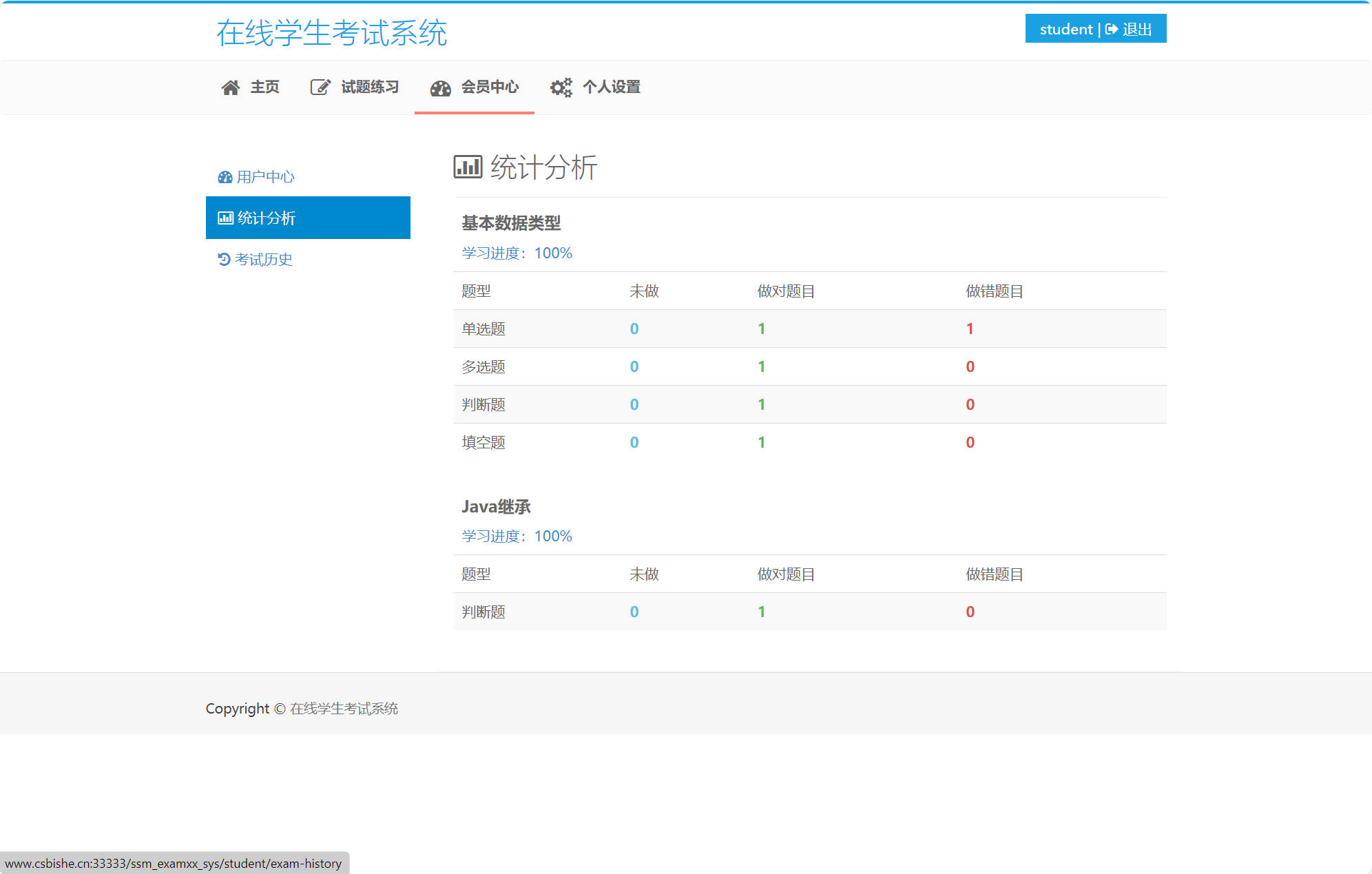
成绩分析模块提供多维度的统计功能:
@Controller
@RequestMapping("/analysis")
public class AnalysisController {

    @RequestMapping(value = "/exam/{examId}", method = RequestMethod.GET)
    public String getExamAnalysis(@PathVariable Integer examId, Model model) {
        // 考试成绩分布统计
        ScoreDistribution distribution = analysisService.getScoreDistribution(examId);
        model.addAttribute("distribution", distribution);

        // 题目正确率分析
        List<QuestionAccuracy> accuracies = analysisService.getQuestionAccuracy(examId);
        model.addAttribute("accuracies", accuracies);

        // 知识点掌握情况
        Map<Integer, Double> knowledgePointMastery = analysisService.getKnowledgePointMastery(examId);
        model.addAttribute("mastery", knowledgePointMastery);

        return "analysis/exam-detail";
    }
}
4. 权限管理与多租户支持
系统采用基于角色的访问控制(RBAC)模型,支持多租户数据隔离:
@Component
public class CustomUserDetailsService implements UserDetailsService {

    @Autowired
    private UserService userService;

    @Override
    public UserDetails loadUserByUsername(String username) throws UsernameNotFoundException {
        User user = userService.getUserByUsername(username);
        if (user == null) {
            throw new UsernameNotFoundException("用户不存在");
        }

        // 获取用户角色和权限
        List<GrantedAuthority> authorities = getAuthorities(user);

        return new UserInfo(
            user.getUsername(),
            user.getPassword(),
            user.getEnabled(),
            true, true, true,
            authorities,
            user.getTruename(),
            user.getFieldId()
        );
    }

    private List<GrantedAuthority> getAuthorities(User user) {
        List<GrantedAuthority> authorities = new ArrayList<>();

        // 根据用户类型添加角色
        if (user.getUserType() == UserType.ADMIN) {
            authorities.add(new SimpleGrantedAuthority("ROLE_ADMIN"));
            authorities.add(new SimpleGrantedAuthority("ROLE_TEACHER"));
            authorities.add(new SimpleGrantedAuthority("ROLE_STUDENT"));
        } else if (user.getUserType() == UserType.TEACHER) {
            authorities.add(new SimpleGrantedAuthority("ROLE_TEACHER"));
            authorities.add(new SimpleGrantedAuthority("ROLE_STUDENT"));
        } else {
            authorities.add(new SimpleGrantedAuthority("ROLE_STUDENT"));
        }

        return authorities;
    }
}
Spring Security配置实现细粒度权限控制:
@Configuration
@EnableWebSecurity
public class SecurityConfig extends WebSecurityConfigurerAdapter {

    @Override
    protected void configure(HttpSecurity http) throws Exception {
        http.authorizeRequests()
            .antMatchers("/admin/**").hasRole("ADMIN")
            .antMatchers("/teacher/**").hasAnyRole("TEACHER", "ADMIN")
            .antMatchers("/student/**").hasAnyRole("STUDENT", "TEACHER", "ADMIN")
            .antMatchers("/public/**").permitAll()
            .anyRequest().authenticated()
            .and()
            .formLogin()
            .loginPage("/login")
            .defaultSuccessUrl("/home")
            .permitAll()
            .and()
            .logout()
            .logoutSuccessUrl("/login")
            .permitAll();
    }
}
实体模型设计精要
系统采用领域驱动设计(DDD)思想,核心实体模型关系清晰:
// 试题实体
@Entity
@Table(name = "et_question")
public class Question {
    @Id
    @GeneratedValue(strategy = GenerationType.IDENTITY)
    private Integer id;

    private String title;
    private String content;
    private QuestionType questionType;
    private Float point;

    @ManyToOne
    @JoinColumn(name = "knowledge_point_id")
    private KnowledgePoint knowledgePoint;

    @ManyToMany
    @JoinTable(name = "et_question_tag",
        joinColumns = @JoinColumn(name = "question_id"),
        inverseJoinColumns = @JoinColumn(name = "tag_id"))
    private Set<Tag> tags;

    // 复杂题目的子问题关系
    @OneToMany(mappedBy = "parentQuestion", cascade = CascadeType.ALL)
    private List<Question> subQuestions;
}

// 考试记录实体
@Entity
@Table(name = "et_user_exam_history")
public class UserExamHistory {
    @Id
    @GeneratedValue(strategy = GenerationType.IDENTITY)
    private Integer id;

    @ManyToOne
    @JoinColumn(name = "user_id")
    private User user;

    @ManyToOne
    @JoinColumn(name = "exam_paper_id")
    private ExamPaper examPaper;

    @Lob
    private String answerSheet; // JSON格式的答题卡

    private Integer duration;
    private Float pointGet;

    @Temporal(TemporalType.TIMESTAMP)
    private Date submitTime;
}