基于SSM框架的酒店餐厅在线点餐系统 - 源码深度解析
在酒店餐饮行业数字化转型的浪潮中,传统人工点餐模式已无法满足现代酒店对运营效率和用户体验的双重要求。传统方式普遍存在菜单信息更新滞后、高峰期订单处理效率低下、数据统计分析困难等痛点。通过构建基于SSM框架的在线点餐系统,酒店能够实现业务流程的标准化和数字化,显著提升服务质量和运营效率。
系统架构与技术栈
本系统采用业界成熟的SSM(Spring + Spring MVC + MyBatis)框架组合,体现了经典的分层架构设计理念:
核心技术组件
- Spring框架:作为核心控制容器,通过依赖注入(DI)和面向切面编程(AOP)机制管理业务对象生命周期,有效降低模块间耦合度
- Spring MVC:负责Web层请求分发,实现清晰的MVC分离模式,提供灵活的URL映射和视图解析
- MyBatis:作为轻量级持久层框架,通过灵活的SQL映射配置提供高效的数据访问能力,支持动态SQL和缓存优化
项目构建与前端技术
- Maven:进行项目依赖管理和构建自动化,确保第三方库版本一致性
- 前端技术栈:采用HTML5、CSS3和原生JavaScript构建响应式用户界面
- 数据库:MySQL 5.7+,支持事务处理和并发访问
系统分层架构
实体层(Entity) → 数据访问层(DAO) → 业务逻辑层(Service) → Web表现层(Controller)
这种分层设计确保了代码的高内聚、低耦合,便于团队协作和后期维护扩展。
数据库设计亮点分析
商品表(product)的设计优化
CREATE TABLE `product` (
  `pid` int(11) NOT NULL AUTO_INCREMENT COMMENT '商品ID',
  `pname` varchar(255) NOT NULL COMMENT '商品名称',
  `market_price` double DEFAULT NULL COMMENT '市场价',
  `shop_price` double NOT NULL COMMENT '商城价',
  `image` varchar(255) DEFAULT NULL COMMENT '商品图片',
  `pdesc` varchar(5000) DEFAULT NULL COMMENT '商品描述',
  `is_hot` int(11) DEFAULT NULL COMMENT '是否热销',
  `pdate` timestamp NULL DEFAULT NULL COMMENT '上架时间',
  `csid` int(11) DEFAULT NULL COMMENT '二级分类ID',
  `state` int(11) DEFAULT NULL COMMENT '商品状态',
  PRIMARY KEY (`pid`),
  KEY `FKED8DCCEF5F778050` (`csid`),
  CONSTRAINT `FKED8DCCEF5F778050` FOREIGN KEY (`csid`) REFERENCES `categorysecond` (`csid`)
) ENGINE=InnoDB AUTO_INCREMENT=72 DEFAULT CHARSET=utf8 COLLATE=utf8_general_ci COMMENT='商品表'
设计亮点分析:
- 性能优化:使用自增主键
pid提高插入性能,避免页分裂 - 业务适应性:
pdesc字段设置为5000长度,充分满足详细菜品描述需求 - 营销支持:
is_hot标志位支持热销商品快速筛选和推荐 - 数据完整性:外键约束确保分类数据的引用完整性
- 事务安全:InnoDB引擎保障ACID特性,特别适合订单处理场景
订单项表(orderitem)的关系设计
CREATE TABLE `orderitem` (
  `oiid` int(11) NOT NULL AUTO_INCREMENT COMMENT '订单项ID',
  `count` int(11) NOT NULL COMMENT '数量',
  `subtotal` double DEFAULT NULL COMMENT '小计金额',
  `pid` int(11) NOT NULL COMMENT '商品ID',
  `oid` int(11) NOT NULL COMMENT '订单ID',
  PRIMARY KEY (`oiid`),
  KEY `FKE8B2AB61E818A405` (`oid`),
  KEY `FKE8B2AB6173B4E627` (`pid`),
  CONSTRAINT `FKE8B2AB6173B4E627` FOREIGN KEY (`pid`) REFERENCES `product` (`pid`),
  CONSTRAINT `FKE8B2AB61E818A405` FOREIGN KEY (`oid`) REFERENCES `orders` (`oid`)
) ENGINE=InnoDB AUTO_INCREMENT=40 DEFAULT CHARSET=utf8 COLLATE=utf8_general_ci COMMENT='订单项表'
设计亮点分析:
- 关系建模:采用双外键设计,完美实现订单与商品的多对多关系
- 性能优化:
subtotal字段预存计算金额,避免查询时重复计算开销 - 索引策略:复合索引优化订单详情查询性能,支持快速关联检索
- 扩展性:支持订单拆分和合并操作,满足复杂业务场景
购物车项表(shopcartitem)的会话管理
CREATE TABLE `shopcartitem` (
  `cartitemid` int(11) NOT NULL AUTO_INCREMENT COMMENT '购物车项ID',
  `uid` int(11) DEFAULT NULL COMMENT '用户ID',
  `pid` int(11) DEFAULT NULL COMMENT '商品ID',
  `pcount` int(11) DEFAULT NULL COMMENT '商品数量',
  `price` double DEFAULT NULL COMMENT '商品单价',
  `image` varchar(255) DEFAULT NULL COMMENT '商品图片',
  `ptotal` double DEFAULT NULL COMMENT '商品总价',
  `pname` varchar(255) DEFAULT NULL COMMENT '商品名称',
  PRIMARY KEY (`cartitemid`)
) ENGINE=InnoDB DEFAULT CHARSET=utf8 COLLATE=utf8_general_ci COMMENT='购物车项表'
设计亮点分析:
- 反范式设计:存储商品名称、图片等冗余信息,大幅减少表连接查询
- 性能提升:购物车页面渲染无需多表关联,响应速度提升明显
- 用户体验:支持用户跨会话保存购物车内容,避免数据丢失
- 数据一致性:通过业务逻辑确保冗余数据同步更新
核心功能实现解析
管理员商品管理功能
系统提供完整的商品CRUD操作,管理员可对菜品信息进行全面管理。商品管理界面采用表格形式展示关键数据,支持条件筛选和分页显示。
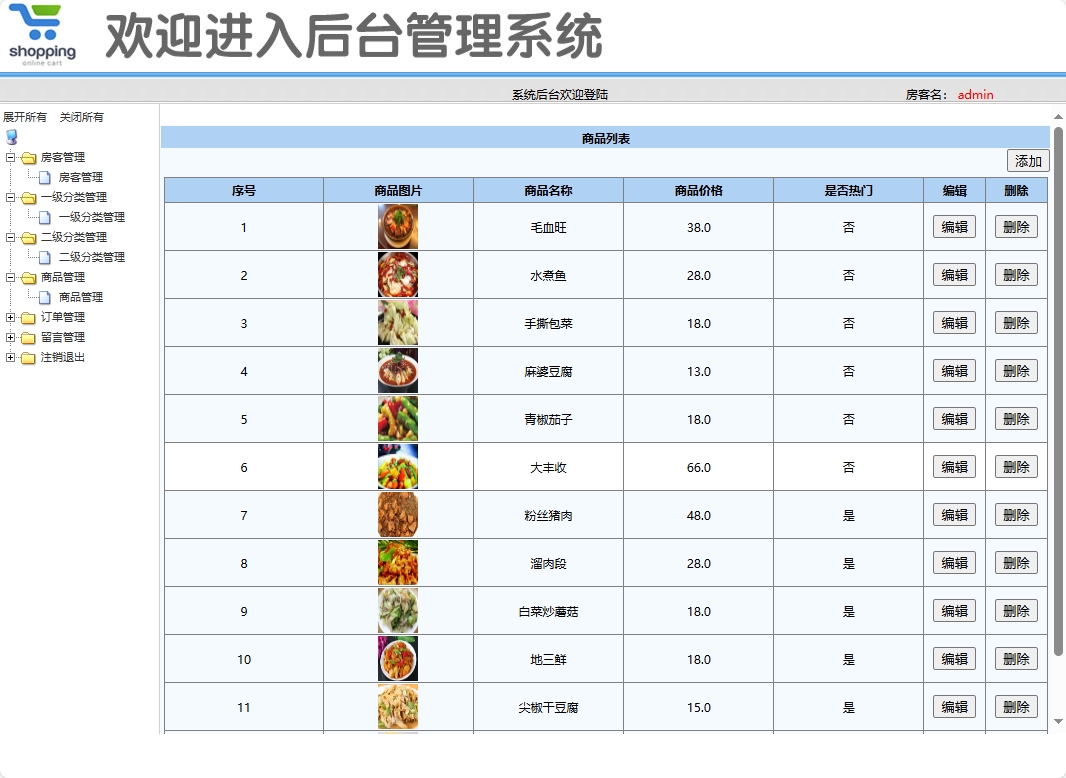
商品添加功能的控制器实现:
@RequestMapping("/admin/adminProduct_save")
public String adminProduct_save(@RequestParam MultipartFile upload,
                               Product product, HttpServletRequest request) throws Exception {
    // 管理员权限验证
    Adminuser adminuserLogin = (Adminuser) request.getSession().getAttribute("adminuserLogin");
    if(adminuserLogin == null){
        request.getSession().setAttribute("message", "对不起您还没有登录");
        return "admin/index";
    }

    // 文件上传处理逻辑
    if(upload != null && !upload.isEmpty()){
        String path = request.getSession().getServletContext().getRealPath("/products");
        String uuidname = UUIDUtiils.getUUIDFileName(upload.getOriginalFilename());
        File file = new File(path, uuidname);
        upload.transferTo(file);
        product.setImage("products/" + uuidname);
    }

    // 设置商品上架时间
    product.setPdate(new Date());
    productService.adminProduct_save(product);
    return "redirect:adminCategorySecond_findAll?page=1";
}
技术实现要点:
- 文件上传:采用Spring MVC的MultipartFile处理文件上传,支持大文件分块传输
- 安全命名:使用UUID重命名文件,避免文件名冲突和安全风险
- 事务管理:通过声明式事务确保数据一致性
- 异常处理:完整的异常处理机制,保证系统稳定性
用户购物车功能
购物车功能提供直观的商品添加、数量修改和删除操作,实时计算总金额,提升用户购物体验。
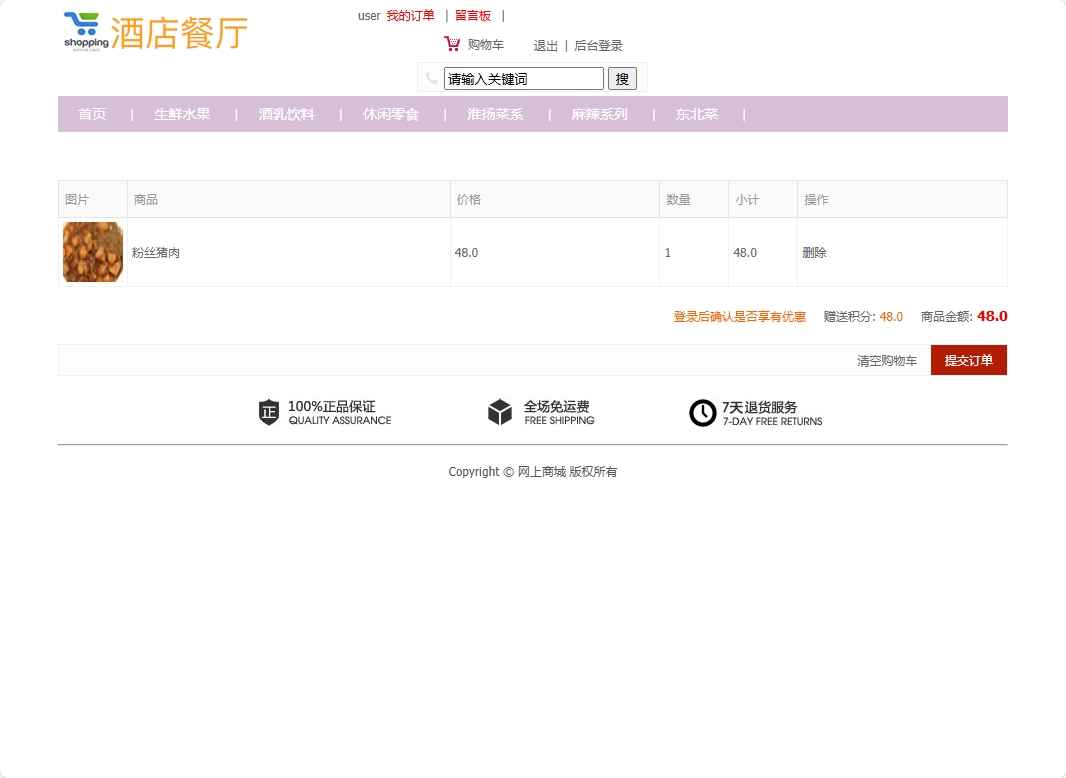
购物车项添加的核心业务逻辑:
@Service
public class ShopCartServiceImpl implements ShopCartService {
    @Autowired
    private ShopCartItemMapper shopCartItemMapper;
    @Autowired
    private ProductMapper productMapper;

    @Override
    @Transactional
    public void addToCart(Integer uid, Integer pid, Integer count) {
        // 商品存在性验证
        Product product = productMapper.selectByPrimaryKey(pid);
        if(product == null) {
            throw new RuntimeException("商品不存在");
        }

        // 检查购物车中是否已存在该商品
        ShopCartItem existItem = shopCartItemMapper.selectByUidAndPid(uid, pid);
        if(existItem != null) {
            // 更新商品数量
            existItem.setPcount(existItem.getPcount() + count);
            // 更新总价
            existItem.setPtotal(existItem.getPcount() * existItem.getPrice());
            shopCartItemMapper.updateByPrimaryKey(existItem);
        } else {
            // 创建新的购物车项
            ShopCartItem newItem = new ShopCartItem();
            newItem.setUid(uid);
            newItem.setPid(pid);
            newItem.setPcount(count);
            newItem.setPrice(product.getShop_price());
            newItem.setPname(product.getPname());
            newItem.setImage(product.getImage());
            newItem.setPtotal(count * product.getShop_price());
            shopCartItemMapper.insert(newItem);
        }
    }
}
技术实现亮点:
- 事务一致性:使用
@Transactional注解确保购物车操作的原子性 - 业务逻辑封装:将复杂的购物车逻辑封装在Service层,保持Controller简洁
- 性能优化:通过存在性检查避免不必要的数据库操作
- 数据同步:实时更新价格信息,确保金额计算准确性
该系统通过精心的架构设计和代码实现,为酒店餐饮行业提供了稳定、高效的在线点餐解决方案,具有良好的可扩展性和维护性。