基于SSM框架的酒店信息管理平台 - 源码深度解析
在酒店行业数字化转型的浪潮中,传统的手工记录和分散式管理方式已难以满足现代酒店高效运营的需求。信息孤岛、数据不一致、操作流程繁琐等问题严重制约了酒店服务质量的提升和管理效率的优化。为此,我们设计并实现了一套企业级酒店智能管理平台,通过技术手段为中小型酒店提供全方位的数字化解决方案。
系统架构与技术栈
该平台采用经典的SSM(Spring + Spring MVC + MyBatis)框架组合,构建了清晰的三层架构体系:
后端技术架构
- Spring框架:作为核心IoC容器,通过依赖注入机制管理所有业务逻辑层和数据访问层组件的生命周期,同时提供声明式事务管理
- Spring MVC:基于前端控制器模式,通过配置的控制器接收前端请求并调用相应服务,实现请求-响应模型的优雅解耦
- MyBatis:作为ORM框架,通过灵活的XML映射文件实现Java对象与数据库表的高效映射,支持动态SQL和复杂的查询优化
前端与工程化技术
- 前端技术:采用JSP结合JSTL标签库实现动态页面渲染,配合jQuery库提供丰富的客户端交互体验
- 项目管理:使用Maven进行依赖管理和项目构建,确保第三方库版本的一致性和可维护性
- 数据库:MySQL 5.7版本,支持事务处理和存储过程,保证数据的一致性和完整性
数据库设计亮点
核心表结构设计
酒店信息表(t_classroom)设计分析
CREATE TABLE `t_classroom` (
  `id` int(11) NOT NULL AUTO_INCREMENT COMMENT '主键ID',
  `t_name` varchar(255) DEFAULT NULL COMMENT '酒店名称',
  `t_location` varchar(255) DEFAULT NULL COMMENT '酒店位置',
  `t_capacity` int(11) DEFAULT NULL COMMENT '客房个数',
  `t_tel` varchar(255) DEFAULT NULL COMMENT '联系电话',
  `t_bz` longtext DEFAULT NULL COMMENT '备注',
  `addTime` datetime DEFAULT NULL COMMENT '插入数据库时间',
  PRIMARY KEY (`id`)
) ENGINE=InnoDB AUTO_INCREMENT=4 DEFAULT CHARSET=utf8mb4 COLLATE=utf8mb4_unicode_ci COMMENT='教室管理表'
该表设计体现了良好的数据库规范化理念:
- 主键设计:
id字段采用自增主键策略,确保数据唯一性和查询性能 - 字段类型优化:
t_name和t_location使用varchar(255)类型,充分考虑了酒店名称和地址信息的实际长度需求 - 数值存储:
t_capacity使用int类型准确记录客房数量,支持数值运算和统计 - 大文本处理:
t_bz字段采用longtext类型,为酒店备注信息提供了充足的存储空间 - 审计追踪:
addTime字段自动记录数据创建时间,便于数据审计和操作追踪
用户信息表(t_user)的扩展性设计
CREATE TABLE `t_user` (
  `id` int(11) NOT NULL AUTO_INCREMENT COMMENT '主键ID',
  `u_username` varchar(255) DEFAULT NULL COMMENT '用户名',
  `u_password` varchar(255) DEFAULT NULL COMMENT '密码',
  `u_name` varchar(255) DEFAULT NULL COMMENT '姓名',
  `u_birthday` varchar(255) DEFAULT NULL COMMENT '生日',
  `u_sex` varchar(255) DEFAULT NULL COMMENT '性别',
  `u_tel` varchar(255) DEFAULT NULL COMMENT '电话',
  `u_qq` varchar(255) DEFAULT NULL COMMENT 'QQ',
  `u_phone` varchar(255) DEFAULT NULL COMMENT '手机号',
  `u_jg` varchar(255) DEFAULT NULL COMMENT '籍贯',
  `u_address` varchar(255) DEFAULT NULL COMMENT '地址',
  `u_bm` varchar(255) DEFAULT NULL COMMENT '部门',
  `u_type` varchar(255) DEFAULT NULL COMMENT '用户类型',
  `u_by_1` int(11) DEFAULT NULL COMMENT '备用字段1',
  `u_by_2` varchar(255) DEFAULT NULL COMMENT '备用字段2',
  `u_by_3` varchar(255) DEFAULT NULL COMMENT '备用字段3',
  `u_bz` varchar(255) DEFAULT NULL COMMENT '备注',
  `u_photo` varchar(255) DEFAULT NULL COMMENT '照片路径',
  `u_percent` varchar(255) DEFAULT NULL COMMENT '权限比例',
  PRIMARY KEY (`id`)
) ENGINE=InnoDB AUTO_INCREMENT=3 DEFAULT CHARSET=utf8mb4 COLLATE=utf8mb4_unicode_ci COMMENT='用户信息表'
用户表的设计充分考虑了系统的扩展性和安全性:
- 扩展性设计:提供
u_by_1、u_by_2、u_by_3三个备用字段,为未来功能扩展预留了充足空间 - 角色管理:
u_type字段支持多角色管理(管理员、前台、客房部等),实现细粒度权限控制 - 权限机制:
u_percent字段实现灵活的权限控制机制,支持权限的动态分配和调整 - 用户体验:
u_photo字段存储用户头像路径,提升系统界面友好度 - 安全考虑:密码字段采用适当的数据类型,为后续加密处理提供基础
核心功能实现
酒店信息管理模块
酒店信息管理是系统的核心功能,通过ClassRoomController实现完整的CRUD操作。以下是控制器中的关键方法实现:
@Controller
@RequestMapping(value = "ClassRoom")
public class ClassRoomController {
    @Autowired
    private ClassRoomService classRoomService;

    /**
     * 初始化页面请求处理
     */
    @RequestMapping(value = "/initPage.do")
    public String initPage(HttpServletRequest request, Model model) {
        return "ClassRoom/saveOrUpdate";
    }

    /**
     * 根据ID查询酒店详细信息
     */
    @RequestMapping(value = "/selectList.do")
    public String selectList(HttpServletRequest request, ClassRoom classRoom, Model model) {
        classRoom = classRoomService.getById(classRoom.getId());
        model.addAttribute("util", classRoom);
        return "ClassRoom/saveOrUpdate";
    }

    /**
     * 分页查询酒店数据
     */
    @SuppressWarnings({ "rawtypes", "unchecked" })
    @RequestMapping(value = "/getAllDataInPage.do")
    public String getAllDataInPage(HttpServletRequest request, Model model) {
        String field = request.getParameter("field");
        String fieldValue = request.getParameter("fieldValue");
        try {
            fieldValue = new String(fieldValue.getBytes("UTF-8"), "UTF-8");
        } catch (Exception e) {}
        String pageNo = request.getParameter("pageModel.currentPageNo");
        int currentPageNo = 1;
        // 分页逻辑处理...
    }
}
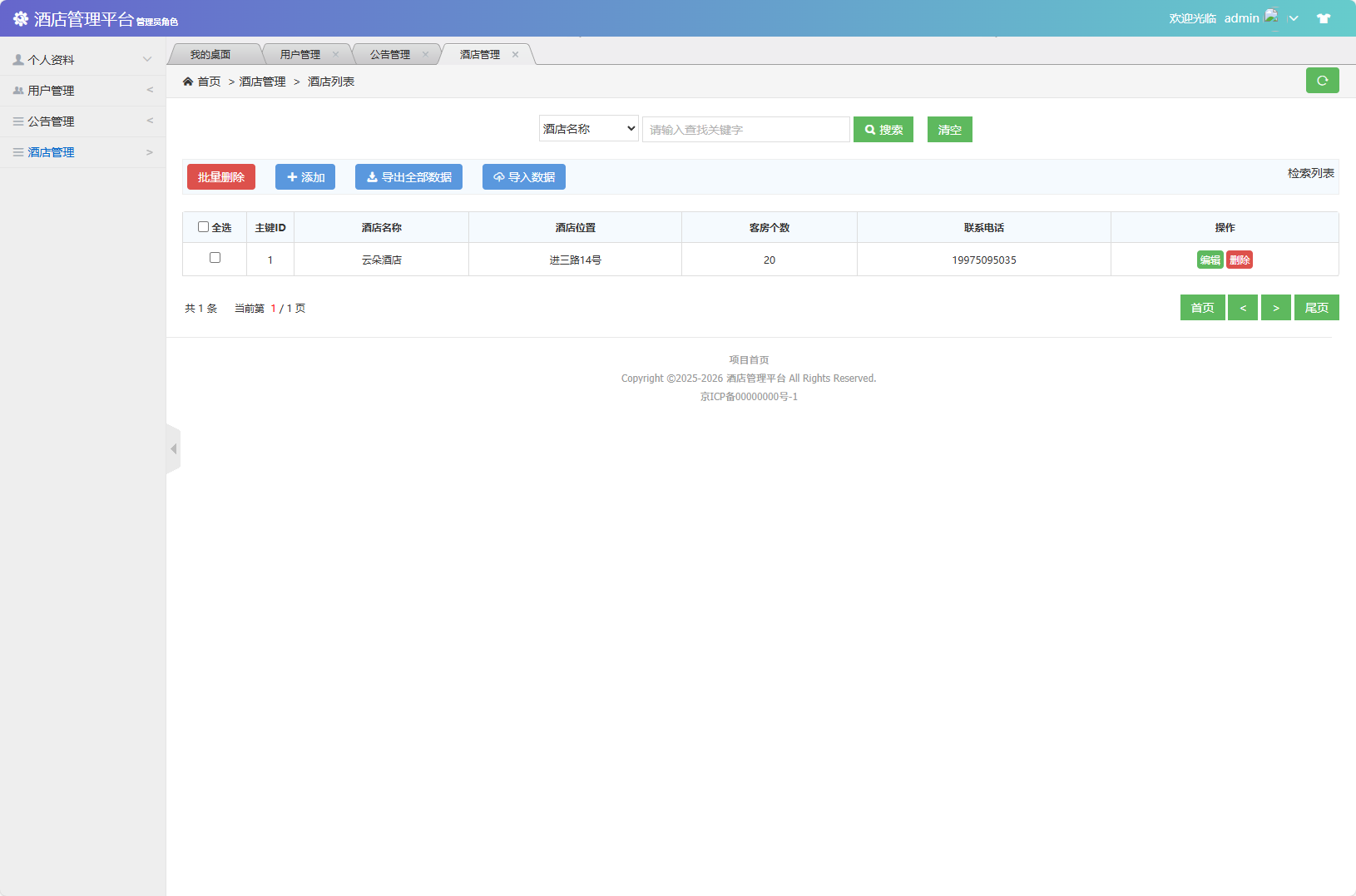
功能特色:
- 支持酒店信息的完整CRUD操作
- 界面设计符合用户体验原则,操作直观便捷
- 管理员可以快速添加新酒店、修改现有信息、查询特定酒店详情
- 采用响应式设计,适配不同设备屏幕
用户权限管理
系统实现了完善的用户权限管理体系,通过UserService提供用户认证和授权功能:
@Autowired
private UserService userService;

/**
 * 用户登录认证处理
 */
@RequestMapping(value = "/userLogin.do")
public String userLogin(HttpServletRequest request, User user, Model model) {
    User loginUser = userService.login(user.getU_username(), user.getU_password());
    if(loginUser != null) {
        request.getSession().setAttribute("user", loginUser);
        return "redirect:/main.jsp";
    } else {
        model.addAttribute("msg", "用户名或密码错误");
        return "login";
    }
}
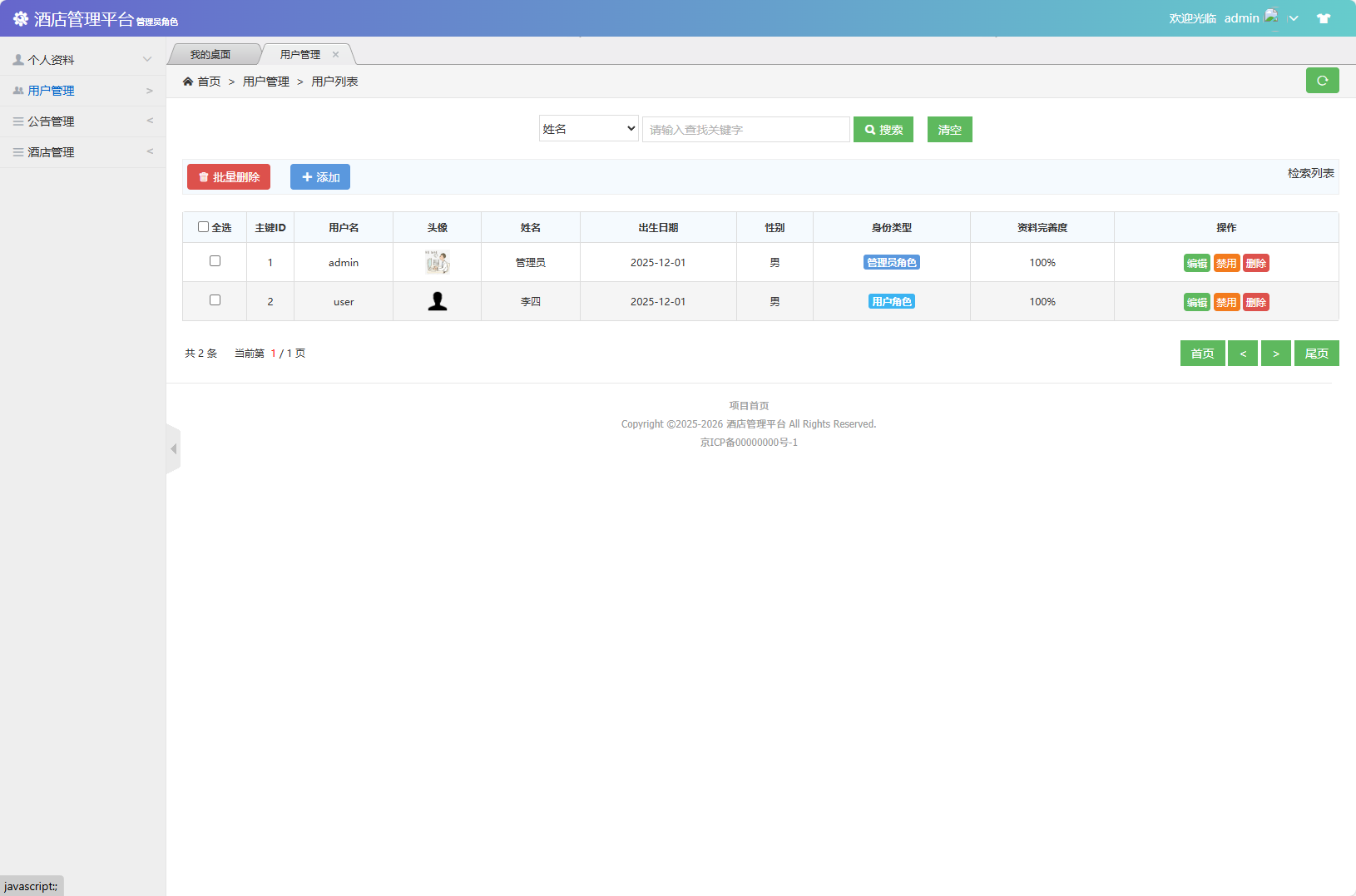
权限管理特性:
- 基于角色的访问控制(RBAC)模型
- 支持多角色分配和权限继承
- 会话管理确保系统安全性
- 细粒度的操作权限控制
公告信息管理
公告管理功能通过GonggaoController实现,支持公告的发布、修改和查看:
@RequestMapping(value = "/saveOrUpdate.do")
public String saveOrUpdate(HttpServletRequest request, Gonggao gonggao, Model model) {
    if(gonggao.getId() == null) {
        gonggao.setAddTime(new Date());
        // 新增公告逻辑
    } else {
        // 更新公告逻辑
    }
    // 业务处理...
}
技术实现亮点:
- 使用Spring MVC的自动数据绑定功能
- 实现统一异常处理机制
- 支持富文本编辑和多媒体内容
- 提供公告状态管理和发布控制
系统特色与优势
架构设计优势
- 分层清晰:严格遵循MVC模式,各层职责明确,便于维护和扩展
- 松耦合设计:通过Spring IoC容器管理对象依赖,提高代码可测试性
- 可扩展性强:模块化设计支持功能插拔,便于二次开发
性能优化措施
- 数据库连接池配置优化
- MyBatis二级缓存机制
- 前端资源压缩和合并
- 静态资源CDN加速支持
安全特性
- SQL注入防护
- XSS攻击防范
- 会话超时管理
- 操作日志记录
该系统为中小型酒店提供了完整的数字化管理解决方案,具有良好的实用性和推广价值。