基于SSM框架的企业人事薪酬管理系统 - 源码深度解析
在数字化转型浪潮席卷各行各业的今天,企业人力资源管理正经历着从传统手工操作向智能化、系统化管理的深刻变革。人事薪酬管理作为企业运营的核心环节,其效率与准确性直接关系到企业的成本控制和员工满意度。传统基于Excel的手工管理模式已无法满足现代企业对数据实时性、准确性和安全性的要求,存在数据孤岛、版本混乱、易出错等痛点。
为此,我们设计并实现了一套基于SSM框架的企业级人力资源与薪酬管理平台。该系统将人事档案管理、考勤记录、绩效评估与工资核算等核心业务流程进行一体化整合,通过数字化手段为企业提供全面、高效的管理解决方案。
系统架构与技术栈深度剖析
技术选型 rationale
该平台采用业界经典的MVC分层架构设计,技术栈选择兼顾成熟度与扩展性:
后端技术栈:
- 核心框架:Spring 5.2.8 + Spring MVC + MyBatis 3.5(SSM组合)
- 项目构建:Maven 3.6+,实现依赖管理和构建标准化
- 模板引擎:Freemarker,支持动态页面渲染
- 数据库:MySQL 5.7,具备良好的事务支持性能
前端技术栈:
- 基础技术:HTML5 + CSS3 + JavaScript ES6+
- UI框架:Bootstrap 4.x,确保响应式布局
- 交互增强:jQuery + Ajax,实现异步数据交互
四层架构设计详解
<!-- Maven核心依赖配置 -->
<dependencies>
    <!-- Spring MVC Web支持 -->
    <dependency>
        <groupId>org.springframework</groupId>
        <artifactId>spring-webmvc</artifactId>
        <version>5.2.8.RELEASE</version>
    </dependency>
    <!-- MyBatis-Spring整合 -->
    <dependency>
        <groupId>org.mybatis</groupId>
        <artifactId>mybatis-spring</artifactId>
        <version>2.0.5</version>
    </dependency>
    <!-- MySQL数据库驱动 -->
    <dependency>
        <groupId>mysql</groupId>
        <artifactId>mysql-connector-java</artifactId>
        <version>8.0.21</version>
    </dependency>
</dependencies>
架构层次职责分明:
持久层(DAO层)
- 采用MyBatis实现对象关系映射(ORM)
- XML映射文件管理SQL语句,支持动态SQL
- 提供类型别名、结果集映射等高级特性
业务层(Service层)
- Spring框架管理业务逻辑Bean
- 声明式事务管理(@Transactional)
- 依赖注入(DI)实现组件解耦
控制层(Controller层)
- Spring MVC处理HTTP请求路由
- RESTful风格API设计
- 参数绑定、数据验证、异常处理
视图层(View层)
- Freemarker模板引擎渲染动态页面
- 前后端分离架构支持
- 响应式设计适配多终端
数据库设计亮点与业务建模
薪酬表(salary)架构设计深度解析
作为系统的核心业务表,薪酬表的设计体现了复杂业务规则的数据建模能力:
CREATE TABLE `salary` (
  `s_id` int(11) NOT NULL AUTO_INCREMENT COMMENT '主键ID',
  `e_id` int(11) DEFAULT NULL COMMENT '员工id',
  `d_id` int(11) DEFAULT NULL COMMENT '部门ID',
  `s_time` date DEFAULT NULL COMMENT '薪酬所属年月',
  `s_state` int(11) DEFAULT NULL COMMENT '状态:0暂存,1已发放',
  `base_pay` double(11,2) DEFAULT NULL COMMENT '基本工资',
  `food_pay` double(11,2) DEFAULT NULL COMMENT '餐饮补贴',
  `post_pay` double(11,2) DEFAULT NULL COMMENT '岗位补贴',
  `working_year_pay` double(11,2) DEFAULT NULL COMMENT '工龄奖金',
  `overtime_pay` double(11,2) DEFAULT NULL COMMENT '加班工资',
  `attendance_award` double(11,2) DEFAULT NULL COMMENT '全勤奖',
  `other_allowance` double(11,2) DEFAULT NULL COMMENT '其他补贴',
  `social_security` double(11,2) DEFAULT NULL COMMENT '社保扣款',
  `housing_fund` double(11,2) DEFAULT NULL COMMENT '公积金扣款',
  `individual_income_tax` double(11,2) DEFAULT NULL COMMENT '个人所得税',
  `should_pay` double(11,2) DEFAULT NULL COMMENT '应发工资',
  `actual_pay` double(11,2) DEFAULT NULL COMMENT '实发工资',
  PRIMARY KEY (`s_id`) USING BTREE,
  KEY `idx_employee_department` (`e_id`,`d_id`),
  KEY `idx_time` (`s_time`)
) ENGINE=InnoDB AUTO_INCREMENT=33 DEFAULT CHARSET=utf8mb4 COLLATE=utf8mb4_unicode_ci ROW_FORMAT=DYNAMIC;
设计亮点与技术考量:
财务精度保障
- 所有金额字段采用
double(11,2)类型,确保小数点后两位精度 - 符合会计准则要求,避免浮点数计算误差
- 所有金额字段采用
业务流程状态管理
s_state字段实现工资单状态机流转(0:暂存 → 1:已发放)- 支持多级审批流程扩展
时间维度设计
s_time字段记录薪酬所属期间,支持历史数据追溯- 便于生成月度、年度薪酬报表和趋势分析
性能优化策略
- 主键采用自增ID,提高插入性能
- 建立复合索引
(e_id, d_id)和单列索引(s_time) - 使用
utf8mb4字符集支持emoji等特殊字符
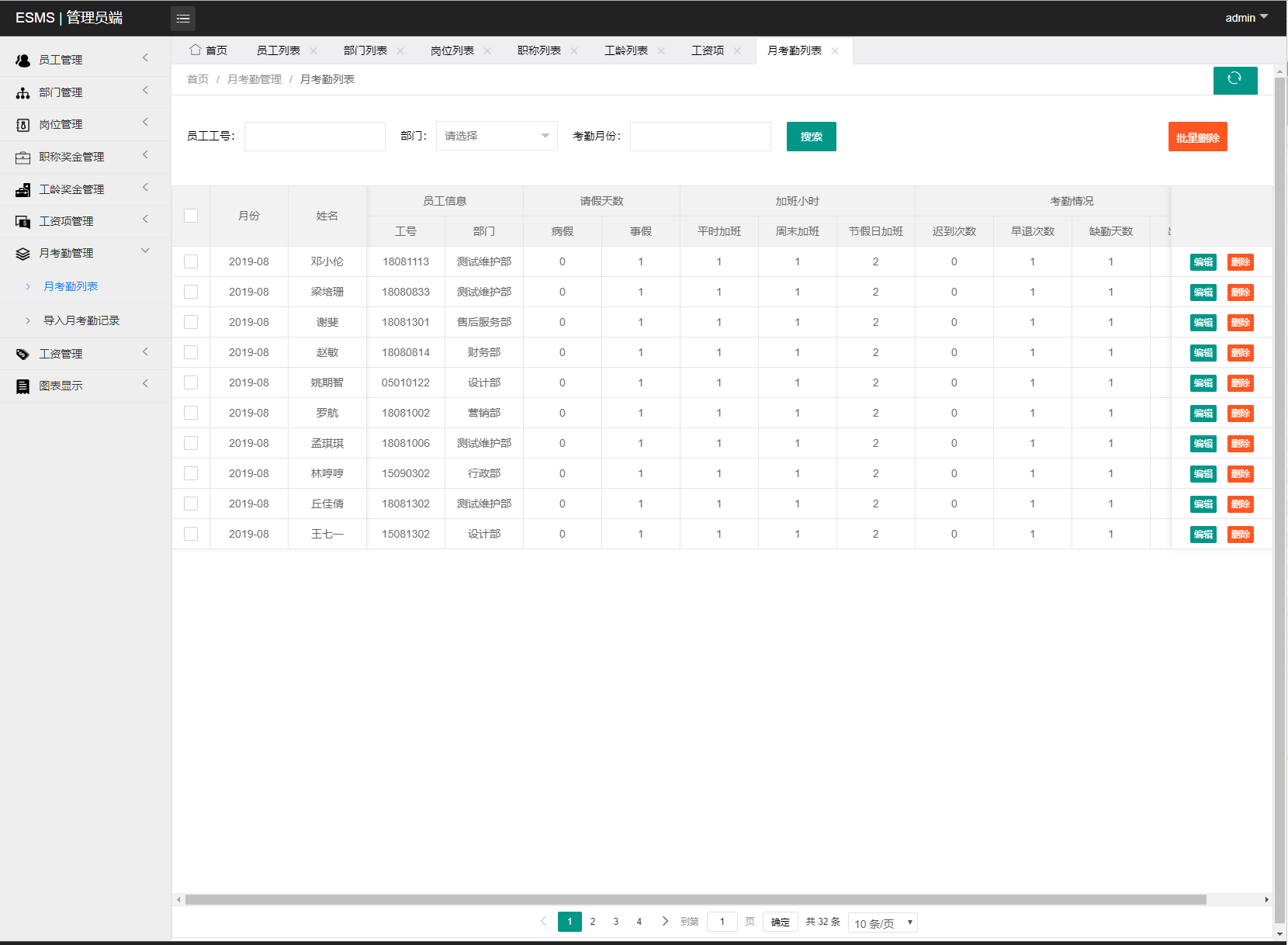
月度考勤表(monthly_attendance)业务建模
CREATE TABLE `monthly_attendance` (
  `ma_id` int(11) NOT NULL AUTO_INCREMENT COMMENT '主键ID',
  `e_id` int(11) DEFAULT NULL COMMENT '员工id(外键关联employee表)',
  `attendance_time` date DEFAULT NULL COMMENT '考勤统计月份',
  `sick_leave_num` int(11) DEFAULT '0' COMMENT '病假天数',
  `overtime_hour` double(11,2) DEFAULT '0.00' COMMENT '平时加班小时数',
  `weekend_hour` double(11,2) DEFAULT '0.00' COMMENT '周末加班小时数',
  `holiday_hour` double(11,2) DEFAULT '0.00' COMMENT '节假日加班小时数',
  `late_num` int(11) DEFAULT '0' COMMENT '迟到次数',
  `early_num` int(11) DEFAULT '0' COMMENT '早退次数',
  `absence_num` int(11) DEFAULT '0' COMMENT '缺勤天数',
  `business_travel_num` int(11) DEFAULT '0' COMMENT '出差天数',
  `compassionate_leave_num` int(11) DEFAULT '0' COMMENT '事假天数',
  `actual_work_days` int(11) DEFAULT '0' COMMENT '实际出勤天数',
  `created_time` datetime DEFAULT CURRENT_TIMESTAMP COMMENT '记录创建时间',
  `updated_time` datetime DEFAULT CURRENT_TIMESTAMP ON UPDATE CURRENT_TIMESTAMP COMMENT '最后更新时间',
  PRIMARY KEY (`ma_id`),
  UNIQUE KEY `uk_employee_month` (`e_id`, `attendance_time`),
  KEY `idx_month` (`attendance_time`)
) ENGINE=InnoDB DEFAULT CHARSET=utf8mb4 COLLATE=utf8mb4_unicode_ci;
业务逻辑深度解析:
精细化考勤分类体系
- 加班时间按劳动法要求细分为三类差异化计算
- 请假类型完整覆盖各种法定假期和特殊情况
数据完整性保障
- 唯一约束防止同一员工月度数据重复
- 时间戳字段跟踪数据变更历史
性能与扩展平衡
- 月度汇总模式优化查询性能
- 预留字段支持未来考勤规则变化
核心功能模块实现详解
1. 部门管理模块设计与实现
部门管理作为组织架构的基础模块,采用标准的CRUD操作模式,结合高级查询和业务校验:
@Controller
@RequestMapping("/department")
public class DepartmentController {

    @Autowired
    private DepartmentService departmentService;

    /**
     * 分页条件查询部门信息
     * 支持按部门名称模糊查询
     *
     * @param pageNum 当前页码,默认1
     * @param limit 每页记录数,默认5
     * @param d_name 部门名称查询条件
     * @return 分页结果封装对象
     */
    @RequestMapping(value = "/findSelective.do", method = RequestMethod.GET)
    @ResponseBody
    public ResponseResult<Department> findSelective(
            @RequestParam(value = "page", defaultValue = "1") int pageNum,
            @RequestParam(value = "limit", defaultValue = "5") int limit,
            @RequestParam(value = "d_name", defaultValue = "") String d_name) {

        try {
            // 构建查询条件
            Department queryCondition = new Department();
            queryCondition.setdName(d_name.trim());

            // PageHelper分页插件配置
            PageHelper.startPage(pageNum, limit);
            List<Department> departmentList = departmentService.findByCondition(queryCondition);
            PageInfo<Department> pageInfo = new PageInfo<>(departmentList);

            // 构建前端需要的标准化响应格式
            return ResponseResult.success(pageInfo.getList(), pageInfo.getTotal());

        } catch (Exception e) {
            logger.error("部门查询异常: {}", e.getMessage(), e);
            return ResponseResult.error("查询失败,请稍后重试");
        }
    }

    /**
     * 新增部门信息
     * 包含重复性校验和业务规则验证
     *
     * @param d_name 部门名称
     * @param d_remark 部门描述
     * @return 操作结果代码
     */
    @RequestMapping(value = "/add.do", method = RequestMethod.POST)
    @ResponseBody
    public ResponseResult<Integer> addDepartment(
            @RequestParam String d_name,
            @RequestParam(required = false) String d_remark) {

        // 参数有效性验证
        if (StringUtils.isBlank(d_name)) {
            return ResponseResult.error("部门名称不能为空");
        }

        try {
            // 重复性校验
            Department existingDept = departmentService.findByDepartmentName(d_name.trim());
            if (existingDept != null) {
                return ResponseResult.error("部门名称已存在", existingDept.getdId());
            }

            // 构建新部门对象
            Department newDepartment = new Department();
            newDepartment.setdName(d_name.trim());
            newDepartment.setdRemark(d_remark);
            newDepartment.setCreateTime(new Date());

            // 执行插入操作
            int result = departmentService.addDepartment(newDepartment);

            if (result > 0) {
                return ResponseResult.success("部门创建成功", newDepartment.getdId());
            } else {
                return ResponseResult.error("部门创建失败");
            }

        } catch (Exception e) {
            logger.error("部门创建异常: {}", e.getMessage(), e);
            return ResponseResult.error("系统异常,创建失败");
        }
    }

    // 更新、删除等其他方法...
}
技术实现亮点:
分页查询优化
- 集成PageHelper分页插件,简化分页逻辑
- 支持多条件组合查询,提高查询灵活性
业务校验机制
- 参数空值校验和格式验证
- 唯一性约束检查,防止数据重复
异常处理体系
- 统一异常处理机制
- 详细的日志记录,便于问题排查
响应标准化
- 统一的响应格式封装
- 包含状态码、消息提示和数据内容
该系统通过严谨的架构设计和精细的业务实现,为企业提供了稳定可靠的人事薪酬管理解决方案,有效提升了人力资源管理效率和准确性。