在传统企业人事管理过程中,信息分散、流程繁琐、数据易错等问题长期困扰着人力资源部门。纸质档案查询困难、考勤统计耗时易错、薪资核算依赖人工计算等痛点,不仅降低了工作效率,也增加了企业运营成本与管理风险。针对这些挑战,我们设计并实现了一套基于SSH(Struts2 + Spring + Hibernate)技术栈的企业人力资源管理系统——"智汇HR管理平台"。该系统通过数字化、流程化的方式,将员工档案、合同管理、考勤记录、薪资核算等核心业务模块有机整合,为企业提供一体化、规范化的人力资源管理解决方案。
系统采用经典的三层架构设计,确保各层职责分离、耦合度低。表现层使用Struts2框架处理用户请求与页面跳转,通过配置Action映射实现前后端数据交互;业务层由Spring框架的IoC容器统一管理Service组件,利用声明式事务管理确保核心业务操作的原子性与数据一致性;数据持久层基于Hibernate实现对象关系映射(ORM),简化数据库操作,提高开发效率。这种架构不仅保证了系统的稳定性和可扩展性,也为后续功能迭代维护提供了良好基础。
技术架构深度解析
表现层:Struts2的请求控制与数据流转
Struts2作为MVC框架,通过拦截器机制对用户请求进行预处理和后处理。在系统中,每个业务模块对应一个或多个Action类,负责接收前端表单数据、调用业务逻辑处理,并返回结果视图。Struts2的类型转换和验证机制确保了数据的安全性和完整性。
<!-- struts.xml 配置示例 -->
<package name="hr" extends="struts-default" namespace="/">
    <action name="employee_*" class="employeeAction" method="{1}">
        <result name="success">/pages/employee/employee_list.jsp</result>
        <result name="input">/pages/employee/employee_edit.jsp</result>
        <interceptor-ref name="defaultStack"/>
    </action>
</package>
业务层:Spring的依赖注入与事务管理
Spring框架通过IoC容器管理所有业务组件,实现组件间的松耦合。Service层包含核心业务逻辑,如员工信息管理、薪资计算、考勤统计等。通过声明式事务管理,确保数据库操作的ACID特性。
// Spring配置示例
@Configuration
@EnableTransactionManagement
public class AppConfig {

    @Bean
    public EmployeeService employeeService() {
        return new EmployeeServiceImpl();
    }

    @Bean
    public SalaryCalculator salaryCalculator() {
        return new SalaryCalculatorImpl();
    }

    @Bean
    public PlatformTransactionManager transactionManager(EntityManagerFactory emf) {
        return new JpaTransactionManager(emf);
    }
}
持久层:Hibernate的对象关系映射
Hibernate通过注解或XML配置实现Java对象与数据库表的映射,简化了数据持久化操作。系统定义了员工、部门、考勤、薪资等实体类,通过Hibernate的Session管理数据库会话,实现高效的CRUD操作。
@Entity
@Table(name = "employee")
public class Employee {
    @Id
    @GeneratedValue(strategy = GenerationType.IDENTITY)
    private Long id;

    @Column(name = "emp_number", unique = true, nullable = false)
    private String employeeNumber;

    @Column(name = "name", nullable = false)
    private String name;

    @ManyToOne
    @JoinColumn(name = "department_id")
    private Department department;

    // 其他字段及getter/setter方法
}
数据库设计亮点分析
系统数据库包含8个核心表,设计遵循第三范式,确保数据的一致性和完整性。以下是几个关键表的设计分析:
员工信息表(employee)设计
员工表作为系统的核心数据表,存储员工的基本信息、职位信息、部门关联等。设计上采用唯一工号作为业务主键,同时使用自增ID作为物理主键,既保证了业务上的唯一性,又提高了查询效率。
CREATE TABLE employee (
    id BIGINT AUTO_INCREMENT PRIMARY KEY,
    emp_number VARCHAR(20) UNIQUE NOT NULL,
    name VARCHAR(50) NOT NULL,
    gender ENUM('M','F'),
    birth_date DATE,
    id_card VARCHAR(18) UNIQUE,
    email VARCHAR(100),
    phone VARCHAR(20),
    address TEXT,
    hire_date DATE NOT NULL,
    position VARCHAR(50),
    salary_level INT,
    department_id BIGINT,
    status ENUM('ACTIVE','INACTIVE') DEFAULT 'ACTIVE',
    created_time TIMESTAMP DEFAULT CURRENT_TIMESTAMP,
    updated_time TIMESTAMP DEFAULT CURRENT_TIMESTAMP ON UPDATE CURRENT_TIMESTAMP,
    FOREIGN KEY (department_id) REFERENCES department(id)
) ENGINE=InnoDB DEFAULT CHARSET=utf8mb4;
该表设计的亮点包括:
- 使用ENUM类型限制性别和状态字段的取值范围,确保数据一致性
- 身份证号和工号设置唯一约束,防止重复数据
- 时间戳字段自动记录创建和修改时间,便于审计追踪
- 外键约束确保部门数据的引用完整性
薪资记录表(salary_record)设计
薪资表记录了每位员工的月度薪资明细,包含基本工资、绩效奖金、扣款项等。设计上采用复合索引优化查询性能,支持按员工和月份快速检索。
CREATE TABLE salary_record (
    id BIGINT AUTO_INCREMENT PRIMARY KEY,
    employee_id BIGINT NOT NULL,
    salary_month DATE NOT NULL,
    base_salary DECIMAL(10,2) NOT NULL,
    performance_bonus DECIMAL(10,2) DEFAULT 0,
    overtime_pay DECIMAL(10,2) DEFAULT 0,
    allowance DECIMAL(10,2) DEFAULT 0,
    social_insurance DECIMAL(10,2) DEFAULT 0,
    housing_fund DECIMAL(10,2) DEFAULT 0,
    tax DECIMAL(10,2) DEFAULT 0,
    other_deductions DECIMAL(10,2) DEFAULT 0,
    net_salary DECIMAL(10,2) NOT NULL,
    payment_status ENUM('PENDING','PAID') DEFAULT 'PENDING',
    payment_date DATE,
    remarks TEXT,
    created_by BIGINT,
    created_time TIMESTAMP DEFAULT CURRENT_TIMESTAMP,
    UNIQUE KEY uk_employee_month (employee_id, salary_month),
    FOREIGN KEY (employee_id) REFERENCES employee(id)
) ENGINE=InnoDB DEFAULT CHARSET=utf8mb4;
该表设计的专业技术特点:
- 使用DECIMAL类型精确存储金额数据,避免浮点数精度问题
- 唯一约束防止同一员工同月薪资重复计算
- 支付状态字段支持流程控制,确保薪资发放的准确性
- 完整的审计字段记录操作人员和操作时间
考勤记录表(attendance)设计
考勤表记录了员工的每日考勤情况,支持多种考勤类型(正常、迟到、早退、缺勤等)。设计上采用分区表概念,可按月份进行数据管理,提高大数据量下的查询性能。
CREATE TABLE attendance (
    id BIGINT AUTO_INCREMENT PRIMARY KEY,
    employee_id BIGINT NOT NULL,
    attendance_date DATE NOT NULL,
    check_in_time TIME,
    check_out_time TIME,
    attendance_type ENUM('NORMAL','LATE','EARLY_LEAVE','ABSENT','BUSINESS_TRIP','LEAVE') DEFAULT 'NORMAL',
    work_hours DECIMAL(4,2),
    overtime_hours DECIMAL(4,2) DEFAULT 0,
    remarks VARCHAR(200),
    created_time TIMESTAMP DEFAULT CURRENT_TIMESTAMP,
    INDEX idx_employee_date (employee_id, attendance_date),
    INDEX idx_date (attendance_date),
    FOREIGN KEY (employee_id) REFERENCES employee(id)
) ENGINE=InnoDB DEFAULT CHARSET=utf8mb4;
核心功能模块实现详解
员工信息管理模块
员工信息管理是系统的基础功能,实现员工全生命周期数据的维护。前端采用分页表格展示员工列表,支持按部门、职位等多条件查询。
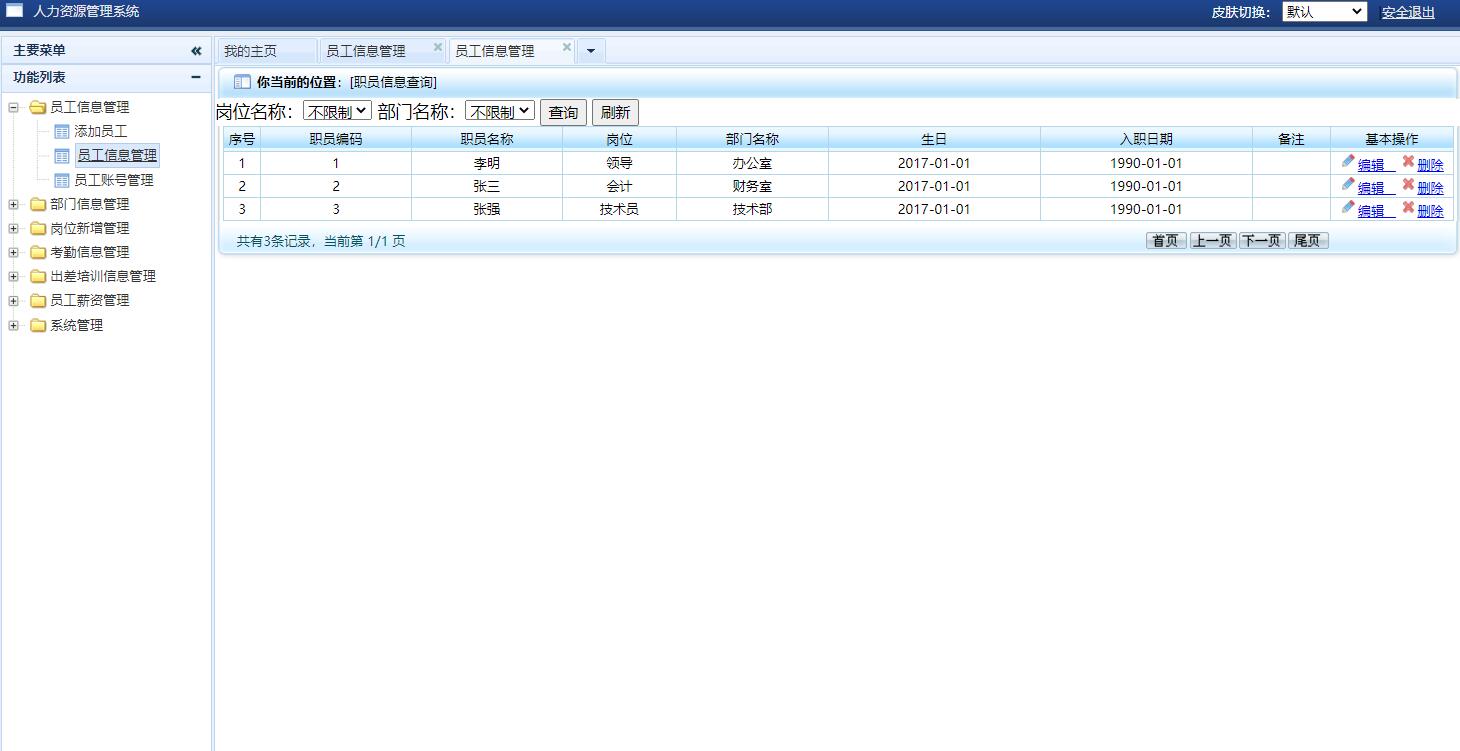
后端EmployeeAction处理员工信息的CRUD操作,通过Hibernate实现数据持久化:
@Controller
@Scope("prototype")
public class EmployeeAction extends BaseAction {
    private Employee employee;
    private List<Employee> employeeList;
    private Long employeeId;

    @Autowired
    private EmployeeService employeeService;

    // 查询员工列表
    public String list() {
        try {
            Map<String, Object> params = new HashMap<>();
            if (departmentId != null) {
                params.put("departmentId", departmentId);
            }
            employeeList = employeeService.findByParams(params, getPage(), getRows());
            setTotal(employeeService.getCountByParams(params));
            return SUCCESS;
        } catch (Exception e) {
            addActionError("查询员工信息失败: " + e.getMessage());
            return ERROR;
        }
    }

    // 保存员工信息
    public String save() {
        try {
            if (employee.getId() == null) {
                employee.setEmployeeNumber(generateEmployeeNumber());
            }
            employeeService.saveOrUpdate(employee);
            addActionMessage("员工信息保存成功");
            return SUCCESS;
        } catch (Exception e) {
            addActionError("保存员工信息失败: " + e.getMessage());
            return INPUT;
        }
    }

    // 生成唯一工号
    private String generateEmployeeNumber() {
        SimpleDateFormat sdf = new SimpleDateFormat("yyyyMMdd");
        String dateStr = sdf.format(new Date());
        Long count = employeeService.getTodayEmployeeCount();
        return "EMP" + dateStr + String.format("%03d", count + 1);
    }
}
薪资核算模块
薪资核算模块是系统的核心业务功能,实现自动化的薪资计算流程。系统根据考勤数据、绩效评分、社保政策等自动计算应发薪资和实发薪资。
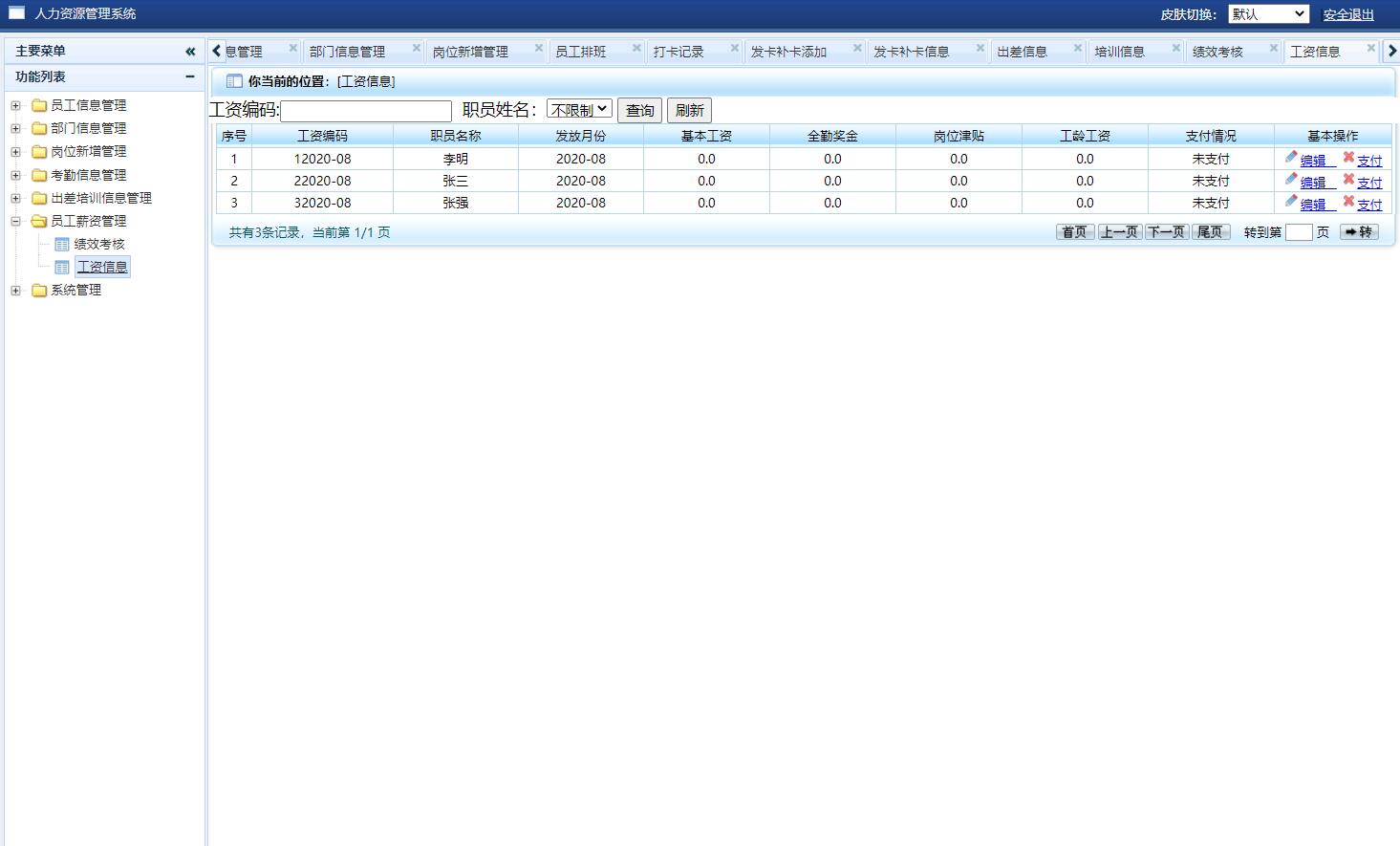
薪资计算服务类实现复杂的薪资逻辑:
@Service
@Transactional
public class SalaryCalculatorImpl implements SalaryCalculator {

    @Autowired
    private AttendanceService attendanceService;

    @Autowired
    private SalaryPolicyService policyService;

    @Override
    public SalaryRecord calculateSalary(Long employeeId, Date salaryMonth) {
        Employee employee = employeeService.findById(employeeId);
        SalaryPolicy policy = policyService.getCurrentPolicy();

        // 计算基本工资
        BigDecimal baseSalary = calculateBaseSalary(employee, policy);

        // 计算绩效奖金
        BigDecimal performanceBonus = calculatePerformanceBonus(employee, salaryMonth);

        // 计算加班工资
        BigDecimal overtimePay = calculateOvertimePay(employee, salaryMonth, policy);

        // 计算社保公积金
        SocialInsuranceInfo insurance = calculateSocialInsurance(employee, baseSalary, policy);

        // 计算个人所得税
        BigDecimal tax = calculateIncomeTax(baseSalary, performanceBonus, overtimePay,
                                          insurance.getTotalDeduction(), policy);

        // 计算实发工资
        BigDecimal netSalary = baseSalary.add(performanceBonus)
                                       .add(overtimePay)
                                       .subtract(insurance.getTotalDeduction())
                                       .subtract(tax);

        SalaryRecord record = new SalaryRecord();
        record.setEmployee(employee);
        record.setSalaryMonth(salaryMonth);
        record.setBaseSalary(baseSalary);
        record.setPerformanceBonus(performanceBonus);
        record.setOvertimePay(overtimePay);
        record.setSocialInsurance(insurance.getSocialInsurance());
        record.setHousingFund(insurance.getHousingFund());
        record.setTax(tax);
        record.setNetSalary(netSalary);

        return salaryRecordService.save(record);
    }

    private BigDecimal calculateOvertimePay(Employee employee, Date month, SalaryPolicy policy) {
        List<Attendance> overtimeRecords = attendanceService
            .getOvertimeRecords(employee.getId(), month);

        BigDecimal totalOvertimePay = BigDecimal.ZERO;
        for (Attendance record : overtimeRecords) {
            BigDecimal hourlyRate = policy.getOvertimeRate()
                                        .multiply(employee.getBasicSalary())
                                        .divide(BigDecimal.valueOf(21.75 * 8), 2, RoundingMode.HALF_UP);

            BigDecimal overtimePay = hourlyRate.multiply(BigDecimal.valueOf(record.getOvertimeHours()));
            totalOvertimePay = totalOvertimePay.add(overtimePay);
        }
        return totalOvertimePay;
    }
}
考勤管理模块
考勤管理模块实现员工打卡记录、考勤统计、异常考勤处理等功能。系统支持多种考勤方式,并与薪资模块紧密集成。
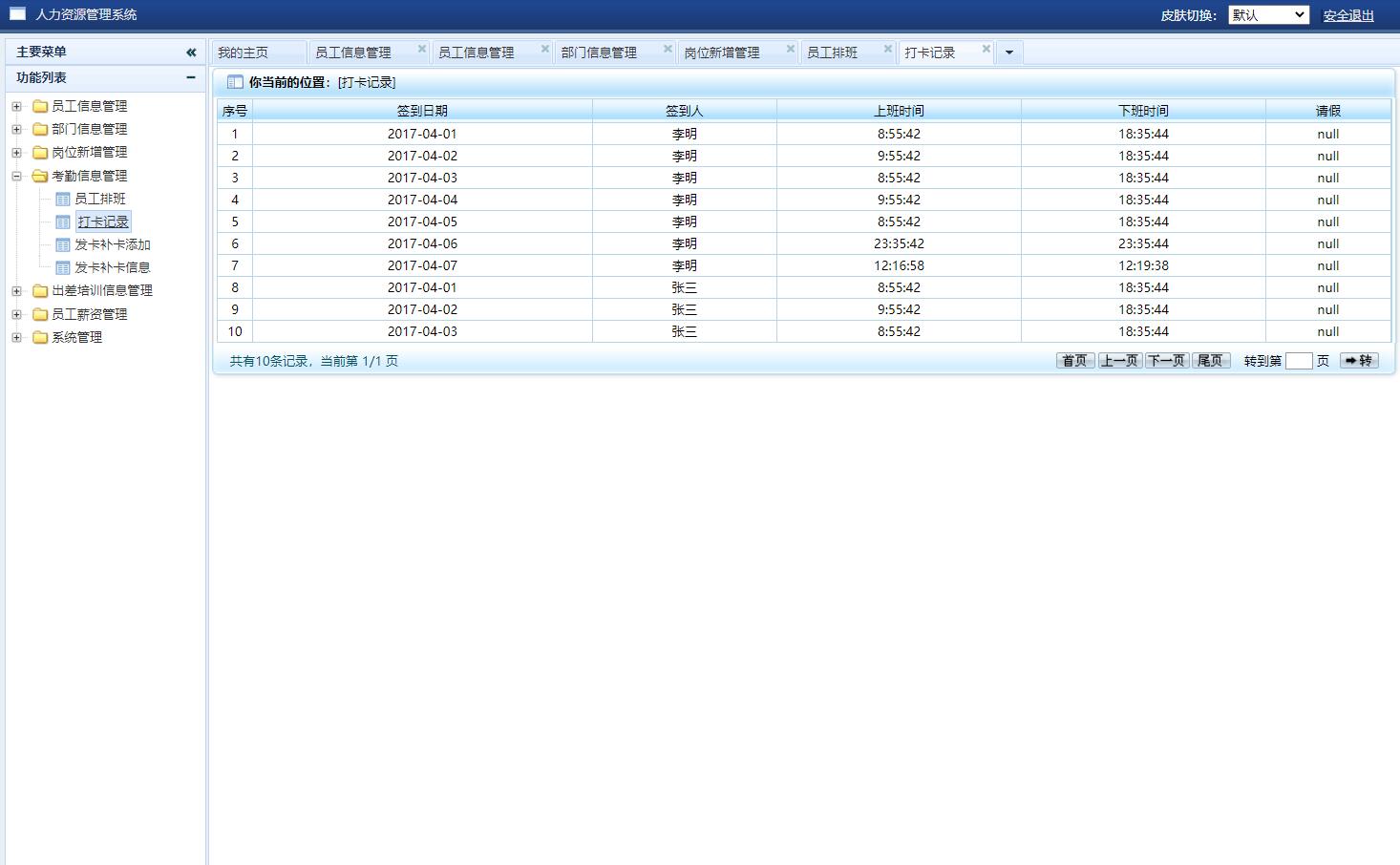
考勤数据服务类实现复杂的考勤逻辑判断:
@Service
@Transactional
public class AttendanceServiceImpl implements AttendanceService {

    @Autowired
    private AttendanceDao attendanceDao;

    @Autowired
    private WorkShiftService workShiftService;

    @Override
    public AttendanceRecord checkIn(CheckInRequest request) {
        Employee employee = employeeService.findById(request.getEmployeeId());
        WorkShift shift = workShiftService.getCurrentShift(employee);

        AttendanceRecord record = new AttendanceRecord();
        record.setEmployee(employee);
        record.setAttendanceDate(new Date());
        record.setCheckInTime(request.getCheckInTime());

        // 判断考勤状态
        if (request.getCheckInTime().after(shift.getLateThreshold())) {
            record.setAttendanceType(AttendanceType.LATE);
            record.setRemarks("迟到 " + calculateLateMinutes(request.getCheckInTime(), shift));
        } else {
            record.setAttendanceType(AttendanceType.NORMAL);
        }

        return attendanceDao.save(record);
    }

    @Override
    public AttendanceSummary getMonthlySummary(Long employeeId, Date month) {
        List<AttendanceRecord> records = attendanceDao.findByEmployeeAndMonth(employeeId, month);

        int normalDays = 0;
        int lateDays = 0;
        int absentDays = 0;
        double totalOvertime = 0;

        for (AttendanceRecord record : records) {
            switch (record.getAttendanceType()) {
                case NORMAL:
                    normalDays++;
                    break;
                case LATE:
                    lateDays++;
                    break;
                case ABSENT:
                    absentDays++;
                    break;
            }
            totalOvertime += record.getOvertimeHours();
        }

        return new AttendanceSummary(normalDays, lateDays, absentDays, totalOvertime);
    }
}
部门与岗位管理模块
部门管理实现组织架构的维护,支持树形结构展示。岗位管理定义各职位的基本信息和薪资等级。
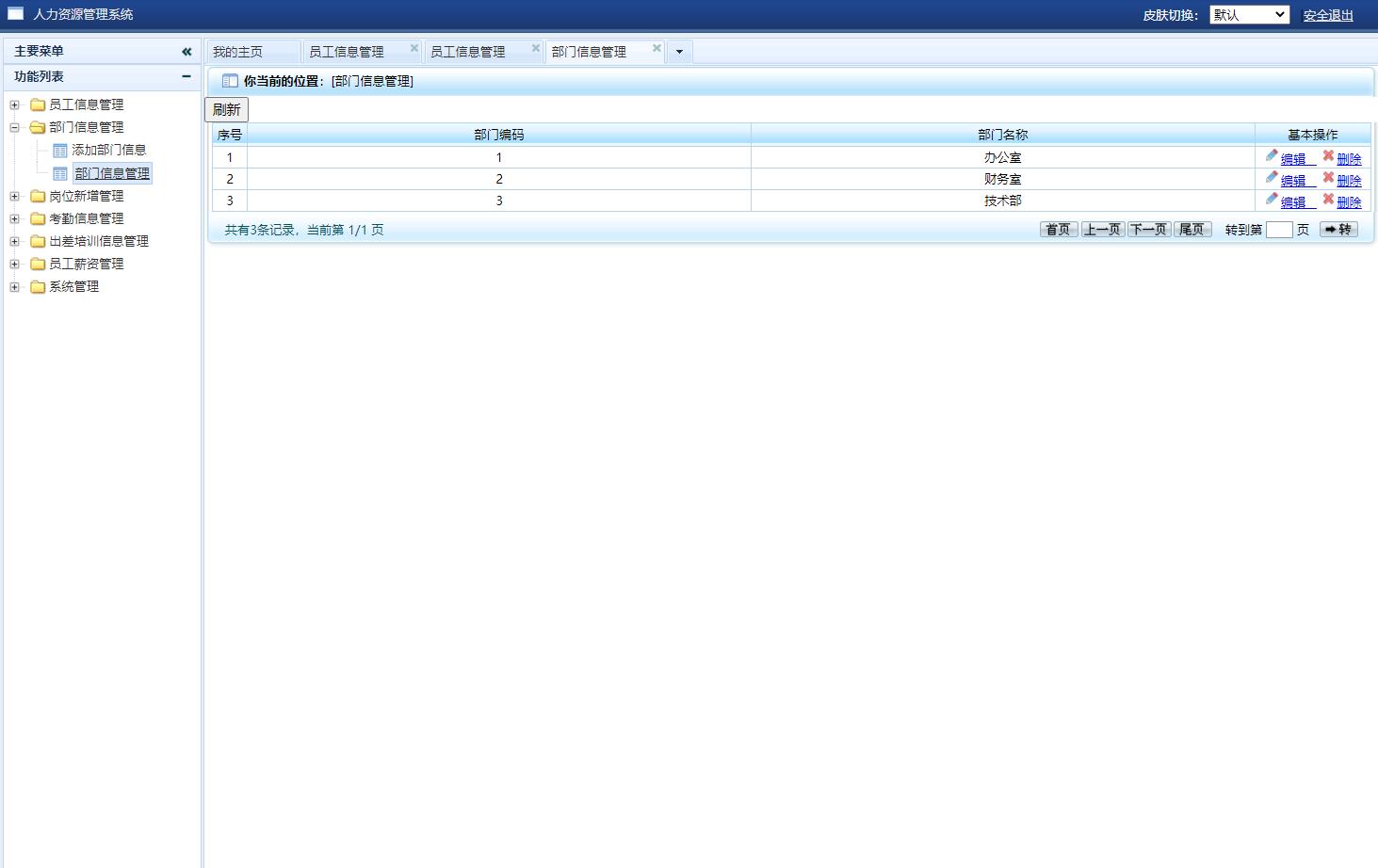
部门实体类设计支持无限级树形结构:
@Entity
@Table(name = "department")
public class Department {
    @Id
    @GeneratedValue(strategy = GenerationType.IDENTITY)
    private Long id;

    @Column(name = "dept_name", nullable = false)
    private String name;

    @Column(name = "dept_code", unique = true)
    private String code;

    @ManyToOne
    @JoinColumn(name = "parent_id")
    private Department parent;

    @OneToMany(mappedBy = "parent")
    private Set<Department> children = new HashSet<>();

    @Column(name = "manager_id")
    private Long managerId;

    @Column(name = "description")
    private String description;

    @Column(name = "sort_order")
    private Integer sortOrder;

    @Temporal(TemporalType.TIMESTAMP)
    @Column(name = "created_time")
    private Date createdTime;

    // 获取部门完整路径
    public String getFullPath() {
        if (parent == null) {
            return name;
        }
        return parent.getFullPath() + " > " + name;
    }
}
实体模型与业务逻辑设计
系统采用面向对象的设计思想,通过丰富的实体关系映射实现复杂的业务逻辑。以下是核心实体模型的关键设计:
员工实体关联设计
员工实体与多个业务实体建立关联关系,形成完整的业务数据模型:
@Entity
@Table(name = "employee")
public class Employee {
    // 基础字段省略...

    // 部门关联
    @ManyToOne(fetch = FetchType.LAZY)
    @JoinColumn(name = "department_id")
    private Department department;

    // 薪资记录(一对多)
    @OneToMany(mappedBy = "employee", cascade = CascadeType.ALL)
    private List<SalaryRecord> salaryRecords = new ArrayList<>();

    // 考勤记录(一对多)
    @OneToMany(mappedBy = "employee", cascade = CascadeType.ALL)
    private List<AttendanceRecord> attendanceRecords = new ArrayList<>();

    // 培训记录(多对多)
    @ManyToMany
    @JoinTable(name = "employee_training",
              joinColumns = @JoinColumn(name = "employee_id"),
              inverseJoinColumns = @JoinColumn(name = "training_id"))
    private Set<Training> trainings = new HashSet<>();

    // 业务方法:计算工龄
    public int getWorkYears() {
        if (hireDate == null) return 0;

        Period period = Period.between(
            hireDate.toInstant().atZone(ZoneId.systemDefault()).toLocalDate(),
            LocalDate.now()
        );
        return period.getYears();
    }
}
服务层事务管理设计
业务服务层采用声明式事务管理,确保复杂业务操作的原子性:
@Service
@Transactional
public class EmployeeManagementServiceImpl implements EmployeeManagementService {

    @Autowired
    private EmployeeDao employeeDao;

    @Autowired
    private SalaryRecordDao salaryRecordDao;

    @Autowired
    private SystemLogService logService;

    @Override
    @Transactional(rollbackFor = Exception.class)
    public void processEmployeeResignation(Long employeeId, ResignationInfo info) {
        try {
            // 1. 更新员工状态
            Employee employee = employeeDao.findById(employeeId);
            employee.setStatus(EmployeeStatus.INACTIVE);
            employee.setResignationDate(info.getResignationDate());
            employeeDao.update(employee);

            // 2. 计算最后薪资
            SalaryRecord finalSalary = salaryCalculator.calculateFinalSalary(employeeId, info);
            salaryRecordDao.save(finalSalary);

            // 3. 记录系统日志
            logService.log