在高校信息化建设进程中,体育场馆资源的高效管理与合理分配一直是校园管理的难点。传统的人工登记、电话预约方式不仅效率低下,还容易引发时间冲突和资源浪费。针对这一痛点,我们设计并实现了一套基于SSH(Struts2 + Spring + Hibernate)架构的体育场馆智能预约平台,旨在通过数字化手段提升场馆利用率,优化师生用户体验。
系统架构与技术栈选型
系统采用经典的三层架构模式,表现层使用JSP+Servlet技术结合HTML/CSS/JavaScript构建动态Web界面,业务逻辑层通过Spring框架实现依赖注入和事务管理,数据持久层则依托Hibernate完成对象关系映射。这种分层架构确保了系统的高内聚、低耦合特性,便于后续维护和功能扩展。
Struts2框架的拦截器机制有效处理了用户请求的分发和结果渲染,配合Spring的IoC容器管理Action、Service、DAO等组件的生命周期。Hibernate的缓存机制和延迟加载策略显著提升了数据访问性能,特别是在处理复杂的场馆关系数据时表现突出。
<!-- Spring配置文件中数据源与事务管理配置 -->
<bean id="dataSource" class="org.apache.commons.dbcp.BasicDataSource">
    <property name="driverClassName" value="com.mysql.jdbc.Driver"/>
    <property name="url" value="jdbc:mysql://localhost:3306/gym_booking"/>
    <property name="username" value="root"/>
    <property name="password" value="123456"/>
</bean>

<bean id="transactionManager"
      class="org.springframework.orm.hibernate5.HibernateTransactionManager">
    <property name="sessionFactory" ref="sessionFactory"/>
</bean>
数据库设计亮点分析
系统共设计10个核心数据表,其中场馆信息表、预约记录表和用户表的設計尤为关键。场馆信息表采用树形结构存储多级场馆数据,支持校区-场馆-具体场地的层级管理。
CREATE TABLE venue (
    venue_id INT PRIMARY KEY AUTO_INCREMENT,
    parent_id INT,
    venue_name VARCHAR(100) NOT NULL,
    venue_type ENUM('室内', '室外') NOT NULL,
    capacity INT,
    equipment_desc TEXT,
    status ENUM('可用', '维修中', '暂停开放') DEFAULT '可用',
    created_time TIMESTAMP DEFAULT CURRENT_TIMESTAMP,
    FOREIGN KEY (parent_id) REFERENCES venue(venue_id)
);
预约记录表的设计充分考虑了并发预约的场景,通过组合唯一索引防止同一时间段的重複预约:
CREATE TABLE reservation (
    reserve_id INT PRIMARY KEY AUTO_INCREMENT,
    user_id INT NOT NULL,
    venue_id INT NOT NULL,
    reserve_date DATE NOT NULL,
    time_slot ENUM('08:00-10:00','10:00-12:00','14:00-16:00','16:00-18:00','19:00-21:00') NOT NULL,
    status ENUM('待审核','已确认','已取消','已完成') DEFAULT '待审核',
    created_time TIMESTAMP DEFAULT CURRENT_TIMESTAMP,
    UNIQUE KEY unique_booking (venue_id, reserve_date, time_slot),
    FOREIGN KEY (user_id) REFERENCES user(user_id),
    FOREIGN KEY (venue_id) REFERENCES venue(venue_id)
);
用户表采用RBAC(基于角色的访问控制)模型,通过角色权限分离实现管理员和普通用户的功能隔离:
CREATE TABLE user (
    user_id INT PRIMARY KEY AUTO_INCREMENT,
    username VARCHAR(50) UNIQUE NOT NULL,
    password_hash VARCHAR(255) NOT NULL,
    real_name VARCHAR(50) NOT NULL,
    role ENUM('学生', '教师', '场馆管理员', '系统管理员') NOT NULL,
    department VARCHAR(100),
    contact_phone VARCHAR(20),
    email VARCHAR(100),
    is_active BOOLEAN DEFAULT TRUE,
    last_login_time TIMESTAMP
);
核心功能模块深度解析
智能场馆预约引擎
预约功能的核心算法通过Hibernate Criteria API实现,确保在髙并发场景下数据的一致性。系统采用乐观锁机制处理同时段的预约冲突,当多个用户同时预约同一时段时,仅第一个提交的请求会成功。
@Service
@Transactional
public class ReservationServiceImpl implements ReservationService {

    @Autowired
    private ReservationDAO reservationDAO;

    @Override
    public BookingResult makeReservation(ReservationDTO reservationDTO) {
        // 检查时段是否已被预约
        List<Reservation> existing = reservationDAO.findByVenueAndTime(
            reservationDTO.getVenueId(),
            reservationDTO.getReserveDate(),
            reservationDTO.getTimeSlot()
        );

        if (!existing.isEmpty()) {
            return new BookingResult(false, "该时段已被预约");
        }

        // 创建新预约记录
        Reservation reservation = new Reservation();
        BeanUtils.copyProperties(reservationDTO, reservation);
        reservation.setStatus(BookingStatus.PENDING);
        reservation.setCreatedTime(new Date());

        reservationDAO.save(reservation);
        return new BookingResult(true, "预约申请已提交,等待审核");
    }
}
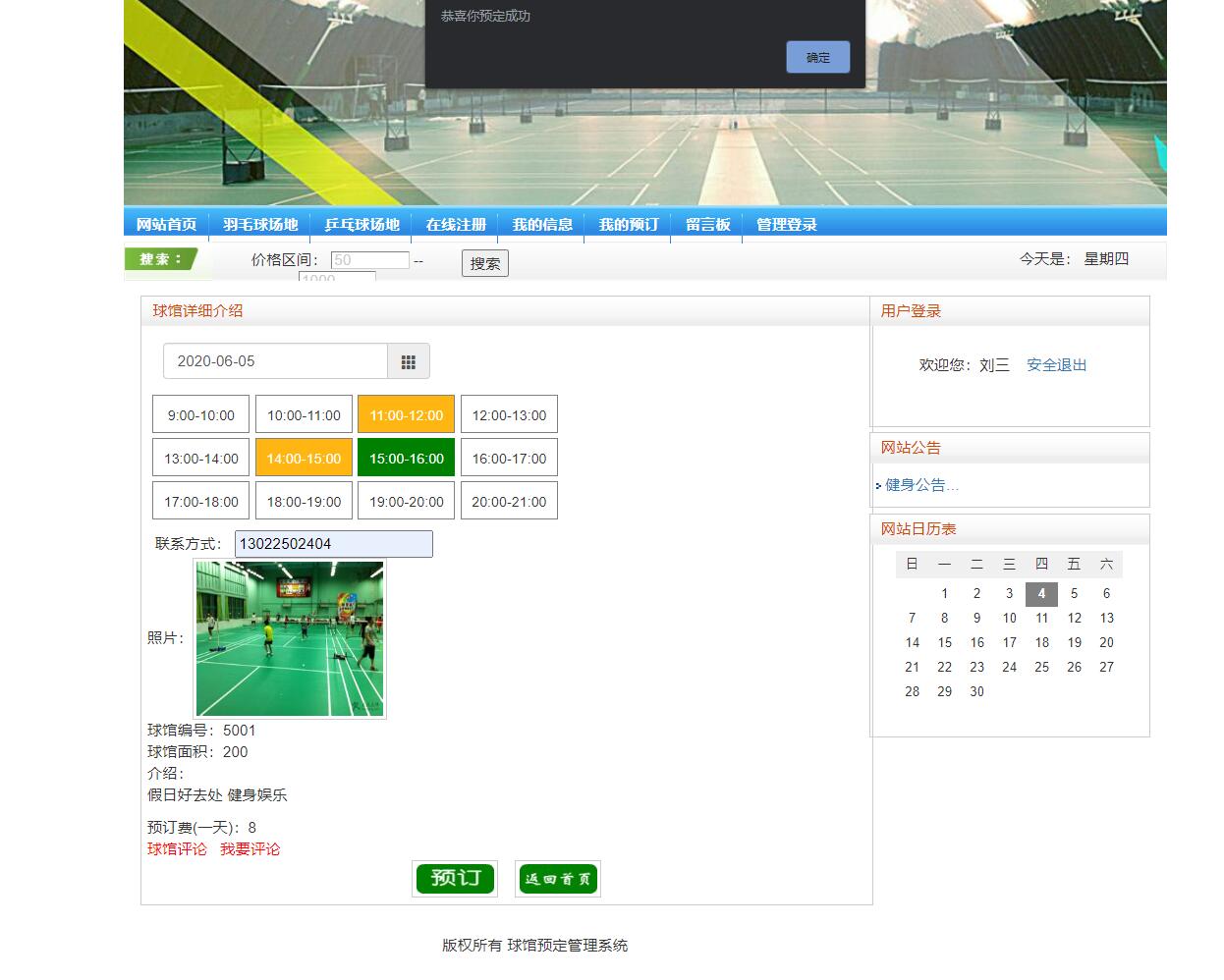
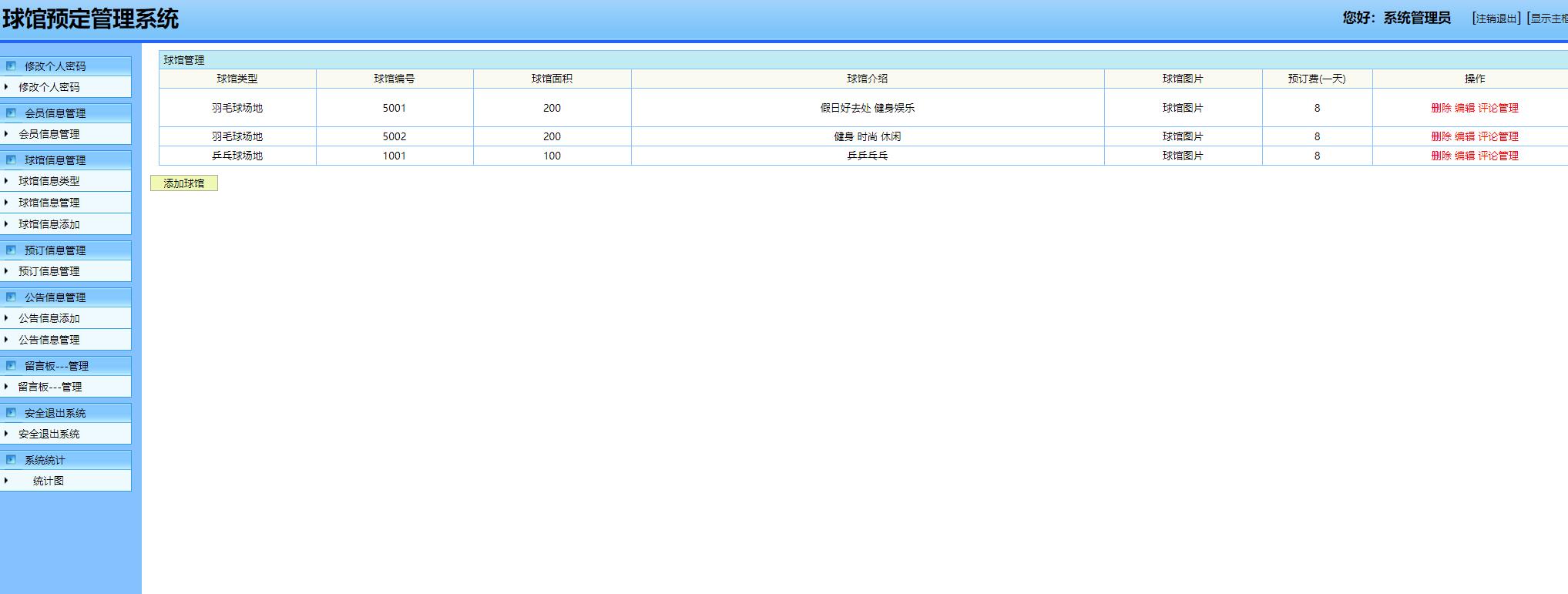
多维度场馆管理系统
场馆管理模块支持按类型、容量、状态等多条件筛选,管理员可以直观查看场馆使用率统计图表。系统采用AJAX技术实现数据的异步加载和实时更新,提升用户体验。
<!-- 场馆管理JSP页面片段 -->
<%@ page contentType="text/html;charset=UTF-8" %>
<%@ taglib prefix="s" uri="/struts-tags" %>
<div class="venue-filter">
    <select id="venueTypeFilter" onchange="filterVenues()">
        <option value="">所有类型</option>
        <option value="室内">室内场馆</option>
        <option value="室外">室外场地</option>
    </select>
    <input type="text" id="venueNameSearch" placeholder="搜索场馆名称...">
</div>

<div id="venueList">
    <s:iterator value="venueList" var="venue">
        <div class="venue-item" data-type="<s:property value='#venue.venueType'/>">
            <h3><s:property value="#venue.venueName"/></h3>
            <p>容量: <s:property value="#venue.capacity"/>人</p>
            <p>状态: <span class="status-<s:property value='#venue.status'/>">
                <s:property value="#venue.status"/>
            </span></p>
        </div>
    </s:iterator>
</div>

<script>
function filterVenues() {
    var type = $('#venueTypeFilter').val();
    var name = $('#venueNameSearch').val();

    $.ajax({
        url: 'venue/filter',
        data: {venueType: type, venueName: name},
        success: function(data) {
            $('#venueList').html(data);
        }
    });
}
</script>
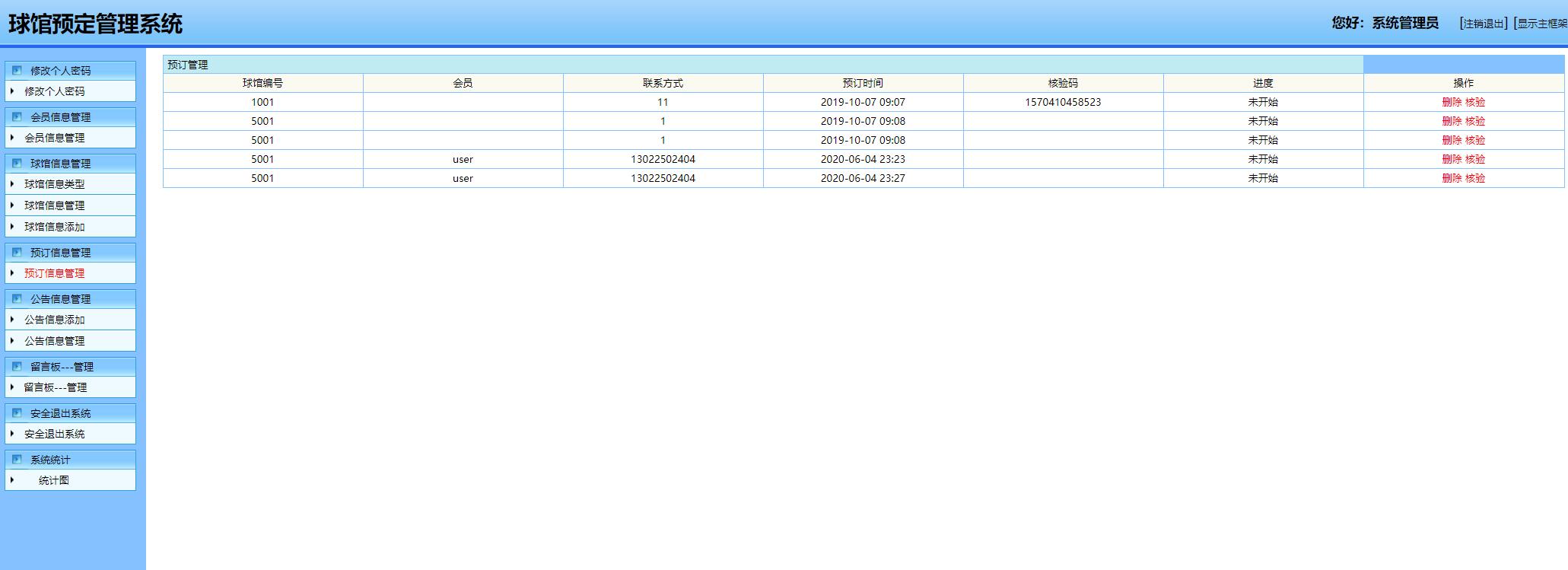
预约信息审核工作流
管理员后台实现了完整的预约审核流水线,支持批量操作和审核意见填写。系统通过Struts2的拦截器栈确保只有授权管理员可以访问审核功能。
@Controller
@Scope("prototype")
public class ReservationManageAction extends BaseAction {

    private List<ReservationVO> pendingReservations;
    private String auditResult;
    private String auditRemark;

    public String listPending() {
        try {
            pendingReservations = reservationService.getPendingReservations();
            return SUCCESS;
        } catch (Exception e) {
            addActionError("获取待审核预约列表失败");
            return ERROR;
        }
    }

    public String batchAudit() {
        String[] reserveIds = getRequest().getParameterValues("reserveIds");
        try {
            reservationService.batchAuditReservations(reserveIds, auditResult, auditRemark);
            addActionMessage("审核操作完成");
            return SUCCESS;
        } catch (BusinessException e) {
            addActionError(e.getMessage());
            return ERROR;
        }
    }

    // Getter和Setter方法
    public List<ReservationVO> getPendingReservations() { return pendingReservations; }
    public void setAuditResult(String auditResult) { this.auditResult = auditResult; }
    public void setAuditRemark(String auditRemark) { this.auditRemark = auditRemark; }
}
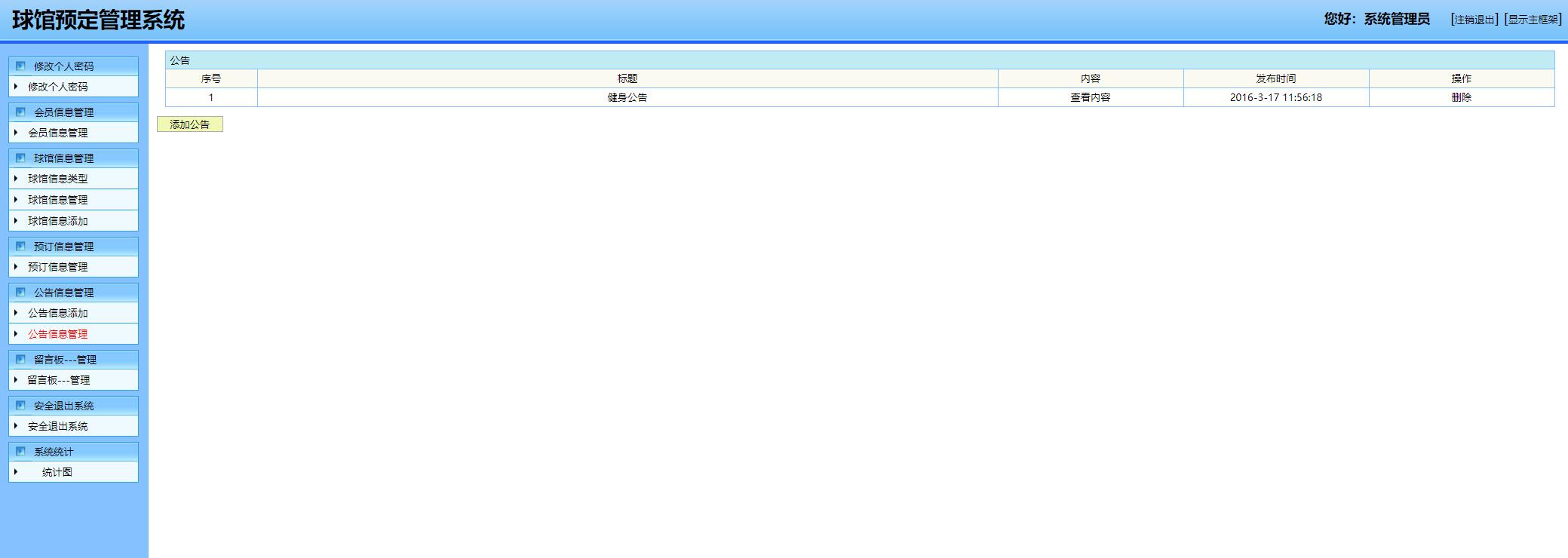
公告信息发布系统
公告模块采用富文本编辑器支持图文混排,通过Hibernate的二级缓存提升公告列表的读取性能。系统实现了公告的定时发布和自动过期功能。
@Entity
@Table(name = "announcement")
@Cache(usage = CacheConcurrencyStrategy.READ_WRITE)
public class Announcement implements Serializable {

    @Id
    @GeneratedValue(strategy = GenerationType.IDENTITY)
    private Integer announcementId;

    @Column(nullable = false, length = 200)
    private String title;

    @Lob
    @Column(nullable = false)
    private String content;

    @Column(nullable = false)
    @Temporal(TemporalType.TIMESTAMP)
    private Date publishTime;

    @Temporal(TemporalType.TIMESTAMP)
    private Date expireTime;

    @Column(nullable = false)
    private Boolean isActive = true;

    @ManyToOne
    @JoinColumn(name = "publisher_id")
    private User publisher;

    // 省略getter和setter方法
}
实体模型与业务逻辑设计
系统通过Hibernate的实体关系映射建立了完整的领域模型。用户与预约之间的一对多关系、场馆与预约之间的一对多关系均通过注解方式配置,确保了数据的一致性和查询效率。
@Entity
@Table(name = "user")
public class User implements Serializable {

    @Id
    @GeneratedValue(strategy = GenerationType.IDENTITY)
    private Integer userId;

    @Column(unique = true, nullable = false, length = 50)
    private String username;

    @Column(nullable = false, length = 255)
    private String passwordHash;

    @Column(nullable = false, length = 50)
    private String realName;

    @Enumerated(EnumType.STRING)
    @Column(nullable = false, length = 20)
    private UserRole role;

    @OneToMany(mappedBy = "user", cascade = CascadeType.ALL, fetch = FetchType.LAZY)
    private Set<Reservation> reservations = new HashSet<>();

    @OneToMany(mappedBy = "publisher", cascade = CascadeType.ALL, fetch = FetchType.LAZY)
    private Set<Announcement> announcements = new HashSet<>();

    // 业务逻辑方法
    public boolean canMakeReservation() {
        return this.role == UserRole.STUDENT || this.role == UserRole.TEACHER;
    }

    public boolean isAdministrator() {
        return this.role == UserRole.VENUE_MANAGER || this.role == UserRole.SYSTEM_ADMIN;
    }
}
性能优化与安全机制
系统在性能方面进行了多维度优化。数据库层面通过合理的索引设计加速查询,应用层使用连接池技术减少资源消耗,Web层通过静态资源缓存提升页面加载速度。
安全方面实现了完整的身份认证和授权机制,密码采用BCrypt强哈希算法加密存储,关键业务操作均进行CSRF令牌验证和SQL注入防护。
@Component
public class SecurityInterceptor extends AbstractInterceptor {

    @Override
    public String intercept(ActionInvocation invocation) throws Exception {
        ActionContext context = invocation.getInvocationContext();
        Map<String, Object> session = context.getSession();
        User user = (User) session.get("currentUser");

        // 检查用户是否登录
        if (user == null) {
            return "loginRedirect";
        }

        // 检查权限
        Action action = (Action) invocation.getAction();
        if (action instanceof PermissionRequired) {
            String requiredPermission = ((PermissionRequired) action).getRequiredPermission();
            if (!user.hasPermission(requiredPermission)) {
                throw new AuthorizationException("权限不足");
            }
        }

        return invocation.invoke();
    }
}
未来功能拓展方向
移动端适配与小程序开发:开发微信小程序和移动APP,支持扫码入场、移动支付等便捷功能。可采用Vue.js+Spring Boot技术栈构建前后端分离的移动端应用。
智能推荐算法集成:基于用户的历史预约数据和偏好,使用协同过滤算法推荐适合的场馆和时段,提升场馆利用率。
物联网设备集成:对接智能门禁系统和能耗监测设备,实现场馆的自动化管理和节能控制。
数据分析与可视化大屏:构建场馆使用情况的数据看板,为学校体育设施规划提供数据支持。
微服务架构重构:将单体应用拆分为用户服务、预约服务、场馆服务等微服务,提升系统的可扩展性和维护性。
该系统通过现代化的技术架构和合理的数据模型设计,为高校体育场馆管理提供了完整的数字化解决方案。模块化的设计使得系统具备良好的扩展性,为后续的功能迭代和技术升级奠定了坚实基础。