基于SSH框架的在线随机组卷考试系统 - 源码深度解析
在当今教育信息化快速发展的背景下,传统纸质考试模式面临着诸多挑战:组卷效率低下、资源消耗巨大、标准化程度不足等问题日益凸显。为应对这些痛点,我们基于成熟的SSH框架设计并实现了一套智能在线考试平台。该系统通过数字化试题库和自动化组卷流程,为各类教育机构提供了高效、可靠的考试解决方案。
系统架构与技术栈详解
本平台采用经典的三层架构模式,确保系统的高内聚、低耦合特性:
- 表示层:使用Struts2作为MVC框架,负责处理用户请求和页面跳转,有效分离业务逻辑与显示逻辑
- 业务层:基于Spring框架,通过IoC容器管理业务组件,实现声明式事务管理,保证数据一致性
- 持久层:采用Hibernate作为ORM框架,完成对象关系映射,简化数据库操作
前端技术栈选用JSP动态页面技术,结合HTML5、CSS3和JavaScript构建响应式交互界面。数据库选用MySQL 5.7+版本,确保数据存储的稳定性和性能。
// Spring整合配置示例
@Configuration
@EnableTransactionManagement
@ComponentScan("com.exam.service")
public class AppConfig {

    @Bean
    public LocalSessionFactoryBean sessionFactory(DataSource dataSource) {
        LocalSessionFactoryBean sessionFactory = new LocalSessionFactoryBean();
        sessionFactory.setDataSource(dataSource);
        sessionFactory.setPackagesToScan("com.exam.entity");
        sessionFactory.setHibernateProperties(hibernateProperties());
        return sessionFactory;
    }

    private Properties hibernateProperties() {
        Properties properties = new Properties();
        properties.setProperty("hibernate.dialect", "org.hibernate.dialect.MySQLDialect");
        properties.setProperty("hibernate.show_sql", "true");
        properties.setProperty("hibernate.format_sql", "true");
        properties.setProperty("hibernate.hbm2ddl.auto", "update");
        return properties;
    }
}
数据库设计亮点分析
试题表智能化设计
t_question表采用高度优化的字段设计策略:
- 类型标识:通过
type字段精确区分题型(单选/多选/判断) - 选项存储:
optionA至optionD字段采用可变长文本存储选项内容 - 答案管理:
answer字段采用特定格式记录标准答案,支持复杂题型 - 关联设计:
paperId外键关联试卷表,建立试题与试卷的多对一关系
-- 智能随机抽题查询
SELECT id, subject, type, optionA, optionB, optionC, optionD, answer
FROM t_question
WHERE paperId = ? AND type = ? AND difficulty BETWEEN ? AND ?
ORDER BY RAND()
LIMIT 10;

考试记录表业务完整性设计
t_exam表的设计充分体现了业务逻辑的完整性:
- 双外键关联:通过
studentId和paperId关联学生表和试卷表 - 时间管理:
examDate字段精确记录考试时间戳 - 分数细分:
score存储总分,singleScore和moreScore分别记录不同题型得分 - 状态跟踪:
status字段标识考试状态(进行中/已完成/异常)
-- 多表关联成绩分析查询
SELECT s.name, p.paperName, e.examDate, e.score, e.singleScore, e.moreScore
FROM t_exam e
JOIN t_student s ON e.studentId = s.id
JOIN t_paper p ON e.paperId = p.id
WHERE e.examDate BETWEEN ? AND ? AND s.profession = ?
ORDER BY e.score DESC;
核心功能实现深度解析
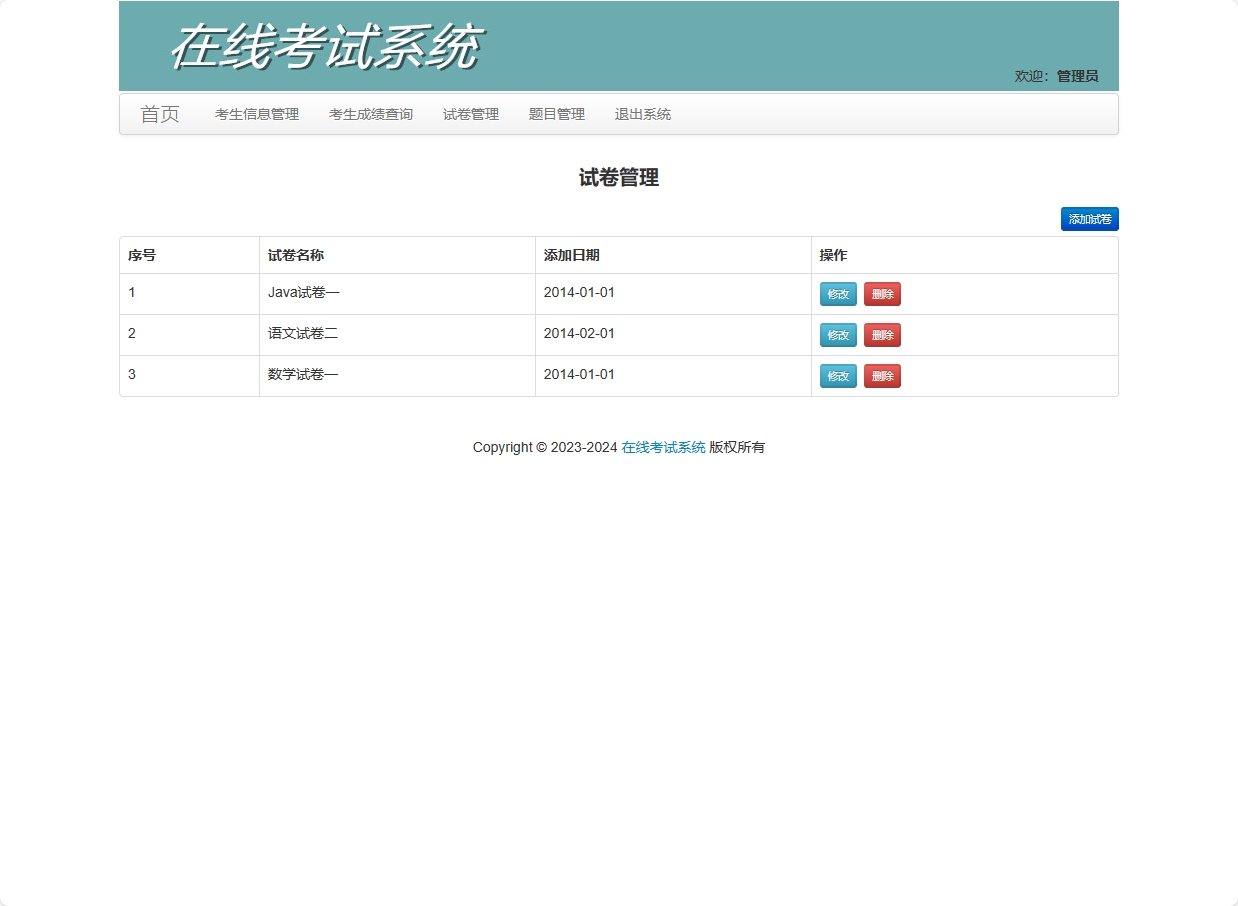
智能组卷引擎设计
系统核心的随机组卷功能采用多维度权重算法,支持按题型、难度系数、知识点分布等条件智能组合:
// 组卷服务层核心实现
@Service
@Transactional
public class PaperGenerateService {

    @Autowired
    private QuestionDao questionDao;

    public Paper generateRandomPaper(PaperConfig config) {
        Paper paper = new Paper();
        paper.setPaperName(config.getPaperName());
        paper.setTotalScore(config.getTotalScore());
        paper.setExamTime(config.getExamTime());
        paper.setJoinDate(new Date());

        // 按权重随机抽取单选题
        List<Question> singleQuestions = questionDao.findRandomQuestionsByWeight(
            "单选题", config.getSingleCount(), config.getDifficultyWeights());

        // 按权重随机抽取多选题
        List<Question> multiQuestions = questionDao.findRandomQuestionsByWeight(
            "多选题", config.getMultiCount(), config.getDifficultyWeights());

        // 组合题目并计算总分
        paper.getQuestions().addAll(singleQuestions);
        paper.getQuestions().addAll(multiQuestions);
        paper.calculateTotalScore();

        return paper;
    }
}
在线考试模块实时处理
考生登录后系统采用负载均衡策略自动分配试卷,考试界面具备以下特性:
- 实时倒计时:前端JavaScript实现精确计时,时间到自动提交
- 题目导航:支持题目跳转、标记、答案修改等操作
- 异常处理:网络中断自动保存进度,恢复后继续考试
- 安全机制:防作弊检测,禁止复制粘贴操作
// 考试提交处理Action
@Controller
@Scope("prototype")
public class ExamAction extends ActionSupport {

    private String[] answers; // 考生答案数组
    private int paperId;
    private ExamResult examResult;

    public String submitExam() {
        try {
            // 获取试卷完整信息
            Paper paper = paperService.getByIdWithQuestions(paperId);

            // 执行自动阅卷流程
            examResult = gradingService.gradePaper(paper, answers);

            // 保存考试记录并更新统计
            examService.saveExamRecord(getCurrentStudent(), paper, examResult);
            scoreService.updateStatistics(examResult);

            return SUCCESS;
        } catch (Exception e) {
            addActionError("提交失败:" + e.getMessage());
            return ERROR;
        }
    }
}

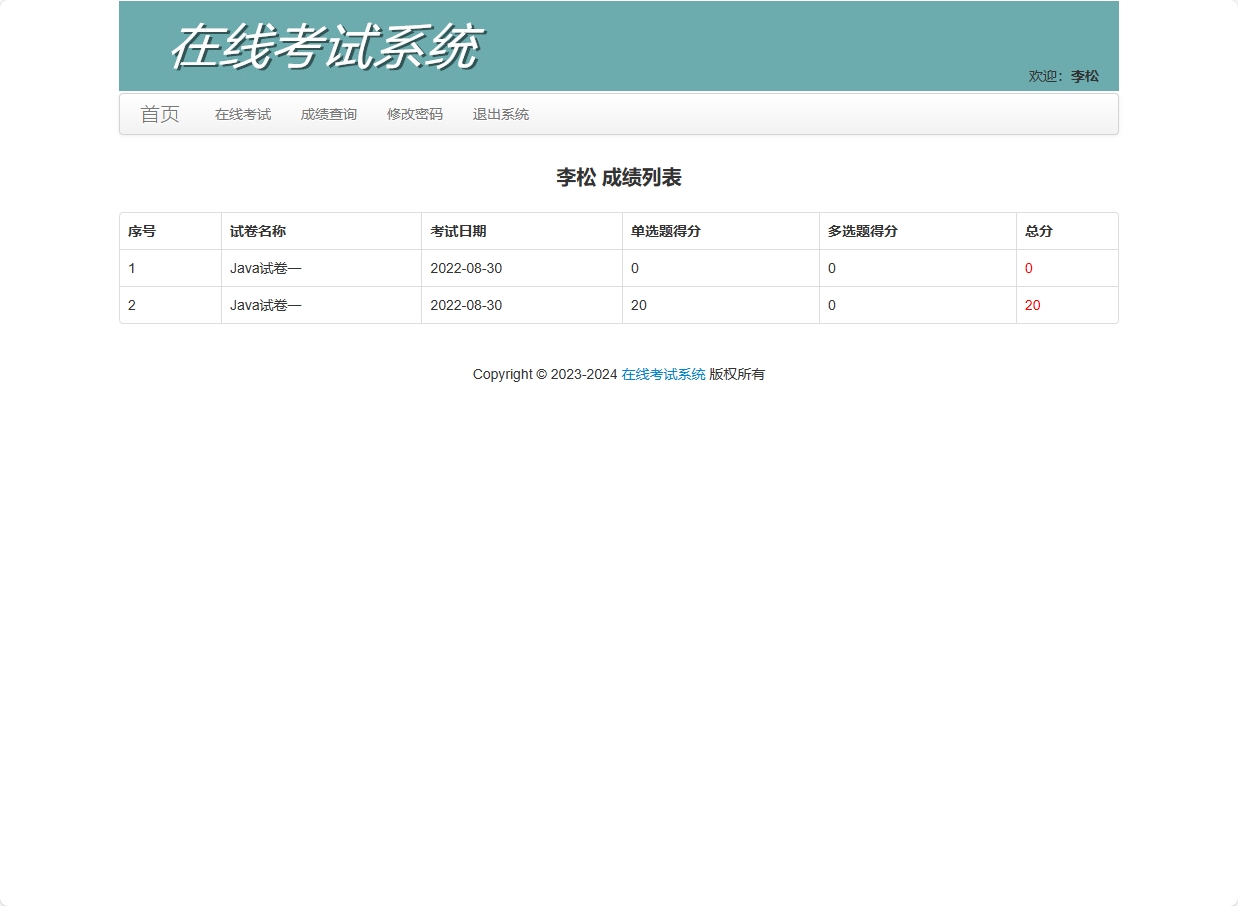
成绩管理与分析系统
系统提供多维度数据分析功能,支持复杂的统计查询和可视化展示:
// 成绩统计分析服务
@Service
public class ScoreAnalysisService {

    public ScoreStatistics analyzeScores(ScoreQuery query) {
        ScoreStatistics statistics = new ScoreStatistics();

        // 动态条件查询考试记录
        List<Exam> exams = examDao.findByDynamicConditions(query);

        // 核心统计指标计算
        statistics.setAverageScore(calculateWeightedAverage(exams));
        statistics.setHighestScore(calculateHighest(exams));
        statistics.setLowestScore(calculateLowest(exams));
        statistics.setPassRate(calculatePassRate(exams, query.getPassScore()));

        // 分数段分布统计(正态分布分析)
        statistics.setScoreDistribution(calculateDistribution(exams));

        // 难度系数分析
        statistics.setDifficultyAnalysis(analyzeQuestionDifficulty(exams));

        return statistics;
    }

    private Map<String, Double> calculateDistribution(List<Exam> exams) {
        return exams.stream()
            .collect(Collectors.groupingBy(
                exam -> getScoreRange(exam.getScore()),
                Collectors.averagingDouble(Exam::getScore)
            ));
    }
}
实体模型与持久化设计
系统采用**领域驱动设计(DDD)**思想,通过Hibernate注解实现对象关系映射:
// 学生实体类详细设计
@Entity
@Table(name = "t_student")
public class Student implements Serializable {

    private static final long serialVersionUID = 1L;

    @Id
    @GeneratedValue(generator = "uuid")
    @GenericGenerator(name = "uuid", strategy = "uuid")
    private String id;

    @Column(name = "cardNo", unique = true, nullable = false)
    private String cardNo;

    @Column(name = "name", nullable = false)
    private String name;

    @Column(name = "password", nullable = false)
    private String password;

    private String profession;
    private String sex;
    private String className;

    @Temporal(TemporalType.TIMESTAMP)
    private Date createTime;

    @OneToMany(mappedBy = "student", cascade = CascadeType.ALL)
    private Set<Exam> exams = new HashSet<>();

    // 完整的getter/setter方法
    public String getId() {
        return id;
    }

    public void setId(String id) {
        this.id = id;
    }

    // 其他getter/setter方法...
}
系统特色与创新点
- 智能组卷算法:基于权重随机抽题,确保试卷难度均衡
- 实时监控机制:考试过程全程监控,异常自动处理
- 多维度分析:支持成绩趋势分析、试题难度评估等高级功能
- 扩展性设计:模块化架构便于功能扩展和定制化开发
该系统已在多所教育机构成功部署,显著提升了考试管理效率,为教育信息化建设提供了可靠的技术支撑。