在传统企业人力资源管理领域,人事专员往往需要处理大量纸质档案和复杂的Excel表格,员工入职、考勤统计、绩效评估和薪资核算等流程相互割裂,导致数据不一致、工作效率低下且易出错。随着企业规模扩大,这种分散式管理模式的弊端日益凸显,迫切需要一套集成化的数字解决方案来统一管理人力资源全流程。
本系统采用SSH(Struts2 + Spring + Hibernate)集成框架,构建了一个功能完备的企业人力资源管理系统。系统通过模块化设计实现了员工信息管理、考勤跟踪、绩效评估、薪资核算等核心功能的深度整合,有效解决了数据孤岛问题,显著提升了人事管理的规范性和效率。
系统架构与技术栈
系统采用典型的三层架构设计,各层职责分明,通过依赖注入实现松耦合。
表现层基于Struts2框架构建,负责接收用户请求和页面渲染。Struts2的拦截器机制有效处理了表单验证、类型转换等通用功能,Action类作为前端请求的入口点,通过简洁的配置映射实现业务逻辑的调用。
<!-- Struts2 Action配置示例 -->
<action name="employee_*" method="{1}" class="employeeAction">
    <result name="success">/WEB-INF/pages/employee_list.jsp</result>
    <result name="input">/WEB-INF/pages/employee_edit.jsp</result>
</action>
业务逻辑层由Spring框架统一管理,通过IoC容器实现组件依赖关系的自动装配。Service层封装了核心业务规则,如薪资计算逻辑、绩效评估算法等,并通过声明式事务管理确保数据操作的原子性和一致性。
// Spring服务层配置示例
@Service("salaryService")
@Transactional
public class SalaryServiceImpl implements SalaryService {

    @Autowired
    private SalaryDao salaryDao;

    @Override
    public void calculateMonthlySalary(Employee employee, Month month) {
        // 复杂薪资计算逻辑
        BigDecimal baseSalary = employee.getBaseSalary();
        BigDecimal performanceBonus = calculatePerformanceBonus(employee);
        BigDecimal attendanceDeduction = calculateAttendanceDeduction(employee, month);

        BigDecimal totalSalary = baseSalary.add(performanceBonus)
                                         .subtract(attendanceDeduction);

        SalaryRecord record = new SalaryRecord(employee, month, totalSalary);
        salaryDao.save(record);
    }
}
数据持久层采用Hibernate实现对象关系映射,将Java实体类与数据库表自动关联。通过HQL(Hibernate Query Language)实现复杂查询,避免了传统JDBC编程的繁琐操作。
// Hibernate数据访问层实现
@Repository("employeeDao")
public class EmployeeDaoImpl extends HibernateDaoSupport implements EmployeeDao {

    public List<Employee> findEmployeesByDepartment(Department department) {
        String hql = "FROM Employee e WHERE e.department = :dept AND e.status = 'ACTIVE'";
        return getHibernateTemplate().findByNamedParam(hql, "dept", department);
    }

    public Employee findWithDetails(Integer id) {
        String hql = "FROM Employee e LEFT JOIN FETCH e.salaryRecords " +
                    "LEFT JOIN FETCH e.attendanceRecords WHERE e.id = ?";
        return (Employee) getHibernateTemplate().find(hql, id).uniqueResult();
    }
}
数据库设计深度解析
系统共设计17张数据表,涵盖了组织机构、员工信息、考勤、薪资等核心业务实体。以下重点分析几个关键表的设计亮点。
员工信息表(employee)设计
员工表作为系统的核心数据载体,采用了高度规范化的设计思路,确保数据的完整性和查询效率。
CREATE TABLE employee (
    id INT PRIMARY KEY AUTO_INCREMENT,
    employee_number VARCHAR(20) UNIQUE NOT NULL COMMENT '员工编号',
    name VARCHAR(50) NOT NULL COMMENT '姓名',
    gender ENUM('MALE','FEMALE') NOT NULL COMMENT '性别',
    id_card VARCHAR(18) UNIQUE NOT NULL COMMENT '身份证号',
    department_id INT NOT NULL COMMENT '部门ID',
    position_id INT NOT NULL COMMENT '职位ID',
    hire_date DATE NOT NULL COMMENT '入职日期',
    base_salary DECIMAL(10,2) NOT NULL DEFAULT 0 COMMENT '基本工资',
    status ENUM('ACTIVE','INACTIVE','SUSPENDED') DEFAULT 'ACTIVE' COMMENT '状态',
    created_time TIMESTAMP DEFAULT CURRENT_TIMESTAMP,
    updated_time TIMESTAMP DEFAULT CURRENT_TIMESTAMP ON UPDATE CURRENT_TIMESTAMP,
    FOREIGN KEY (department_id) REFERENCES department(id),
    FOREIGN KEY (position_id) REFERENCES position(id),
    INDEX idx_department (department_id),
    INDEX idx_status (status),
    INDEX idx_hire_date (hire_date)
) ENGINE=InnoDB DEFAULT CHARSET=utf8mb4 COMMENT='员工基本信息表';
设计亮点分析:
- 业务唯一性约束:通过
employee_number和id_card的双重唯一约束,确保员工标识的全局唯一性,防止数据重复录入。 - 枚举类型优化:使用ENUM类型存储性别、状态等有限值字段,既节省存储空间又提高查询效率。
- 索引策略:针对常用的查询条件(部门、状态、入职日期)建立复合索引,显著提升大数据量下的查询性能。
- 审计字段:
created_time和updated_time自动记录数据变更时间,便于数据追踪和审计。
薪资记录表(salary_record)设计
薪资表的设计充分考虑了薪资计算的复杂性和历史数据追溯的需求。
CREATE TABLE salary_record (
    id INT PRIMARY KEY AUTO_INCREMENT,
    employee_id INT NOT NULL COMMENT '员工ID',
    salary_month DATE NOT NULL COMMENT '薪资月份',
    base_salary DECIMAL(10,2) NOT NULL COMMENT '基本工资',
    performance_bonus DECIMAL(10,2) DEFAULT 0 COMMENT '绩效奖金',
    attendance_deduction DECIMAL(10,2) DEFAULT 0 COMMENT '考勤扣款',
    tax_amount DECIMAL(10,2) DEFAULT 0 COMMENT '个税金额',
    net_salary DECIMAL(10,2) NOT NULL COMMENT '实发工资',
    calculation_details TEXT COMMENT '计算明细JSON',
    status ENUM('DRAFT','CONFIRMED','PAID') DEFAULT 'DRAFT' COMMENT '状态',
    calculated_by INT NOT NULL COMMENT '计算人员',
    calculated_time TIMESTAMP DEFAULT CURRENT_TIMESTAMP,
    confirmed_time TIMESTAMP NULL COMMENT '确认时间',
    FOREIGN KEY (employee_id) REFERENCES employee(id),
    FOREIGN KEY (calculated_by) REFERENCES user(id),
    UNIQUE KEY uk_employee_month (employee_id, salary_month),
    INDEX idx_salary_month (salary_month),
    INDEX idx_status (status)
) ENGINE=InnoDB DEFAULT CHARSET=utf8mb4 COMMENT='员工薪资记录表';
设计亮点分析:
- 事务一致性保障:通过
UNIQUE KEY确保同一员工同月的薪资记录唯一,防止重复计算。 - 明细数据存储:
calculation_details字段以JSON格式存储详细的计算过程,便于后续审计和问题排查。 - 状态机设计:采用三状态流转(草稿→确认→已发放),严格控制薪资发放流程。
- 完整的审计追踪:记录计算人员、计算时间、确认时间等关键操作信息,满足财务审计要求。
核心功能实现深度解析
员工全生命周期管理
系统实现了从员工入职、在职管理到离职的全流程数字化管理。通过统一的员工信息中心,人事专员可以高效完成各项人事操作。
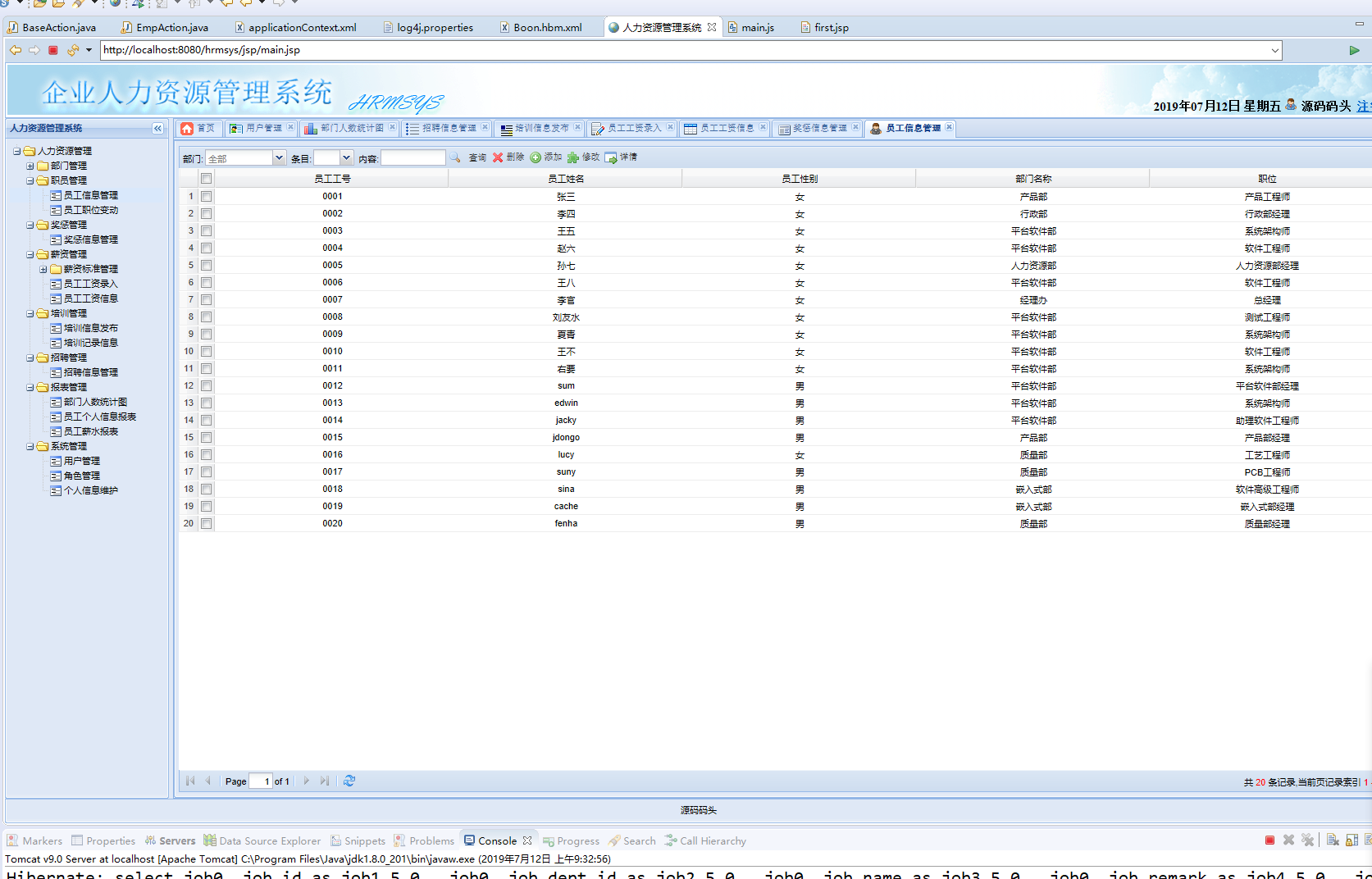
技术实现关键点:
// 员工信息管理Action实现
public class EmployeeAction extends ActionSupport {
    private Employee employee;
    private List<Employee> employeeList;
    private EmployeeService employeeService;

    // 员工入职处理
    public String onboard() {
        try {
            // 数据验证
            if (!validateEmployeeInfo()) {
                return INPUT;
            }

            // 生成唯一员工编号
            employee.setEmployeeNumber(generateEmployeeNumber());
            employee.setStatus(EmployeeStatus.ACTIVE);

            // 保存员工信息
            employeeService.saveEmployee(employee);

            // 触发入职流程
            initiateOnboardingProcess(employee);

            addActionMessage("员工入职成功!");
            return SUCCESS;
        } catch (Exception e) {
            addActionError("入职处理失败:" + e.getMessage());
            return ERROR;
        }
    }

    // 复杂的员工查询逻辑
    public String search() {
        EmployeeSearchCriteria criteria = buildSearchCriteria();
        employeeList = employeeService.findByCriteria(criteria);

        // 分页处理
        applyPagination();

        return SUCCESS;
    }
}
智能薪资计算引擎
薪资模块是系统的核心价值所在,通过自动化计算大幅减少人工错误,提高薪资核算效率。
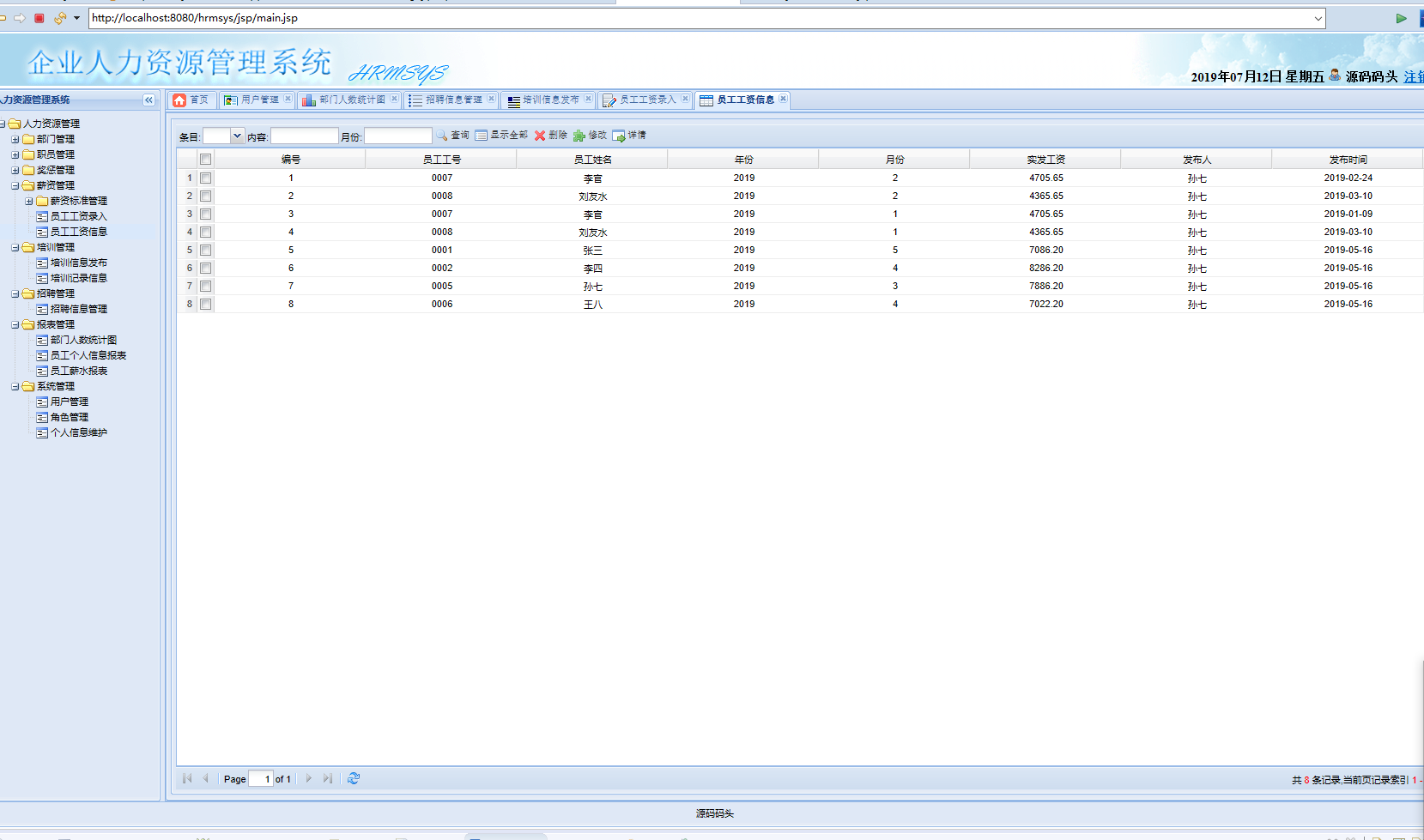
技术实现关键点:
// 薪资计算服务实现
@Service
@Transactional
public class SalaryCalculationEngine {

    @Autowired
    private AttendanceService attendanceService;

    @Autowired
    private PerformanceService performanceService;

    @Autowired
    private TaxCalculationService taxService;

    public SalaryRecord calculateSalary(Integer employeeId, YearMonth period) {
        Employee employee = employeeService.findById(employeeId);

        // 获取考勤数据
        AttendanceSummary attendance = attendanceService.getSummary(employeeId, period);

        // 获取绩效数据
        PerformanceEvaluation performance = performanceService.getEvaluation(employeeId, period);

        // 计算各个薪资组成部分
        BigDecimal baseSalary = calculateBaseSalary(employee, attendance);
        BigDecimal performanceBonus = calculatePerformanceBonus(performance);
        BigDecimal attendanceDeduction = calculateDeduction(attendance);

        // 计算税前总额
        BigDecimal grossSalary = baseSalary.add(performanceBonus).subtract(attendanceDeduction);

        // 计算个税
        BigDecimal taxAmount = taxService.calculateTax(grossSalary, employee.getTaxThreshold());

        // 计算实发工资
        BigDecimal netSalary = grossSalary.subtract(taxAmount);

        // 构建薪资记录
        SalaryRecord record = buildSalaryRecord(employee, period, grossSalary,
                                              netSalary, taxAmount, attendance, performance);

        return salaryDao.save(record);
    }

    private BigDecimal calculateBaseSalary(Employee employee, AttendanceSummary attendance) {
        BigDecimal dailySalary = employee.getBaseSalary().divide(BigDecimal.valueOf(22), 2, RoundingMode.HALF_UP);
        BigDecimal workedDays = BigDecimal.valueOf(attendance.getActualWorkDays());

        return dailySalary.multiply(workedDays);
    }
}
部门组织架构管理
系统提供可视化的部门管理界面,支持树形结构展示,便于管理者分析组织架构和人力分布。
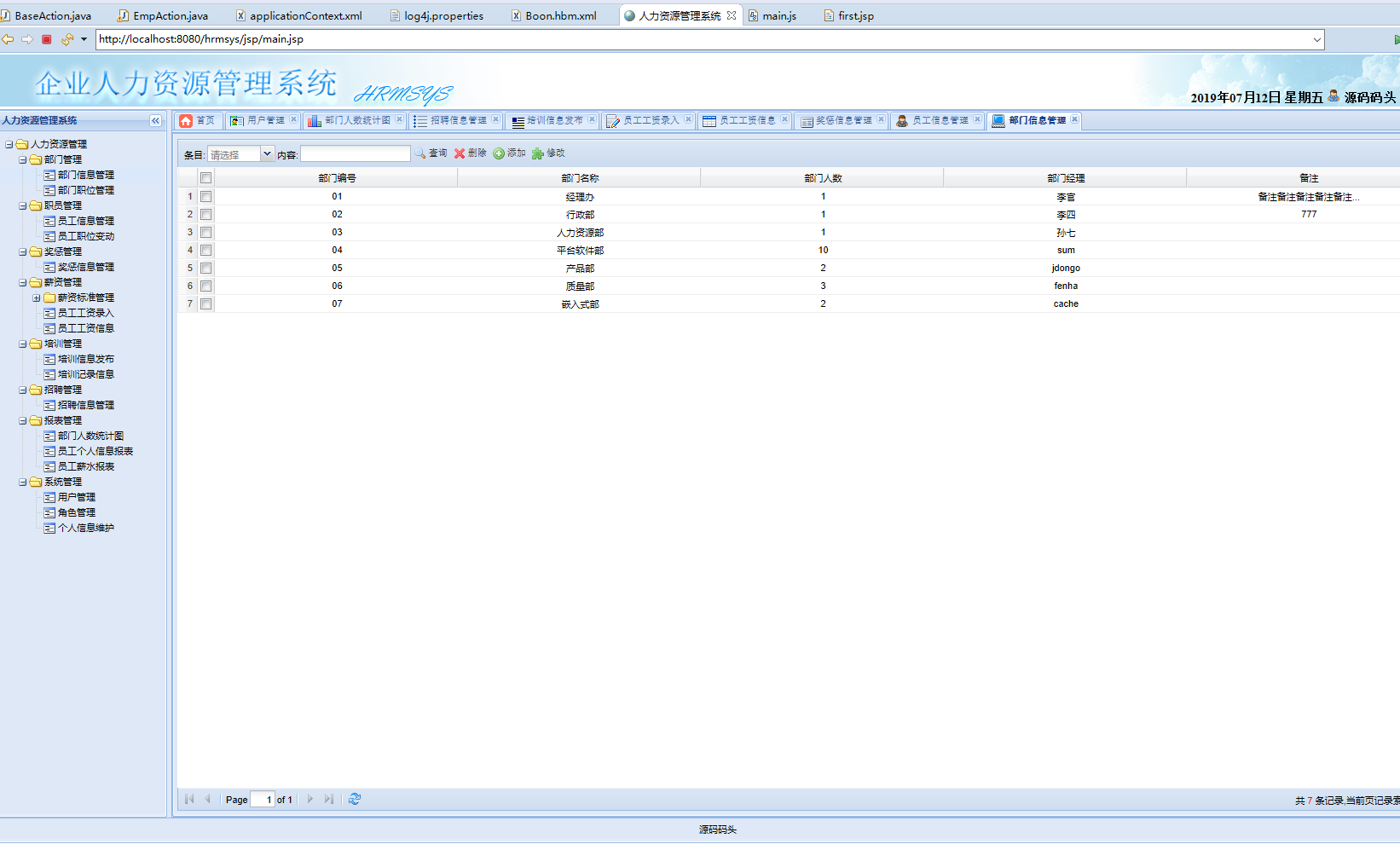
技术实现关键点:
// 部门管理服务实现
@Service
public class DepartmentServiceImpl implements DepartmentService {

    @Autowired
    private DepartmentDao departmentDao;

    public DepartmentTree buildDepartmentTree() {
        List<Department> allDepartments = departmentDao.findAll();
        return buildTreeRecursively(null, allDepartments);
    }

    private DepartmentTree buildTreeRecursively(Integer parentId, List<Department> departments) {
        DepartmentTree tree = new DepartmentTree();

        List<Department> children = departments.stream()
            .filter(dept -> Objects.equals(dept.getParentId(), parentId))
            .collect(Collectors.toList());

        for (Department dept : children) {
            DepartmentTree.Node node = new DepartmentTree.Node(dept);
            node.setChildren(buildTreeRecursively(dept.getId(), departments));
            tree.addNode(node);
        }

        return tree;
    }

    public DepartmentStatistics getDepartmentStatistics(Integer departmentId) {
        // 统计部门人数、薪资总额等关键指标
        long employeeCount = employeeDao.countByDepartment(departmentId);
        BigDecimal totalSalary = salaryDao.sumSalaryByDepartment(departmentId, YearMonth.now());
        BigDecimal avgSalary = totalSalary.divide(BigDecimal.valueOf(employeeCount), 2, RoundingMode.HALF_UP);

        return new DepartmentStatistics(employeeCount, totalSalary, avgSalary);
    }
}
招聘流程管理
招聘模块实现了从职位发布、简历筛选到面试安排的完整流程管理,提高了招聘工作的规范性和效率。
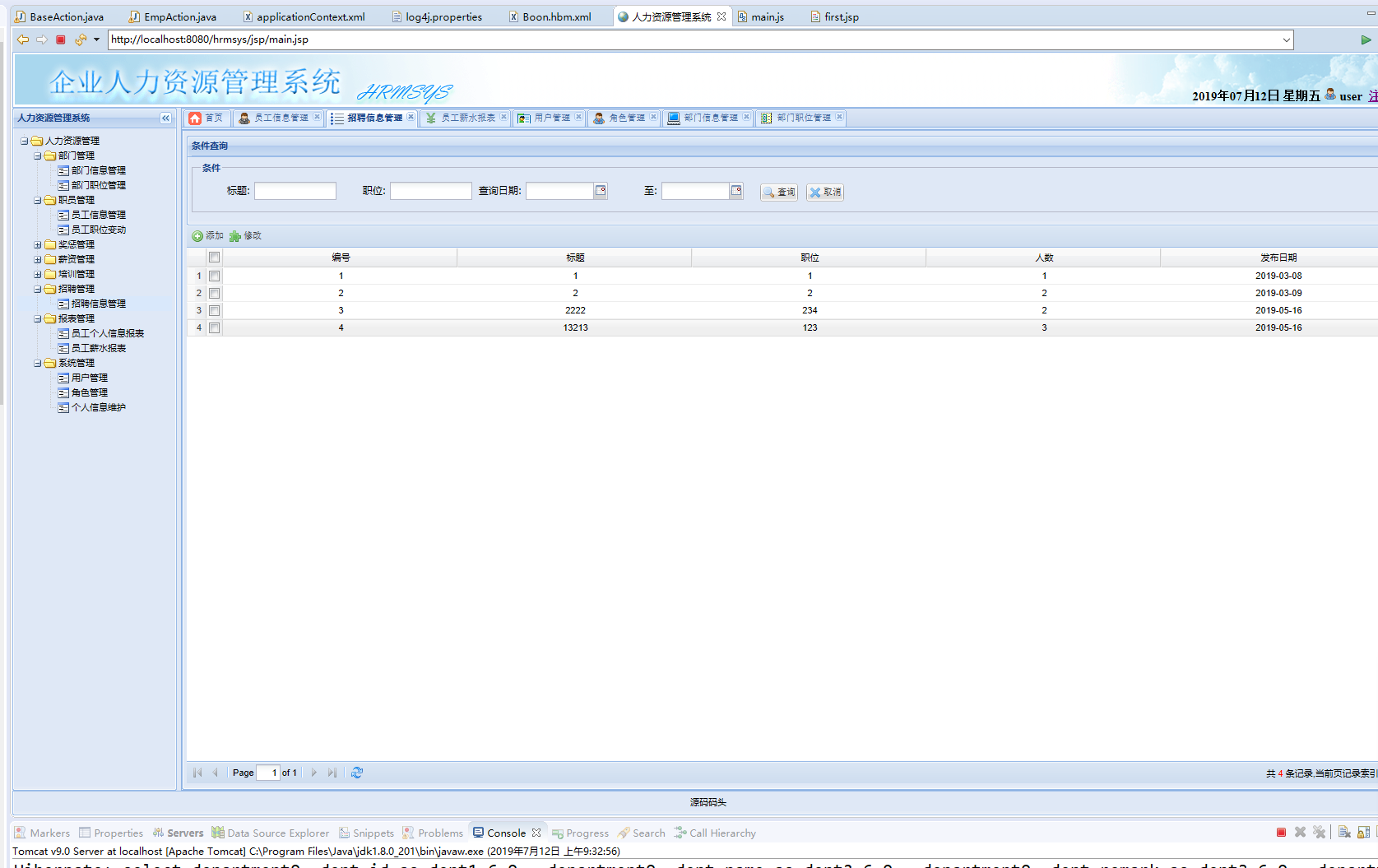
技术实现关键点:
// 招聘流程控制实现
@Service
public class RecruitmentProcessService {

    public RecruitmentProcess initiateProcess(JobPosition position, Applicant applicant) {
        RecruitmentProcess process = new RecruitmentProcess();
        process.setJobPosition(position);
        process.setApplicant(applicant);
        process.setCurrentStage(RecruitmentStage.RESUME_SCREENING);
        process.setStatus(ProcessStatus.ACTIVE);

        // 自动分配招聘专员
        Recruiter assignedRecruiter = assignRecruiter(position.getDepartment());
        process.setAssignedRecruiter(assignedRecruiter);

        // 创建初始任务
        createScreeningTask(process);

        return recruitmentDao.save(process);
    }

    public void advanceToNextStage(Integer processId) {
        RecruitmentProcess process = recruitmentDao.findById(processId);
        RecruitmentStage currentStage = process.getCurrentStage();
        RecruitmentStage nextStage = getNextStage(currentStage);

        process.setCurrentStage(nextStage);
        process.setLastUpdated(new Date());

        // 根据新阶段创建相应任务
        createStageSpecificTasks(process, nextStage);

        recruitmentDao.update(process);
    }

    private void createStageSpecificTasks(RecruitmentProcess process, RecruitmentStage stage) {
        switch (stage) {
            case INTERVIEW_ARRANGEMENT:
                createInterviewTask(process);
                break;
            case OFFER_NEGOTIATION:
                createOfferTask(process);
                break;
            case ONBOARDING_PREPARATION:
                createOnboardingTask(process);
                break;
        }
    }
}
实体模型与业务逻辑整合
系统通过Hibernate实体映射实现了对象与关系的完美转换,以下是核心实体类的设计:
// 员工实体类设计
@Entity
@Table(name = "employee")
public class Employee implements Serializable {

    @Id
    @GeneratedValue(strategy = GenerationType.IDENTITY)
    private Integer id;

    @Column(name = "employee_number", unique = true, nullable = false)
    private String employeeNumber;

    @Column(nullable = false)
    private String name;

    @Enumerated(EnumType.STRING)
    private Gender gender;

    @Column(name = "id_card", unique = true, nullable = false)
    private String idCard;

    @ManyToOne(fetch = FetchType.LAZY)
    @JoinColumn(name = "department_id")
    private Department department;

    @OneToMany(mappedBy = "employee", cascade = CascadeType.ALL)
    private Set<SalaryRecord> salaryRecords = new HashSet<>();

    @OneToMany(mappedBy = "employee", cascade = CascadeType.ALL)
    private Set<AttendanceRecord> attendanceRecords = new HashSet<>();

    // 业务逻辑方法
    public boolean isProbationary() {
        Period period = Period.between(hireDate, LocalDate.now());
        return period.getMonths() < 3; // 试用期3个月
    }

    public BigDecimal getCurrentBaseSalary() {
        return salaryAdjustments.stream()
            .filter(adj -> adj.getEffectiveDate().isBefore(LocalDate.now()))
            .max(Comparator.comparing(SalaryAdjustment::getEffectiveDate))
            .map(SalaryAdjustment::getNewSalary)
            .orElse(baseSalary);
    }
}
系统优化与功能扩展展望
基于当前系统架构和业务需求,以下优化方向具有较高的实施价值:
1. 性能优化与缓存策略
实现思路:引入Redis作为二级缓存,对频繁访问的组织架构数据、基础参数配置等进行缓存。对于复杂的薪资计算报表,可以采用预生成策略,在数据变更时异步更新缓存。
// 缓存集成示例
@Service
public class CachedDepartmentService {

    @Autowired
    private RedisTemplate<String, DepartmentTree> redisTemplate;

    @Cacheable(value = "departmentTree", key = "'fullTree'")
    public DepartmentTree getDepartmentTreeWithCache() {
        return buildDepartmentTree(); // 原始构建逻辑
    }

    @CacheEvict(value = "departmentTree", key = "'fullTree'")
    public void evictDepartmentTreeCache() {
        // 部门结构变更时清除缓存
    }
}
2. 微服务架构迁移
实现思路:将单体应用拆分为员工服务、考勤服务、薪资服务、招聘服务等独立微服务。通过Spring Cloud实现服务注册发现、配置管理和API网关,提升系统可扩展性和部署灵活性。
3. 智能化数据分析功能
实现思路:集成Apache Spark或类似的大数据处理框架,实现对历史薪资数据、员工流失率、绩效趋势的智能分析。通过机器学习算法预测人力成本变化和招聘需求。
4. 移动端支持与实时通知
实现思路:开发React Native跨平台移动应用,为员工提供薪资查询、请假申请等自助服务功能。集成WebSocket实现实时消息推送,如薪资发放通知、审批流程提醒等。
5. 流程引擎集成
实现思路:集成Activiti或Flowable工作流引擎,将员工入职、转正、离职等业务流程可视化配置。支持动态流程调整和审批路径自定义,提升业务流程的灵活性。
该系统通过SSH框架的有机整合,构建了一个稳定可靠的人力资源管理平台。清晰的分层架构、严谨的数据库设计和完善的业务功能,为企业的数字化转型提供了坚实的技术基础。随着技术的不断演进,系统在性能优化、架构升级和智能化扩展方面具有广阔的发展空间。