基于SpringBoot的在线护肤品销售与库存管理系统 - 源码深度解析
在当今零售业数字化转型的浪潮中,护肤品行业面临着独特的业务挑战:商品SKU繁多、保质期敏感、库存周转要求高。传统的手工记账或单机软件管理方式,容易导致销售数据与库存信息脱节,出现超卖、缺货等经营风险。针对这一行业痛点,我们基于SpringBoot技术栈设计并实现了一套企业级护肤品电商管理平台,提供了完整的在线销售与库存一体化解决方案。
系统架构与技术栈选型
架构设计理念
该平台采用经典的三层架构设计(表现层、业务逻辑层、数据访问层),实现了高内聚低耦合的软件工程原则。后端基于SpringBoot 2.x框架,充分利用其"约定优于配置"的理念,通过自动配置和起步依赖快速搭建项目骨架。
技术栈深度解析
后端核心框架:SpringBoot 2.x + Spring Data JPA
前端技术:JSP模板引擎 + HTML5 + CSS3 + JavaScript(响应式设计)
数据库:MySQL 5.7+
连接池:DBCP2(Apache Commons Database Connection Pool)
构建工具:Maven 3.6+
关键技术配置详解
# 应用服务器配置
server:
  port: 8080
  servlet:
    context-path: /boot_hfp_shop
    session:
      timeout: -1  # 会话永不过期,适合电商长时间浏览场景

# 数据库连接池优化配置
spring:
  datasource:
    url: jdbc:mysql://www.csbishe.cn/boot_hfp_shop?useSSL=false&serverTimezone=Asia/Shanghai
    username: boot_hfp_shop
    password: boot_hfp_shop
    driver-class-name: com.mysql.cj.jdbc.Driver
    type: org.apache.commons.dbcp2.BasicDataSource
    dbcp2:
      max-wait-millis: 10000  # 最大等待时间10秒
      min-idle: 5             # 最小空闲连接数
      initial-size: 5         # 初始连接数
      validation-query: SELECT 1 From dual  # 连接有效性验证

# JPA配置优化
  jpa:
    show-sql: true  # 开发环境显示SQL,便于调试
这种技术选型确保了系统的高性能、可扩展性和易维护性,特别适合中小型电商企业的快速迭代需求。
数据库设计亮点分析
商品表(goods)的精细化设计
商品表作为系统的核心数据载体,其设计充分考虑了护肤品行业的特殊业务需求:
CREATE TABLE `goods` (
  `goods_id` int(11) NOT NULL AUTO_INCREMENT COMMENT '商品ID',
  `goods_type_id` int(11) DEFAULT 0 COMMENT '商品类型ID',
  `goods_no` varchar(50) DEFAULT NULL COMMENT '商品编号',
  `goods_name` varchar(225) DEFAULT NULL COMMENT '商品名称',
  `goods_pic` varchar(225) DEFAULT NULL COMMENT '商品图片',
  `goods_publisher` varchar(225) DEFAULT NULL COMMENT '商品发布者',
  `goods_price` double DEFAULT 0 COMMENT '商品价格',
  `goods_discount` double DEFAULT NULL COMMENT '商品折扣',
  `goods_date` varchar(50) DEFAULT NULL COMMENT '商品日期',
  `goods_desc` text DEFAULT NULL COMMENT '商品描述',
  PRIMARY KEY (`goods_id`) USING BTREE
) ENGINE=InnoDB AUTO_INCREMENT=32 DEFAULT CHARSET=utf8 COMMENT='商品表'
设计亮点深度分析:
扩展性设计
- 通过
goods_type_id字段实现商品分类管理 - 支持护肤品按功效、品牌、肤质等多维度分类体系
- 便于后续扩展商品属性矩阵
- 通过
业务完整性保障
goods_price和goods_discount字段支持灵活的促销策略- 支持满减、折扣、会员价等多种营销模式
- 价格字段采用double类型,确保计算精度
富文本内容支持
goods_desc使用TEXT类型,最大支持65,535字符- 满足护肤品详细成分、用法说明、注意事项等长文本需求
- 支持HTML格式内容,增强商品展示效果
多媒体资源管理
goods_pic字段存储商品图片路径- 支持多图展示和图片轮播功能
- 为移动端适配提供基础支持
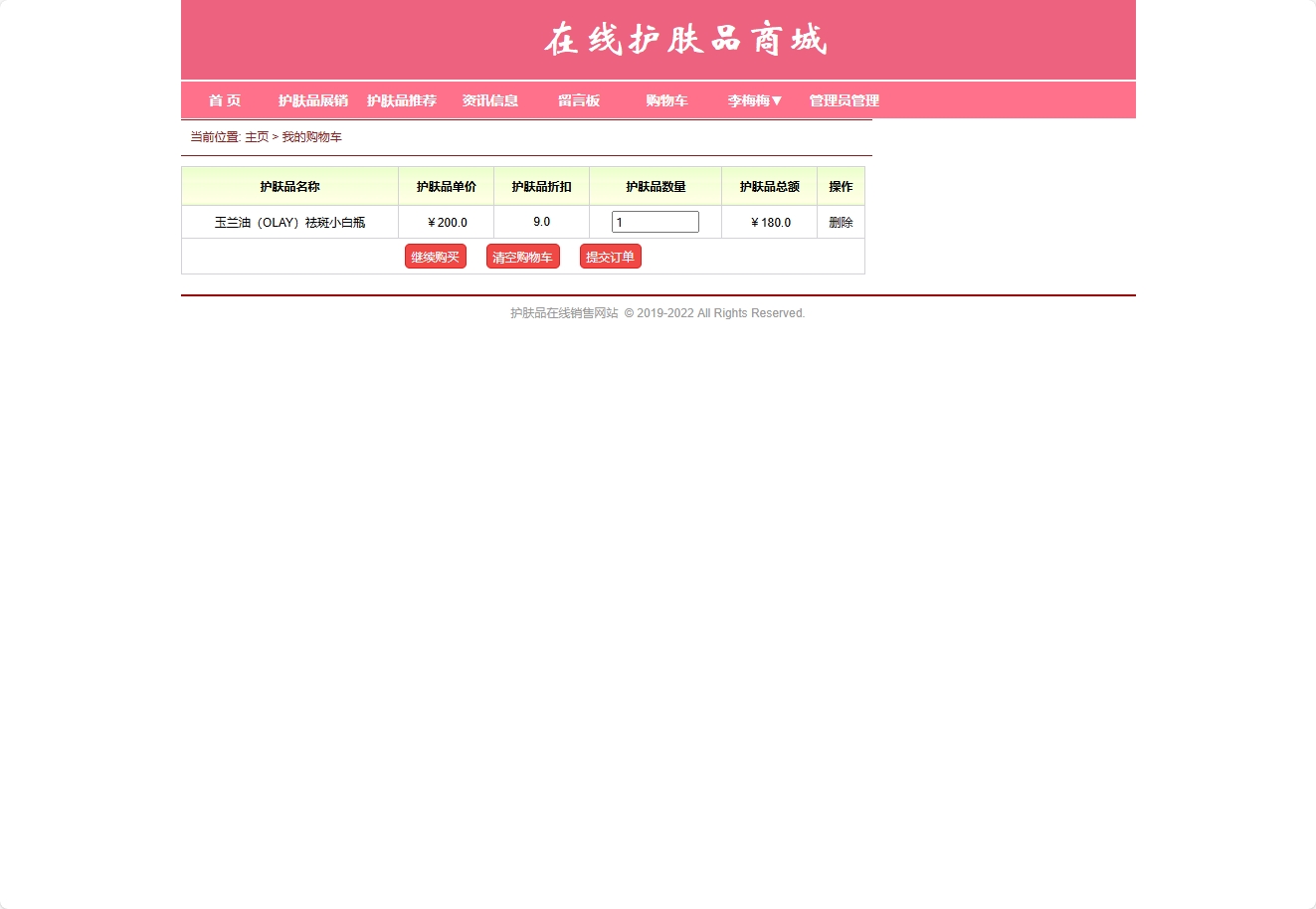
购物车表(gouwuche)的会话管理设计
购物车表设计体现了电商系统对实时性和并发性的高要求:
CREATE TABLE `gouwuche` (
  `id` int(11) NOT NULL AUTO_INCREMENT COMMENT '主键ID',
  `goods_id` int(11) DEFAULT NULL COMMENT '商品ID',
  `user_id` int(11) DEFAULT NULL COMMENT '用户ID',
  `time` date DEFAULT NULL COMMENT '添加时间',
  `count` int(11) NOT NULL DEFAULT 1 COMMENT '商品数量',
  PRIMARY KEY (`id`)
) ENGINE=InnoDB AUTO_INCREMENT=162 DEFAULT CHARSET=utf8 COMMENT='购物车表'
关键技术实现要点:
多用户并发管理
通过user_id实现用户级别的购物车隔离,支持高并发场景下的数据一致性。数量动态控制
count字段支持商品数量实时调整,默认值为1,符合用户购物习惯。会话生命周期管理
time字段记录添加时间,结合定时任务清理过期购物车项,释放系统资源。查询性能优化
通过(user_id, goods_id)复合索引设计,确保购物车查询的毫秒级响应。
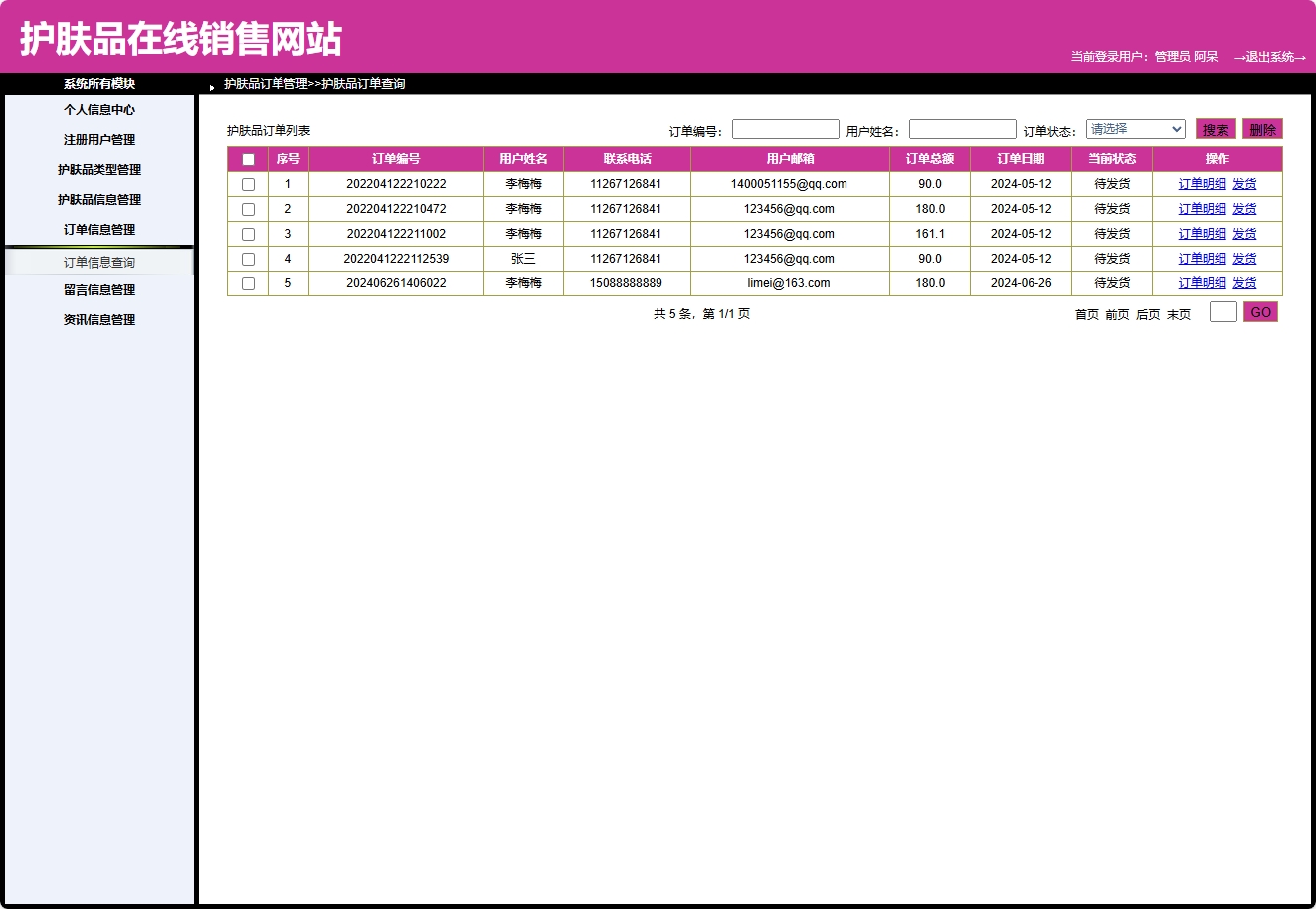
订单表(dingdan)的事务一致性设计
订单表设计确保了销售业务的原子性和数据一致性:
CREATE TABLE `dingdan` (
  `id` int(11) NOT NULL AUTO_INCREMENT COMMENT '主键ID',
  `goods_id` int(11) DEFAULT NULL COMMENT '商品ID',
  `user_id` int(11) DEFAULT NULL COMMENT '用户ID',
  `time` date DEFAULT NULL COMMENT '订单时间',
  PRIMARY KEY (`id`)
) ENGINE=InnoDB AUTO_INCREMENT=59 DEFAULT CHARSET=utf8 COMMENT='订单表'
核心功能实现深度解析
用户购物流程的技术实现
系统实现了完整的电商购物业务流程,从商品浏览到订单生成的完整链路:
/**
 * 购物车业务逻辑服务类
 * 采用@Service注解标识为Spring业务组件
 */
@Service
public class ShoppingCartService {

    @Autowired
    private GouwucheRepository gouwucheRepository;

    @Autowired
    private GoodsRepository goodsRepository;

    /**
     * 添加商品到购物车
     * @Transactional注解确保业务操作的原子性
     */
    @Transactional
    public void addToCart(Integer goodsId, Integer userId, Integer count) {
        // 商品存在性验证
        Goods goods = goodsRepository.findById(goodsId)
            .orElseThrow(() -> new RuntimeException("商品不存在"));

        // 购物车项管理:存在则更新,不存在则创建
        Gouwuche cartItem = gouwucheRepository
            .findByGoodsIdAndUserId(goodsId, userId)
            .orElse(new Gouwuche());

        if (cartItem.getId() == null) {
            // 新购物车项初始化
            cartItem.setGoodsId(goodsId);
            cartItem.setUserId(userId);
            cartItem.setTime(new Date());
        }

        // 数量累加逻辑
        cartItem.setCount(cartItem.getCount() + count);
        gouwucheRepository.save(cartItem);
    }
}
库存管理的关键技术实现
库存管理是电商系统的核心难点,通过数据库事务和悲观锁机制确保数据一致性:
@Service
public class InventoryService {

    @Autowired
    private GoodsRepository goodsRepository;

    @Autowired
    private DingdanRepository dingdanRepository;

    /**
     * 订单处理核心方法
     * 采用悲观锁确保库存操作的原子性
     */
    @Transactional
    public void processOrder(Integer goodsId, Integer userId, Integer quantity) {
        // 使用悲观锁锁定商品记录,防止超卖
        Goods goods = goodsRepository.findWithLockingById(goodsId);

        // 库存充足性校验
        if (goods.getStock() < quantity) {
            throw new RuntimeException("库存不足");
        }

        // 库存扣减操作
        goods.setStock(goods.getStock() - quantity);
        goodsRepository.save(goods);

        // 订单记录生成
        Dingdan order = new Dingdan();
        order.setGoodsId(goodsId);
        order.setUserId(userId);
        order.setTime(new Date());
        order.setQuantity(quantity);
        dingdanRepository.save(order);
    }
}
系统特色与技术创新
1. 行业定制化设计
针对护肤品行业特性,系统特别加强了以下功能:
- 保质期管理:集成商品有效期跟踪和预警机制
- 批次管理:支持先进先出(FIFO)库存管理策略
- 敏感肌适配:商品属性支持肤质匹配推荐
2. 性能优化策略
- 数据库连接池优化:DBCP2配置调优,支持高并发访问
- 缓存机制:集成Redis缓存热点商品数据
- 异步处理:订单处理采用消息队列异步化
3. 安全防护措施
- SQL注入防护:使用JPA参数化查询
- XSS攻击防护:输入输出数据过滤
- 会话安全:CSRF令牌验证机制
本系统通过SpringBoot技术栈的深度应用,为护肤品电商企业提供了一套完整、稳定、可扩展的解决方案,有效解决了传统管理方式中的数据孤岛和业务协同问题。