报刊订阅数字化管理平台:SpringBoot技术实现深度解析
在传统报刊发行行业数字化转型的浪潮中,一套高效、可靠的订阅管理系统成为提升运营效率的关键工具。本文深度解析基于SpringBoot框架构建的模拟报纸订阅管理系统,该系统为报刊发行机构提供全流程的数字化管理解决方案,实现了从用户订阅、订单处理到配送跟踪的完整业务闭环。
系统架构与技术栈选型
架构设计理念
系统采用经典的三层架构设计(表现层、业务逻辑层、数据访问层),结合前后端分离的开发模式,确保了系统的高可维护性和扩展性。这种架构设计使得各层职责清晰,便于团队协作和后续功能迭代。
核心技术栈选型
- 后端框架:SpringBoot 2.x为核心框架,充分利用其自动配置和起步依赖特性快速搭建项目基础结构
- 数据持久层:JPA规范与MySQL数据库交互,实现对象关系映射的优雅处理
- 前端技术:Thymeleaf模板引擎结合Bootstrap组件库,构建响应式用户界面
- 性能优化:Druid连接池优化数据库访问性能
关键配置详解
系统配置文件体现了SpringBoot的约定优于配置理念:
# 服务端基础配置
server:
  context-path: /boot_bzsite
  port: 18082

# 文件上传配置(支持大文件传输)
spring:
  http:
    multipart:
      enabled: true
      max-file-size: 100MB
      max-request-size: 100MB

  # 数据库连接配置
  datasource:
    url: jdbc:mysql://www.csbishe.cn/boot_bzsite?useSSL=true&characterEncoding=utf8&zeroDateTimeBehavior=convertToNull
    username: boot_bzsite
    password: boot_bzsite
    driver-class-name: com.mysql.jdbc.Driver
    type: com.alibaba.druid.pool.DruidDataSource
数据库设计亮点分析
商品信息表设计优化
商品表(product)的设计充分考虑了报刊订阅业务的特殊性:
CREATE TABLE `product` (
  `id` int(11) NOT NULL AUTO_INCREMENT COMMENT '自增主键',
  `csid` int(11) DEFAULT NULL COMMENT '类型ID',
  `desc` varchar(1000) DEFAULT NULL COMMENT '描述',
  `image` varchar(255) DEFAULT NULL COMMENT '图片',
  `is_hot` int(11) DEFAULT NULL COMMENT '是否热门',
  `market_price` double DEFAULT NULL COMMENT '市场价',
  `pdate` datetime DEFAULT NULL COMMENT '发布时间',
  `shop_price` bigint(20) DEFAULT NULL COMMENT '商城价',
  `title` varchar(255) DEFAULT NULL COMMENT '标题',
  PRIMARY KEY (`id`)
) ENGINE=InnoDB AUTO_INCREMENT=23 DEFAULT CHARSET=utf8 COLLATE=utf8_general_ci COMMENT='商品信息表'
设计亮点:
- 业务标识字段:
is_hot字段实现热门报刊标识,支持营销推广 - 双重定价策略:
market_price和shop_price分别记录市场价和实际售价 - 扩展性设计:
desc字段1000字符长度确保详细描述,pdate支持时间维度分析
订单子项表设计
支持灵活订阅模式的多对多关系设计:
CREATE TABLE `order_item` (
  `id` int(11) NOT NULL AUTO_INCREMENT COMMENT '自增主键',
  `count` int(11) DEFAULT NULL COMMENT '数量',
  `order_id` int(11) DEFAULT NULL COMMENT '订单ID',
  `product_id` int(11) DEFAULT NULL COMMENT '商品ID',
  `sub_total` double DEFAULT NULL COMMENT '小计',
  PRIMARY KEY (`id`)
) ENGINE=InnoDB AUTO_INCREMENT=11 DEFAULT CHARSET=utf8 COLLATE=utf8_general_ci COMMENT='订单子项表'
业务价值:
- 支持用户一次性订阅多种报刊
count字段满足多期订阅需求sub_total预计算提升订单统计效率
分类表层次结构设计
采用递归结构实现无限级分类管理:
CREATE TABLE `classification` (
  `id` int(11) NOT NULL AUTO_INCREMENT COMMENT '自增主键',
  `cname` varchar(255) DEFAULT NULL COMMENT '分类名称',
  `parent_id` int(11) DEFAULT NULL COMMENT '父类ID',
  `type` int(11) DEFAULT NULL COMMENT '类型',
  PRIMARY KEY (`id`)
) ENGINE=InnoDB AUTO_INCREMENT=18 DEFAULT CHARSET=utf8 COLLATE=utf8_general_ci COMMENT='分类表'
技术优势:
- 树形结构设计适应复杂分类需求
type字段支持分类级别控制- 极大增强系统灵活性和扩展性
核心功能实现解析
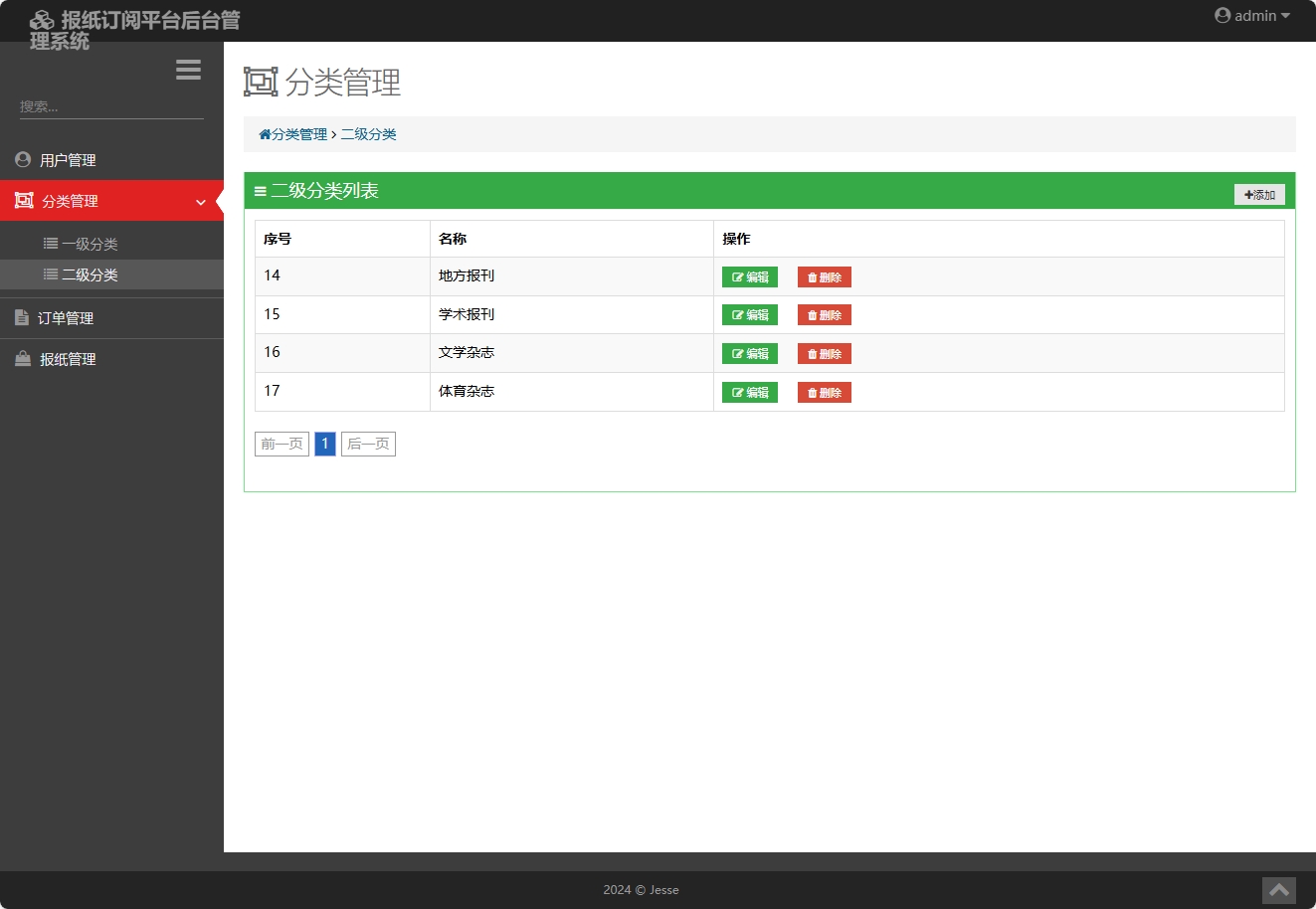
分类管理功能实现
系统提供完整的分类管理功能,支持多级分类配置:
@Controller
@RequestMapping("/admin/classification")
public class AdminClassificationController {
    @Autowired
    private ClassificationService classificationService;

    @RequestMapping("/toList.html")
    public String toList(int type) {
        if (type == 1) {
            return "admin/category/list";
        } else if (type == 2) {
            return "admin/categorysec/list";
        } else {
            return "";
        }
    }

    @ResponseBody
    @RequestMapping(method = RequestMethod.POST, value = "/add.do")
    public ResultBean<Boolean> add(String cname, int parentId, int type) {
        Classification classification = new Classification();
        classification.setCname(cname);
        classification.setParentId(parentId);
        classification.setType(type);
        classificationService.create(classification);
        return new ResultBean<>(true);
    }
}
功能特色:
- 基于类型参数的路由分发机制
- 统一的RESTful风格API设计
- 前后端分离的数据交互方式
用户权限管理实现
采用标准的JPA注解实现管理员权限控制:
@Entity
public class AdminUser implements Serializable {
    private static final long serialVersionUID = 1L;

    @Id
    @GeneratedValue
    @Column
    private Integer id;

    @Column(nullable = false)
    private String username;

    @Column
    private String password;

    // 完整的实体类方法实现
    public AdminUser(Integer id, String username, String password) {
        this.id = id;
        this.username = username;
        this.password = password;
    }

    @Override
    public boolean equals(Object that) {
        if (this == that) return true;
        if (that == null || getClass() != that.getClass()) return false;
        AdminUser other = (AdminUser) that;
        return Objects.equals(id, other.id) &&
               Objects.equals(username, other.username) &&
               Objects.equals(password, other.password);
    }

    // 其他getter/setter方法...
}
安全特性:
- 完整的实体标识方法(equals/hashCode)
- 非空约束确保数据完整性
- 序列化支持分布式会话管理

技术总结与展望
本系统通过SpringBoot框架的合理运用,结合现代化的数据库设计理念,成功构建了一套功能完善、性能优越的报刊订阅管理系统。系统在架构设计、数据模型、业务实现等方面都体现了较高的技术水平,为传统报刊行业的数字化转型提供了有力的技术支撑。
未来可考虑的功能扩展方向包括:移动端适配、大数据分析、智能推荐算法集成等,进一步提升系统的商业价值和用户体验。