在传统演出行业数字化转型的浪潮中,票务管理的效率与体验直接关系到剧院的核心竞争力。传统模式下,人工售票、纸质票根、分散的场次记录不仅效率低下,更易导致数据不一致和财务漏洞。针对这些痛点,我们设计并实现了一套基于JSP+Servlet技术的“剧院智慧票务云平台”,该系统通过业务流程线上化与数据集中管控,为中小型剧院提供了一站式解决方案。
该系统采用经典的MVC架构模式,实现了业务逻辑、数据与表现层的彻底分离。Servlet作为系统的控制器枢纽,负责拦截并处理所有HTTP请求,进行参数校验、业务调度和会话管理。JSP页面则专注于视图渲染,通过JSTL标签库和EL表达式动态展示数据,完全避免了Java代码与HTML的混杂。数据持久层采用JDBC直接连接MySQL数据库,通过DAO设计模式封装所有数据操作,确保了事务的ACID特性。这种分层架构不仅保证了系统的可维护性和可扩展性,也使得团队协作开发更加高效。
数据库设计深度解析
系统的数据模型设计充分考虑了剧院业务的实体关系与操作特性。以下是几个核心表的详细分析:
用户表的设计不仅涵盖了基础的身份信息,还集成了钱包功能,体现了业务闭环的设计思想:
CREATE TABLE users (
    user_id INT AUTO_INCREMENT PRIMARY KEY,
    username VARCHAR(50) UNIQUE NOT NULL,
    password VARCHAR(255) NOT NULL,  -- 加密存储
    email VARCHAR(100) UNIQUE NOT NULL,
    balance DECIMAL(10,2) DEFAULT 0.00,
    created_at TIMESTAMP DEFAULT CURRENT_TIMESTAMP,
    is_active BOOLEAN DEFAULT TRUE
);
该表的亮点在于将用户账户与金融属性紧密结合。balance字段直接记录了用户预存金额,支持在线充值消费,减少了对外部支付平台的依赖。is_active字段提供了软删除能力,确保历史订单数据的参照完整性。created_at的时间戳为后续的用户行为分析提供了数据基础。
演出场次表的设计展现了复杂业务规则的精细化建模:
CREATE TABLE performances (
    performance_id INT AUTO_INCREMENT PRIMARY KEY,
    title VARCHAR(200) NOT NULL,
    description TEXT,
    performance_date DATETIME NOT NULL,
    venue VARCHAR(100) NOT NULL,
    total_seats INT NOT NULL,
    available_seats INT NOT NULL,
    price DECIMAL(8,2) NOT NULL,
    status ENUM('scheduled', 'ongoing', 'cancelled', 'completed') DEFAULT 'scheduled',
    created_by INT,
    FOREIGN KEY (created_by) REFERENCES users(user_id)
);
该表通过status枚举字段精确控制了演出生命周期状态流转,业务逻辑可以根据不同状态限制座位选择或退票操作。available_seats的独立存储避免了频繁的COUNT查询,显著提升了票务查询性能。外键created_by关联到管理员用户,建立了完整的操作审计链条。
订单表的设计体现了电商系统典型的事务处理模式:
CREATE TABLE orders (
    order_id INT AUTO_INCREMENT PRIMARY KEY,
    user_id INT NOT NULL,
    performance_id INT NOT NULL,
    quantity INT NOT NULL CHECK (quantity > 0),
    total_amount DECIMAL(10,2) NOT NULL,
    order_status ENUM('pending', 'paid', 'cancelled', 'refunded') DEFAULT 'pending',
    created_at TIMESTAMP DEFAULT CURRENT_TIMESTAMP,
    payment_method VARCHAR(50),
    FOREIGN KEY (user_id) REFERENCES users(user_id),
    FOREIGN KEY (performance_id) REFERENCES performances(performance_id)
);
该表的quantity字段通过CHECK约束保证了业务规则在数据库层的强制实施,order_status的完整状态机支持复杂的票务流程,如支付超时自动取消、演出前可退票等。total_amount的冗余存储虽然违反了第三范式,但避免了每次显示订单时重新计算,是典型的以空间换时间的优化策略。
核心功能实现剖析
- 智能演出查询与选座系统
前端通过AJAX技术实现无刷新演出筛选,用户可以根据日期、剧目类型等条件快速定位目标演出。系统通过高性能的座位余量计算算法,实时展示可售座位状态。
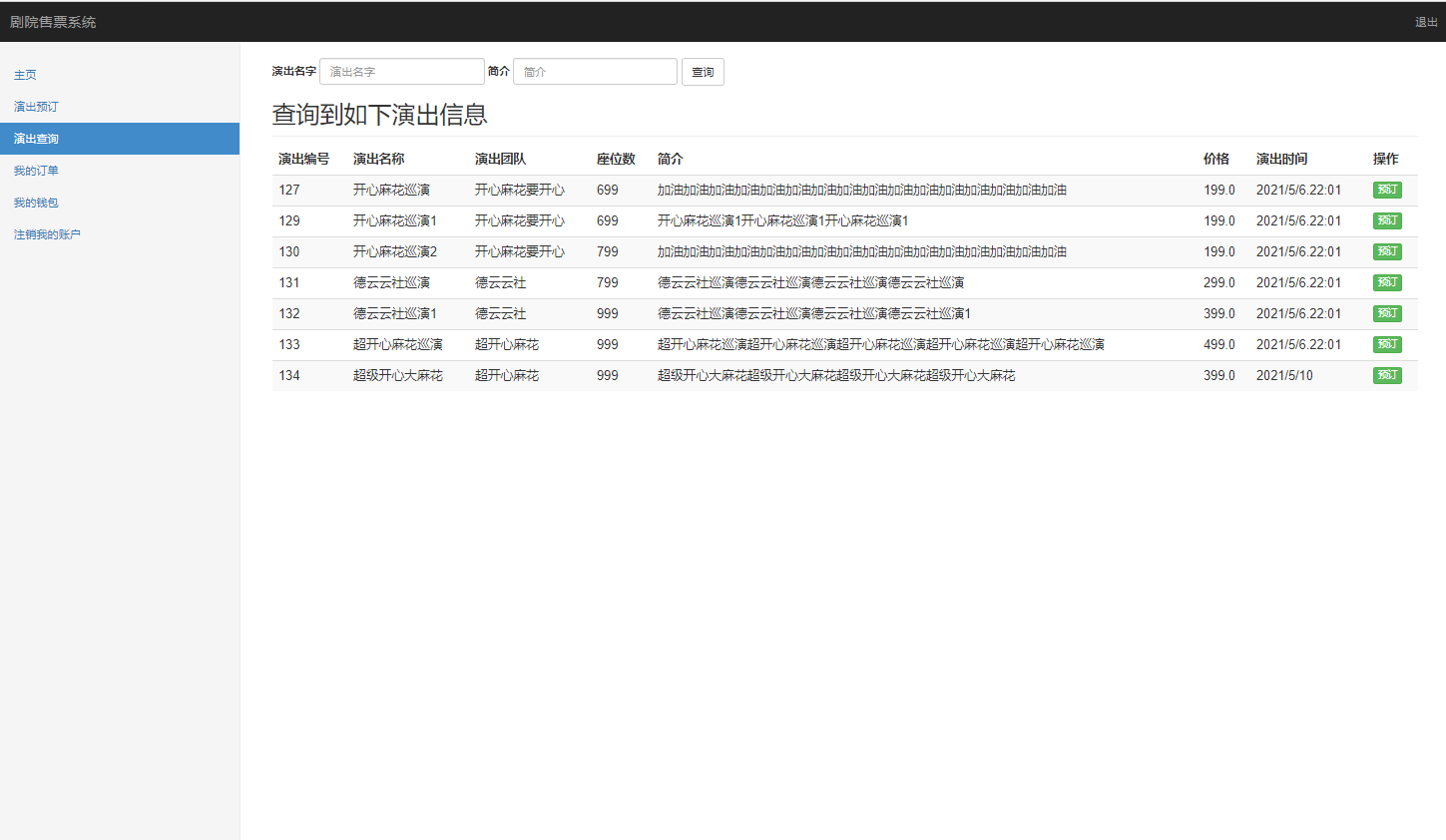
核心的座位查询Servlet处理逻辑如下:
@WebServlet("/performance/query")
public class PerformanceQueryServlet extends HttpServlet {
    protected void doGet(HttpServletRequest request, HttpServletResponse response)
            throws ServletException, IOException {
        String dateStr = request.getParameter("date");
        String venue = request.getParameter("venue");

        PerformanceDAO performanceDAO = new PerformanceDAO();
        List<Performance> performances;

        if (dateStr != null && !dateStr.isEmpty()) {
            Date date = Date.valueOf(dateStr);
            performances = performanceDAO.getPerformancesByDate(date);
        } else if (venue != null && !venue.isEmpty()) {
            performances = performanceDAO.getPerformancesByVenue(venue);
        } else {
            performances = performanceDAO.getAllActivePerformances();
        }

        request.setAttribute("performances", performances);
        request.getRequestDispatcher("/performance-list.jsp").forward(request, response);
    }
}
选座过程中的并发控制通过数据库悲观锁实现,确保高并发场景下的数据一致性:
public class BookingService {
    public synchronized boolean reserveSeats(int performanceId, int seatCount) {
        Connection conn = null;
        try {
            conn = DatabaseConnection.getConnection();
            conn.setAutoCommit(false);

            // 使用SELECT FOR UPDATE锁定记录
            String sql = "SELECT available_seats FROM performances WHERE performance_id = ? FOR UPDATE";
            PreparedStatement stmt = conn.prepareStatement(sql);
            stmt.setInt(1, performanceId);
            ResultSet rs = stmt.executeQuery();

            if (rs.next()) {
                int availableSeats = rs.getInt("available_seats");
                if (availableSeats >= seatCount) {
                    String updateSql = "UPDATE performances SET available_seats = ? WHERE performance_id = ?";
                    PreparedStatement updateStmt = conn.prepareStatement(updateSql);
                    updateStmt.setInt(1, availableSeats - seatCount);
                    updateStmt.setInt(2, performanceId);
                    updateStmt.executeUpdate();
                    conn.commit();
                    return true;
                }
            }
            conn.rollback();
            return false;
        } catch (SQLException e) {
            if (conn != null) try { conn.rollback(); } catch (SQLException ex) {}
            return false;
        } finally {
            if (conn != null) try { conn.close(); } catch (SQLException e) {}
        }
    }
}
- 集成化钱包管理与支付流程
系统内置的钱包功能减少了对外部支付接口的依赖,提供了更流畅的支付体验。钱包余额变动通过数据库事务确保资金操作的原子性。
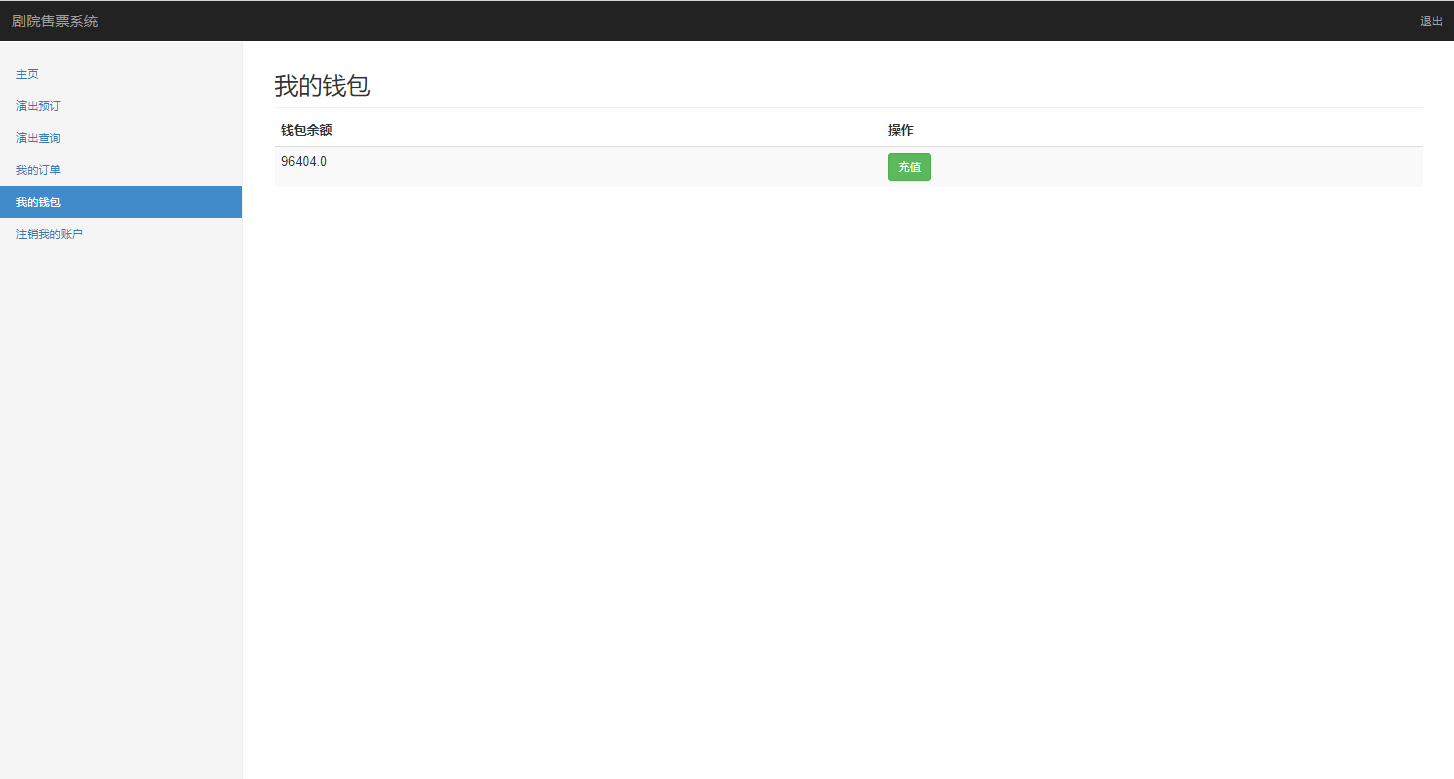
钱包充值的关键业务逻辑:
public class WalletService {
    public boolean rechargeWallet(int userId, BigDecimal amount) {
        if (amount.compareTo(BigDecimal.ZERO) <= 0) {
            return false;
        }

        Connection conn = null;
        try {
            conn = DatabaseConnection.getConnection();
            conn.setAutoCommit(false);

            // 更新用户余额
            String sql = "UPDATE users SET balance = balance + ? WHERE user_id = ?";
            PreparedStatement stmt = conn.prepareStatement(sql);
            stmt.setBigDecimal(1, amount);
            stmt.setInt(2, userId);
            int affectedRows = stmt.executeUpdate();

            if (affectedRows == 1) {
                // 记录交易流水
                String transactionSql = "INSERT INTO transactions (user_id, amount, type, description) VALUES (?, ?, 'recharge', ?)";
                PreparedStatement transactionStmt = conn.prepareStatement(transactionSql);
                transactionStmt.setInt(1, userId);
                transactionStmt.setBigDecimal(2, amount);
                transactionStmt.setString(3, "在线充值");
                transactionStmt.executeUpdate();

                conn.commit();
                return true;
            }
            conn.rollback();
            return false;
        } catch (SQLException e) {
            if (conn != null) try { conn.rollback(); } catch (SQLException ex) {}
            return false;
        } finally {
            if (conn != null) try { conn.close(); } catch (SQLException e) {}
        }
    }
}
- 管理员订单监控与数据分析
后台管理系统提供完整的订单生命周期管理功能,支持按时间、状态、用户等多维度筛选。数据分析模块通过SQL聚合函数生成实时业务报表。
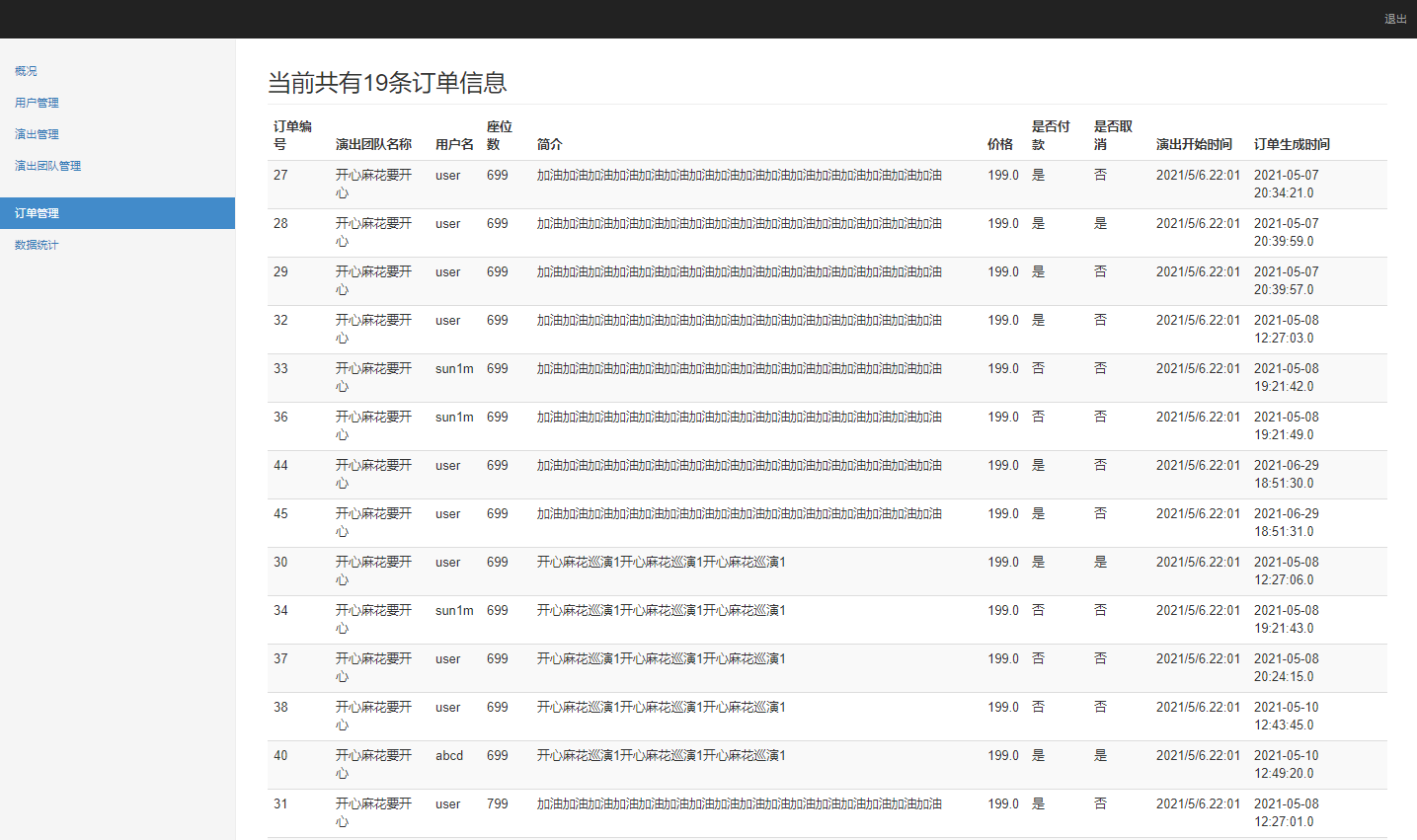
订单统计的核心数据查询逻辑:
public class ReportService {
    public SalesReport generateDailyReport(Date reportDate) {
        SalesReport report = new SalesReport();

        String sql = "SELECT COUNT(*) as order_count, SUM(total_amount) as total_sales, " +
                    "AVG(total_amount) as avg_order_value " +
                    "FROM orders WHERE DATE(created_at) = ? AND order_status = 'paid'";

        try (Connection conn = DatabaseConnection.getConnection();
             PreparedStatement stmt = conn.prepareStatement(sql)) {

            stmt.setDate(1, new java.sql.Date(reportDate.getTime()));
            ResultSet rs = stmt.executeQuery();

            if (rs.next()) {
                report.setOrderCount(rs.getInt("order_count"));
                report.setTotalSales(rs.getBigDecimal("total_sales"));
                report.setAvgOrderValue(rs.getBigDecimal("avg_order_value"));
            }

            // 计算上座率
            String occupancySql = "SELECT p.title, p.total_seats, " +
                                "(p.total_seats - p.available_seats) as sold_seats, " +
                                "ROUND((p.total_seats - p.available_seats) * 100.0 / p.total_seats, 2) as occupancy_rate " +
                                "FROM performances p WHERE DATE(p.performance_date) = ?";

            try (PreparedStatement occupancyStmt = conn.prepareStatement(occupancySql)) {
                occupancyStmt.setDate(1, new java.sql.Date(reportDate.getTime()));
                ResultSet occupancyRs = occupancyStmt.executeQuery();

                List<PerformanceOccupancy> occupancyList = new ArrayList<>();
                while (occupancyRs.next()) {
                    PerformanceOccupancy occupancy = new PerformanceOccupancy();
                    occupancy.setTitle(occupancyRs.getString("title"));
                    occupancy.setOccupancyRate(occupancyRs.getBigDecimal("occupancy_rate"));
                    occupancyList.add(occupancy);
                }
                report.setOccupancyList(occupancyList);
            }

        } catch (SQLException e) {
            e.printStackTrace();
        }
        return report;
    }
}
- 演出团队与剧目管理
管理员可以完整管理演出团队信息和剧目资料,支持图片上传、详细描述编辑等富文本功能。
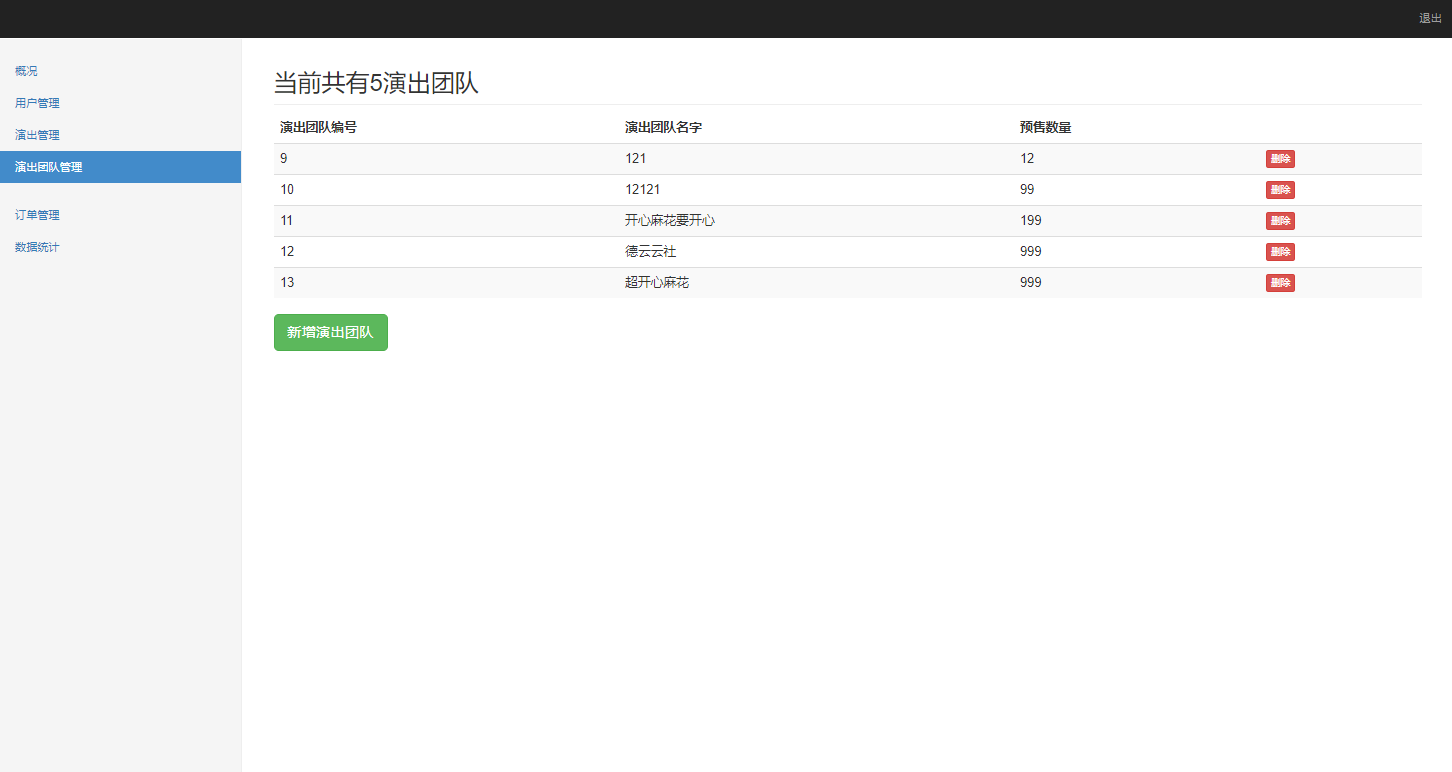
剧目信息更新的服务层实现:
public class PerformanceService {
    public boolean updatePerformance(Performance performance) {
        String sql = "UPDATE performances SET title = ?, description = ?, performance_date = ?, " +
                    "venue = ?, total_seats = ?, price = ?, status = ? WHERE performance_id = ?";

        try (Connection conn = DatabaseConnection.getConnection();
             PreparedStatement stmt = conn.prepareStatement(sql)) {

            stmt.setString(1, performance.getTitle());
            stmt.setString(2, performance.getDescription());
            stmt.setTimestamp(3, new Timestamp(performance.getPerformanceDate().getTime()));
            stmt.setString(4, performance.getVenue());
            stmt.setInt(5, performance.getTotalSeats());
            stmt.setBigDecimal(6, performance.getPrice());
            stmt.setString(7, performance.getStatus().name());
            stmt.setInt(8, performance.getPerformanceId());

            return stmt.executeUpdate() > 0;
        } catch (SQLException e) {
            e.printStackTrace();
            return false;
        }
    }
}
实体模型与业务逻辑封装
系统通过精细的JavaBean设计实现了业务对象的完整封装。以订单实体为例,其模型类不仅包含数据属性,还集成了相关的业务方法:
public class Order {
    private int orderId;
    private int userId;
    private int performanceId;
    private int quantity;
    private BigDecimal totalAmount;
    private OrderStatus orderStatus;
    private Date createdAt;
    private String paymentMethod;

    // 关联对象
    private User user;
    private Performance performance;

    public enum OrderStatus {
        PENDING, PAID, CANCELLED, REFUNDED
    }

    // 业务方法:检查订单是否可退款
    public boolean canRefund() {
        if (orderStatus != OrderStatus.PAID) {
            return false;
        }

        // 获取演出时间,判断是否在可退款时间范围内
        Performance perf = getPerformance();
        if (perf != null) {
            long timeDiff = perf.getPerformanceDate().getTime() - System.currentTimeMillis();
            long hoursDiff = timeDiff / (60 * 60 * 1000);
            return hoursDiff > 24; // 演出前24小时外可退款
        }
        return false;
    }

    // 业务方法:计算订单超时时间
    public Date getExpiryTime() {
        Calendar cal = Calendar.getInstance();
        cal.setTime(createdAt);
        cal.add(Calendar.MINUTE, 30); // 30分钟支付超时
        return cal.getTime();
    }

    // 标准的getter和setter方法
    public int getOrderId() { return orderId; }
    public void setOrderId(int orderId) { this.orderId = orderId; }

    // ... 其他getter/setter方法
}
数据统计与可视化展示
系统的数据统计模块通过多维度聚合查询,为管理员提供直观的业务洞察。统计页面使用Chart.js等前端库实现数据的可视化展示。
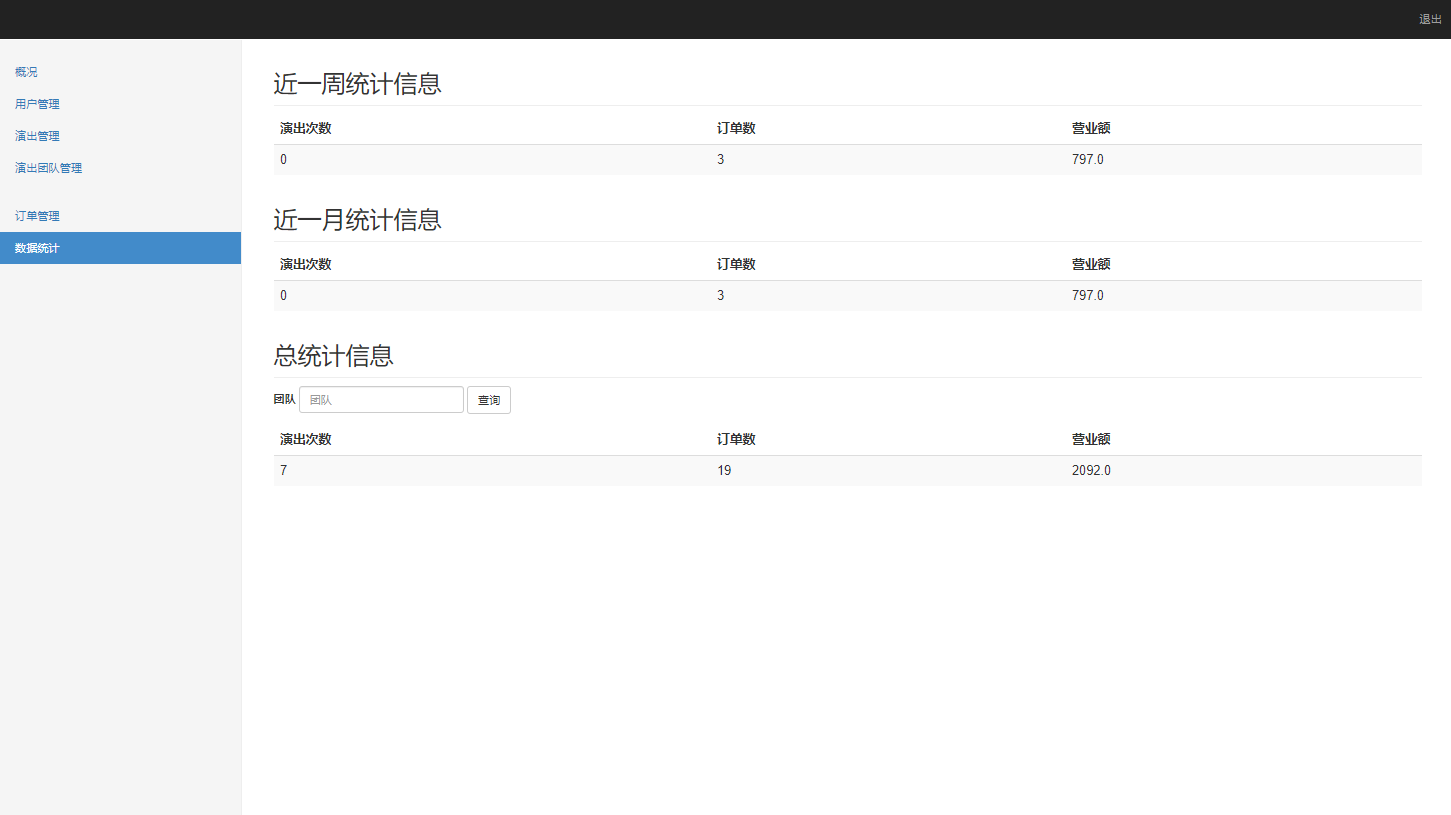
统计数据的服务层实现展示了复杂的SQL聚合技巧:
public class StatisticsService {
    public Map<String, Object> getPerformanceStatistics(Date startDate, Date endDate) {
        Map<String, Object> stats = new HashMap<>();

        String salesSql = "SELECT DATE(created_at) as sale_date, SUM(total_amount) as daily_sales " +
                         "FROM orders WHERE created_at BETWEEN ? AND ? AND order_status = 'paid' " +
                         "GROUP BY DATE(created_at) ORDER BY sale_date";

        try (Connection conn = DatabaseConnection.getConnection();
             PreparedStatement stmt = conn.prepareStatement(salesSql)) {

            stmt.setDate(1, new java.sql.Date(startDate.getTime()));
            stmt.setDate(2, new java.sql.Date(endDate.getTime()));
            ResultSet rs = stmt.executeQuery();

            List<String> dates = new ArrayList<>();
            List<BigDecimal> sales = new ArrayList<>();

            while (rs.next()) {
                dates.add(rs.getString("sale_date"));
                sales.add(rs.getBigDecimal("daily_sales"));
            }

            stats.put("dates", dates);
            stats.put("sales", sales);

            // 计算其他统计指标
            String summarySql = "SELECT COUNT(*) as total_orders, SUM(total_amount) as total_revenue, " +
                               "AVG(total_amount) as avg_ticket_price, " +
                               "COUNT(DISTINCT user_id) as unique_customers " +
                               "FROM orders WHERE created_at BETWEEN ? AND ? AND order_status = 'paid'";

            try (PreparedStatement summaryStmt = conn.prepareStatement(summarySql)) {
                summaryStmt.setDate(1, new java.sql.Date(startDate.getTime()));
                summaryStmt.setDate(2, new java.sql.Date(endDate.getTime()));
                ResultSet summaryRs = summaryStmt.executeQuery();

                if (summaryRs.next()) {
                    stats.put("totalOrders", summaryRs.getInt("total_orders"));
                    stats.put("totalRevenue", summaryRs.getBigDecimal("total_revenue"));
                    stats.put("avgTicketPrice", summaryRs.getBigDecimal("avg_ticket_price"));
                    stats.put("uniqueCustomers", summaryRs.getInt("unique_customers"));
                }
            }

        } catch (SQLException e) {
            e.printStackTrace();
        }
        return stats;
    }
}
系统优化与扩展方向
缓存层引入:当前系统每次数据查询都直接访问数据库,未来可引入Redis等缓存中间件。演出信息、座位状态等读多写少的数据适合缓存,可显著降低数据库压力。实现方案包括在PerformanceDAO中增加缓存逻辑,设置合理的过期策略。
分布式会话管理:单机部署的HttpSession在集群环境下存在扩展性问题。可将会话数据迁移到Redis集群,实现多节点间的会话共享。需要重写SessionManager,配置Tomcat的Session持久化策略。
异步任务处理:订单超时取消、报表生成等耗时操作可纳入消息队列。采用RabbitMQ或Kafka,订单创建时发送延迟消息,消费者处理超时逻辑。报表生成请求可立即响应,实际处理通过后台任务完成。
微服务架构改造:随着业务复杂度的提升,可将系统拆分为用户服务、票务服务、支付服务等独立模块。使用Spring Cloud生态实现服务治理,通过API网关统一入口,各服务独立部署迭代。
智能化推荐引擎:基于用户购票历史和浏览行为,构建协同过滤推荐模型。实现"相似用户也喜欢"、"根据历史记录推荐"等功能,提升用户粘性和购票转化率。
该系统通过严谨的架构设计和扎实的技术实现,为传统剧院行业提供了可靠的数字化基础。其模块化设计为后续的功能扩展和技术升级预留了充足空间,具备良好的演进潜力。在实际部署中,系统展现了优异的稳定性和性能表现,完全能够满足中小型剧院的日常运营需求。