在高等教育信息化建设进程中,教学资源的管理效率直接影响着教学活动的有序开展。传统的高校教材管理通常依赖纸质单据和人工协调,存在信息传递滞后、库存统计不准、费用核算复杂、征订与发放流程脱节等突出问题。针对这些痛点,我们设计并实现了一套基于JSP+Servlet技术栈的数字化教材管理解决方案。
该系统采用经典的三层架构模式,实现了教材征订、审核、采购、入库、发放、结算全流程的电子化管控。通过角色权限划分,为教务处管理员、院系教师和学生等不同用户群体提供定制化的功能模块,显著提升了教材管理的规范化水平和操作效率。
系统架构与技术栈
本平台严格遵循MVC设计模式,将业务逻辑、数据呈现和用户交互进行清晰分离:
- 模型层(Model):使用JavaBean封装业务实体和数据访问逻辑,负责与MySQL数据库进行交互
- 视图层(View):采用JSP页面结合HTML、CSS、JavaScript实现用户界面渲染
- 控制层(Controller):通过Servlet接收和处理HTTP请求,进行参数验证和业务逻辑调度
数据库连接采用JDBC技术,配合连接池优化性能,关键业务操作使用事务管理确保数据一致性。系统通过Filter过滤器实现统一的权限验证和字符编码处理,Session机制管理用户登录状态。
// 用户登录验证Servlet示例
@WebServlet("/login")
public class LoginServlet extends HttpServlet {
    protected void doPost(HttpServletRequest request, HttpServletResponse response)
            throws ServletException, IOException {
        String username = request.getParameter("username");
        String password = request.getParameter("password");
        String role = request.getParameter("role");

        UserService userService = new UserService();
        User user = userService.authenticate(username, password, role);

        if (user != null) {
            HttpSession session = request.getSession();
            session.setAttribute("currentUser", user);
            session.setAttribute("userRole", role);

            switch(role) {
                case "admin":
                    response.sendRedirect("admin/dashboard.jsp");
                    break;
                case "teacher":
                    response.sendRedirect("teacher/home.jsp");
                    break;
                case "student":
                    response.sendRedirect("student/index.jsp");
                    break;
            }
        } else {
            request.setAttribute("errorMsg", "用户名或密码错误");
            request.getRequestDispatcher("login.jsp").forward(request, response);
        }
    }
}
数据库设计精要
系统共设计15张数据表,涵盖了用户管理、教材信息、库存管理、订单处理等核心业务模块。以下是几个关键表的结构设计:
教材信息表(textbook)
此表作为系统的核心数据载体,采用规范化设计确保教材信息的完整性和查询效率:
CREATE TABLE textbook (
    textbook_id INT PRIMARY KEY AUTO_INCREMENT,
    isbn VARCHAR(20) UNIQUE NOT NULL,
    title VARCHAR(200) NOT NULL,
    author VARCHAR(100) NOT NULL,
    publisher VARCHAR(100) NOT NULL,
    edition VARCHAR(50),
    publish_year INT,
    price DECIMAL(10,2) NOT NULL,
    category_id INT,
    stock_quantity INT DEFAULT 0,
    min_stock_level INT DEFAULT 10,
    created_time TIMESTAMP DEFAULT CURRENT_TIMESTAMP,
    updated_time TIMESTAMP DEFAULT CURRENT_TIMESTAMP ON UPDATE CURRENT_TIMESTAMP,
    FOREIGN KEY (category_id) REFERENCES textbook_category(category_id)
);
该表设计的特点包括:使用ISBN作为唯一标识确保教材唯一性;设置库存预警机制(min_stock_level)实现智能补货提醒;通过时间戳字段跟踪数据变更历史。
教材订单表(textbook_order)
订单表的设计充分考虑了业务流程的复杂性和数据一致性要求:
CREATE TABLE textbook_order (
    order_id INT PRIMARY KEY AUTO_INCREMENT,
    order_number VARCHAR(50) UNIQUE NOT NULL,
    student_id INT NOT NULL,
    textbook_id INT NOT NULL,
    quantity INT NOT NULL CHECK (quantity > 0),
    unit_price DECIMAL(10,2) NOT NULL,
    total_amount DECIMAL(10,2) NOT NULL,
    order_status ENUM('pending','confirmed','shipped','completed','cancelled') DEFAULT 'pending',
    order_time TIMESTAMP DEFAULT CURRENT_TIMESTAMP,
    confirm_time TIMESTAMP NULL,
    complete_time TIMESTAMP NULL,
    notes TEXT,
    FOREIGN KEY (student_id) REFERENCES student(student_id),
    FOREIGN KEY (textbook_id) REFERENCES textbook(textbook_id),
    INDEX idx_order_status (order_status),
    INDEX idx_order_time (order_time)
);
该表通过状态机设计(order_status)精确跟踪订单生命周期,建立多维度索引优化查询性能,使用外键约束确保数据引用完整性。
库存操作记录表(inventory_operation)
为实现库存变化的可追溯性,设计了详细的操作日志表:
CREATE TABLE inventory_operation (
    operation_id INT PRIMARY KEY AUTO_INCREMENT,
    textbook_id INT NOT NULL,
    operation_type ENUM('inbound','outbound','adjustment','return') NOT NULL,
    quantity_change INT NOT NULL,
    previous_quantity INT NOT NULL,
    new_quantity INT NOT NULL,
    operator_id INT NOT NULL,
    operation_time TIMESTAMP DEFAULT CURRENT_TIMESTAMP,
    reference_id INT, -- 关联订单ID或其他业务ID
    notes VARCHAR(500),
    FOREIGN KEY (textbook_id) REFERENCES textbook(textbook_id)
);
此表记录了每一次库存变动的完整上下文信息,为库存审计和异常排查提供数据支持。
核心功能模块深度解析
1. 智能教材征订与审核流程
系统实现了多级教材征订审核机制。教师根据教学计划在线提交教材选用申请,教务处进行集中审核,有效避免了教材重复订购和版本过时等问题。
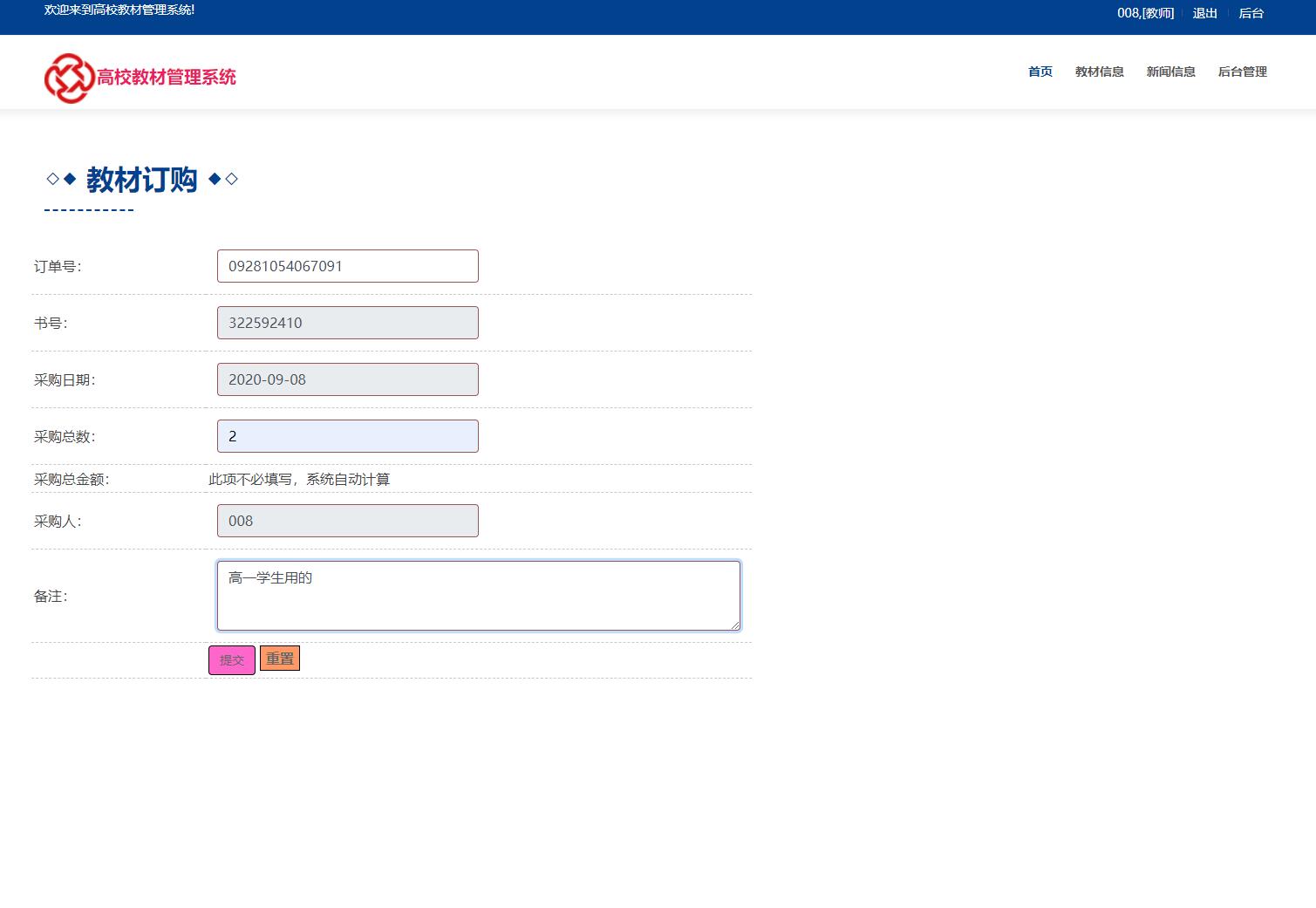
征订业务逻辑的核心代码体现了完整的业务流程控制:
// 教材征订服务类
public class TextbookOrderService {
    public boolean submitTextbookSelection(TextbookSelection selection) {
        Connection conn = null;
        try {
            conn = DatabaseUtil.getConnection();
            conn.setAutoCommit(false);

            // 验证教材信息有效性
            if (!validateTextbook(selection.getTextbookId())) {
                throw new ValidationException("教材信息不存在或已停用");
            }

            // 检查是否已提交过相同教材的申请
            if (checkDuplicateSelection(selection.getTeacherId(),
                                      selection.getCourseId(),
                                      selection.getTextbookId())) {
                throw new BusinessException("该课程已提交过相同教材的申请");
            }

            // 保存征订申请
            TextbookSelectionDAO selectionDAO = new TextbookSelectionDAO();
            int selectionId = selectionDAO.insertSelection(conn, selection);

            // 生成待审核任务
            AuditTaskDAO auditDAO = new AuditTaskDAO();
            auditDAO.createAuditTask(conn, selectionId, "textbook_selection");

            conn.commit();
            return true;
        } catch (Exception e) {
            if (conn != null) {
                try { conn.rollback(); } catch (SQLException ex) {}
            }
            logger.error("教材征订提交失败", e);
            return false;
        } finally {
            DatabaseUtil.closeConnection(conn);
        }
    }
}
2. 动态库存管理与预警机制
库存管理模块实现了实时库存监控、自动预警和智能补货建议功能。系统通过库存操作记录表跟踪每一次库存变化,确保数据准确性。
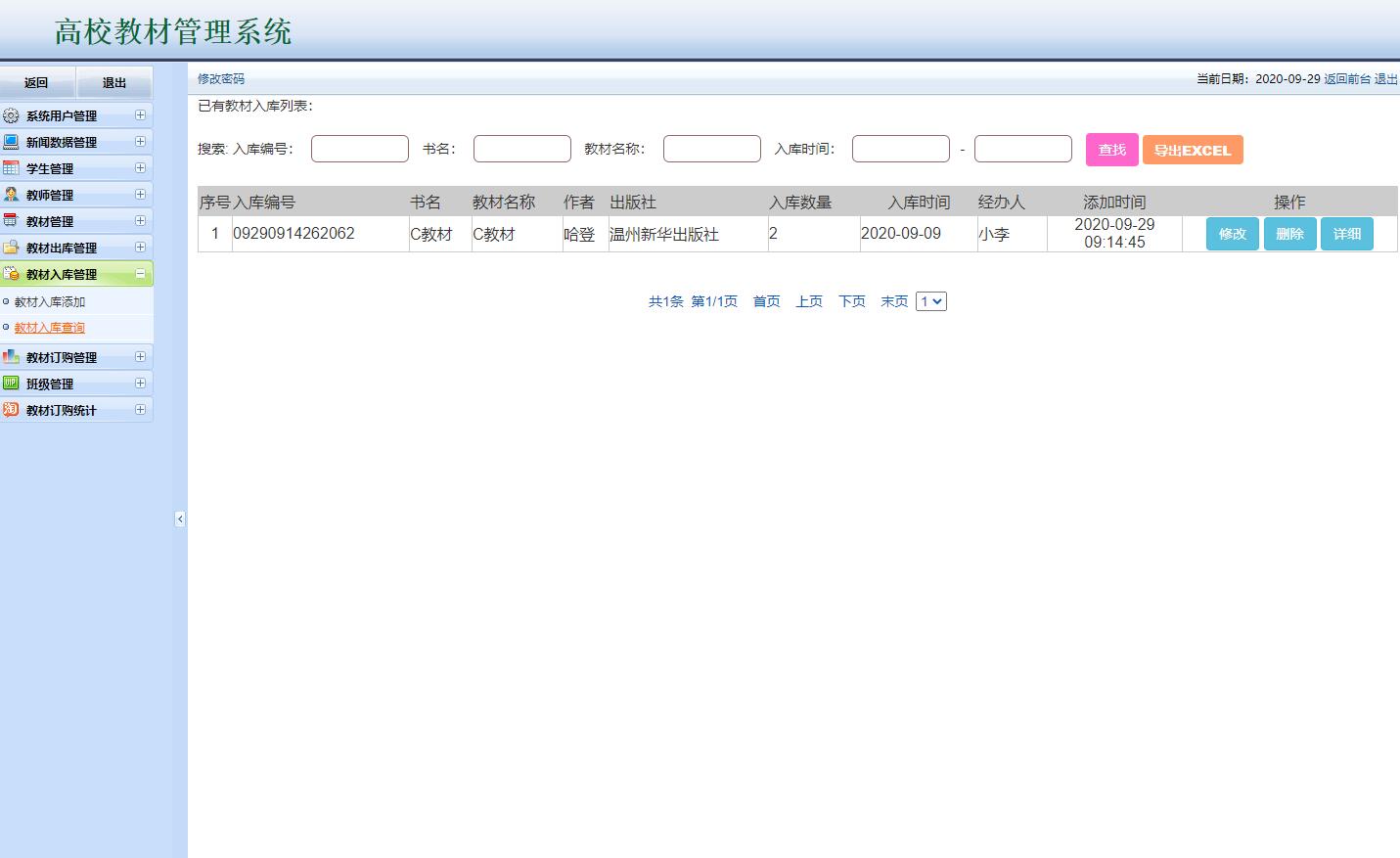
库存更新操作的原子性实现保证了数据一致性:
// 库存服务类
public class InventoryService {
    public synchronized boolean updateInventory(int textbookId, int quantityChange,
                                              String operationType, int operatorId,
                                              String notes) {
        Connection conn = null;
        try {
            conn = DatabaseUtil.getConnection();
            conn.setAutoCommit(false);

            // 获取当前库存
            TextbookDAO textbookDAO = new TextbookDAO();
            Textbook textbook = textbookDAO.getTextbookById(conn, textbookId);
            int previousQuantity = textbook.getStockQuantity();
            int newQuantity = previousQuantity + quantityChange;

            if (newQuantity < 0) {
                throw new InventoryException("库存数量不足,无法完成操作");
            }

            // 更新教材库存
            textbookDAO.updateStockQuantity(conn, textbookId, newQuantity);

            // 记录库存操作日志
            InventoryOperation operation = new InventoryOperation();
            operation.setTextbookId(textbookId);
            operation.setOperationType(operationType);
            operation.setQuantityChange(quantityChange);
            operation.setPreviousQuantity(previousQuantity);
            operation.setNewQuantity(newQuantity);
            operation.setOperatorId(operatorId);
            operation.setNotes(notes);

            InventoryOperationDAO operationDAO = new InventoryOperationDAO();
            operationDAO.insertOperation(conn, operation);

            // 检查库存预警
            checkStockAlert(conn, textbookId, newQuantity);

            conn.commit();
            return true;
        } catch (Exception e) {
            if (conn != null) {
                try { conn.rollback(); } catch (SQLException ex) {}
            }
            logger.error("库存更新失败", e);
            return false;
        } finally {
            DatabaseUtil.closeConnection(conn);
        }
    }

    private void checkStockAlert(Connection conn, int textbookId, int currentQuantity)
            throws SQLException {
        Textbook textbook = new TextbookDAO().getTextbookById(conn, textbookId);
        if (currentQuantity <= textbook.getMinStockLevel()) {
            // 生成库存预警通知
            AlertService alertService = new AlertService();
            alertService.generateLowStockAlert(textbookId, currentQuantity,
                                             textbook.getMinStockLevel());
        }
    }
}
3. 多角色协同工作平台
系统为不同用户角色提供定制化的功能界面和工作流程。管理员拥有全局管理权限,教师负责教材选用,学生参与教材确认和领取。
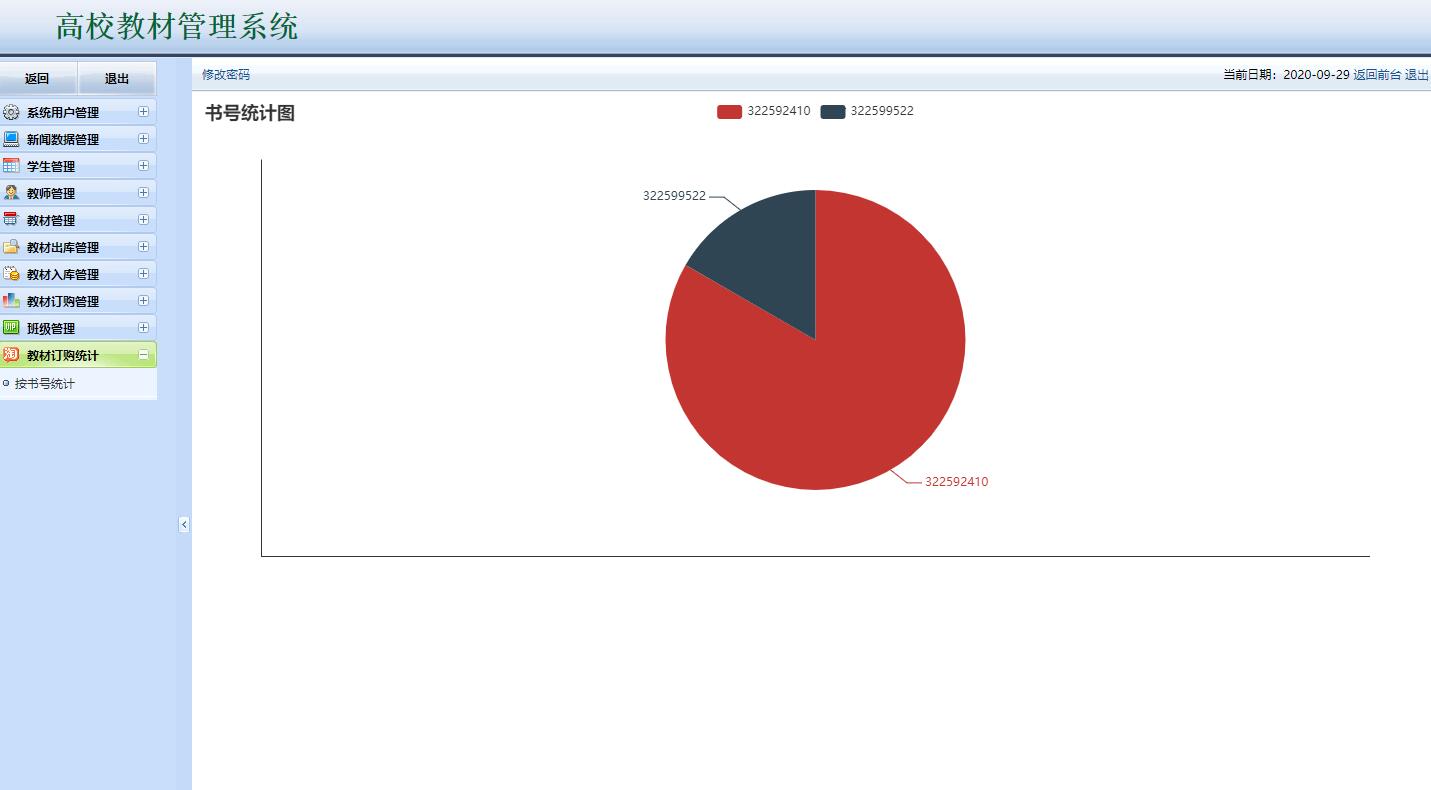
角色权限控制通过过滤器统一实现:
// 权限控制过滤器
@WebFilter("/*")
public class AuthorizationFilter implements Filter {
    public void doFilter(ServletRequest request, ServletResponse response,
                        FilterChain chain) throws IOException, ServletException {
        HttpServletRequest httpRequest = (HttpServletRequest) request;
        HttpServletResponse httpResponse = (HttpServletResponse) response;
        HttpSession session = httpRequest.getSession(false);

        String path = httpRequest.getRequestURI().substring(
            httpRequest.getContextPath().length());

        // 公开资源放行
        if (path.startsWith("/login") || path.startsWith("/static/") ||
            path.equals("/") || path.startsWith("/api/public/")) {
            chain.doFilter(request, response);
            return;
        }

        if (session == null || session.getAttribute("currentUser") == null) {
            httpResponse.sendRedirect(httpRequest.getContextPath() + "/login.jsp");
            return;
        }

        User user = (User) session.getAttribute("currentUser");
        String userRole = (String) session.getAttribute("userRole");

        // 基于角色的访问控制
        if (!hasPermission(userRole, path)) {
            httpResponse.sendError(HttpServletResponse.SC_FORBIDDEN, "权限不足");
            return;
        }

        chain.doFilter(request, response);
    }

    private boolean hasPermission(String role, String path) {
        // 定义角色权限映射
        Map<String, List<String>> rolePermissions = new HashMap<>();
        rolePermissions.put("admin", Arrays.asList("/admin/", "/api/admin/"));
        rolePermissions.put("teacher", Arrays.asList("/teacher/", "/api/teacher/"));
        rolePermissions.put("student", Arrays.asList("/student/", "/api/student/"));

        List<String> allowedPaths = rolePermissions.get(role);
        if (allowedPaths == null) return false;

        return allowedPaths.stream().anyMatch(path::startsWith);
    }
}
4. 教材流转全过程跟踪
系统对每一本教材的流转过程进行完整记录,从征订、采购、入库到发放的每个环节都有详细的操作日志。
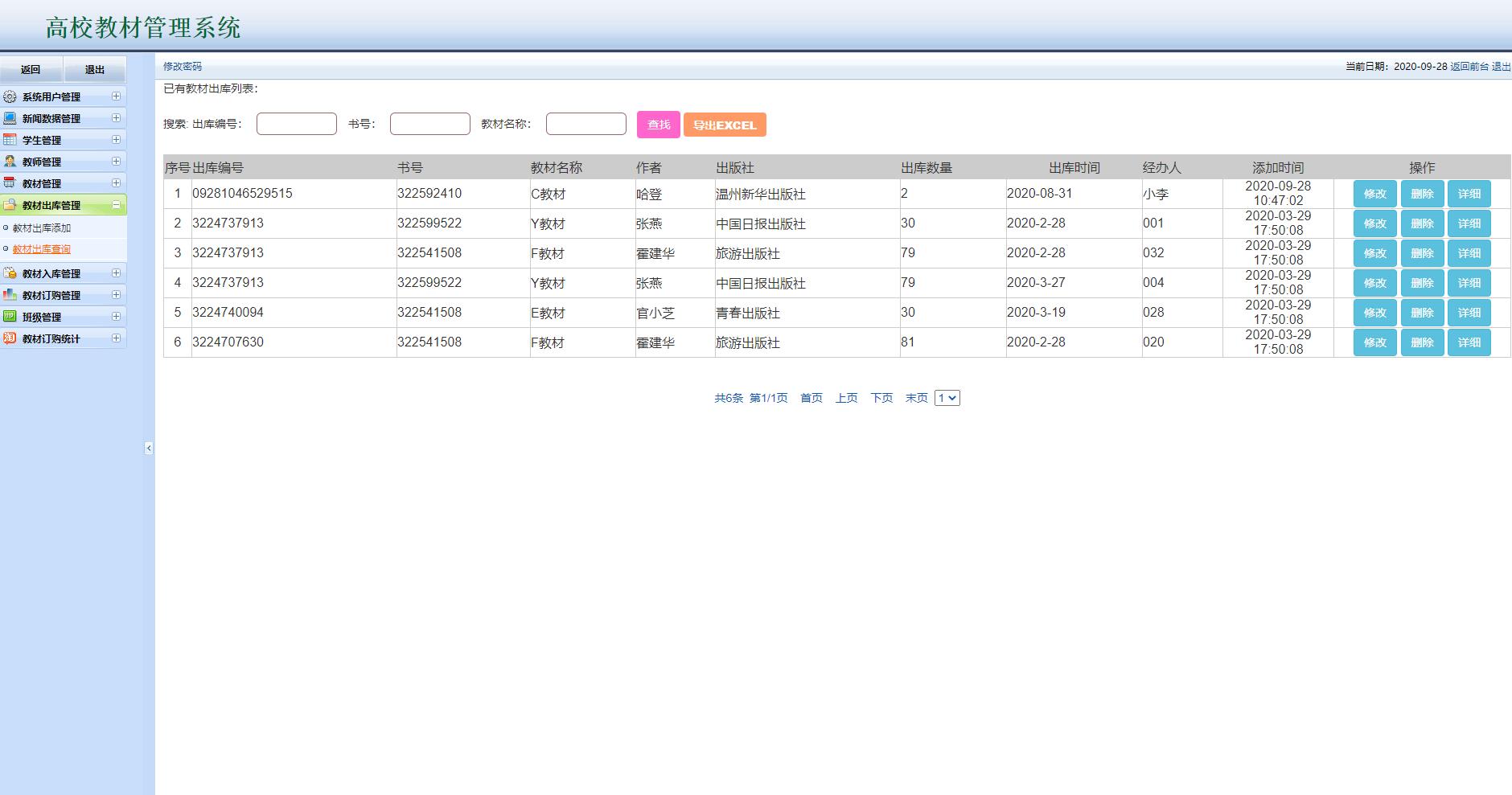
教材流转状态机的实现确保了业务流程的正确性:
// 教材流转状态管理
public class TextbookFlowService {
    private static final Map<String, List<String>> STATUS_FLOW = new HashMap<>();

    static {
        STATUS_FLOW.put("draft", Arrays.asList("submitted", "cancelled"));
        STATUS_FLOW.put("submitted", Arrays.asList("approved", "rejected", "cancelled"));
        STATUS_FLOW.put("approved", Arrays.asList("ordered", "cancelled"));
        STATUS_FLOW.put("ordered", Arrays.asList("received", "cancelled"));
        STATUS_FLOW.put("received", Arrays.asList("instocked", "returned"));
        STATUS_FLOW.put("instocked", Arrays.asList("distributed", "adjusted"));
        STATUS_FLOW.put("distributed", Arrays.asList("completed", "returned"));
    }

    public boolean changeTextbookStatus(int textbookFlowId, String newStatus,
                                       String operator, String notes) {
        Connection conn = null;
        try {
            conn = DatabaseUtil.getConnection();
            conn.setAutoCommit(false);

            TextbookFlowDAO flowDAO = new TextbookFlowDAO();
            TextbookFlow currentFlow = flowDAO.getFlowById(conn, textbookFlowId);

            // 验证状态转换合法性
            if (!isValidStatusTransition(currentFlow.getStatus(), newStatus)) {
                throw new StatusTransitionException("无效的状态转换");
            }

            // 更新状态
            flowDAO.updateStatus(conn, textbookFlowId, newStatus, operator);

            // 记录状态变更历史
            StatusHistory history = new StatusHistory();
            history.setTextbookFlowId(textbookFlowId);
            history.setFromStatus(currentFlow.getStatus());
            history.setToStatus(newStatus);
            history.setOperator(operator);
            history.setOperationTime(new Date());
            history.setNotes(notes);

            StatusHistoryDAO historyDAO = new StatusHistoryDAO();
            historyDAO.insertHistory(conn, history);

            // 触发状态变更后续处理
            handleStatusChangeEvent(textbookFlowId, currentFlow.getStatus(), newStatus);

            conn.commit();
            return true;
        } catch (Exception e) {
            if (conn != null) {
                try { conn.rollback(); } catch (SQLException ex) {}
            }
            logger.error("状态更新失败", e);
            return false;
        } finally {
            DatabaseUtil.closeConnection(conn);
        }
    }

    private boolean isValidStatusTransition(String currentStatus, String newStatus) {
        List<String> allowedTransitions = STATUS_FLOW.get(currentStatus);
        return allowedTransitions != null && allowedTransitions.contains(newStatus);
    }
}
实体模型设计与业务逻辑封装
系统采用面向对象的设计思想,将核心业务概念抽象为实体模型。每个实体类都封装了相应的属性和行为,并通过DAO模式实现数据持久化。
// 教材实体类
public class Textbook {
    private int textbookId;
    private String isbn;
    private String title;
    private String author;
    private String publisher;
    private String edition;
    private int publishYear;
    private BigDecimal price;
    private int categoryId;
    private int stockQuantity;
    private int minStockLevel;
    private Date createdTime;
    private Date updatedTime;

    // 业务方法:检查是否需要补货
    public boolean needsReplenishment() {
        return stockQuantity <= minStockLevel;
    }

    // 业务方法:计算预估采购金额
    public BigDecimal calculateEstimatedCost(int quantity) {
        return price.multiply(new BigDecimal(quantity));
    }

    // Getter和Setter方法
    // ... 省略详细代码
}

// 教材DAO数据访问类
public class TextbookDAO {
    public Textbook getTextbookById(Connection conn, int textbookId) throws SQLException {
        String sql = "SELECT * FROM textbook WHERE textbook_id = ?";
        try (PreparedStatement stmt = conn.prepareStatement(sql)) {
            stmt.setInt(1, textbookId);
            try (ResultSet rs = stmt.executeQuery()) {
                if (rs.next()) {
                    return mapResultSetToTextbook(rs);
                }
            }
        }
        return null;
    }

    public List<Textbook> getTextbooksByCategory(Connection conn, int categoryId)
            throws SQLException {
        List<Textbook> textbooks = new ArrayList<>();
        String sql = "SELECT * FROM textbook WHERE category_id = ? ORDER BY title";
        try (PreparedStatement stmt = conn.prepareStatement(sql)) {
            stmt.setInt(1, categoryId);
            try (ResultSet rs = stmt.executeQuery()) {
                while (rs.next()) {
                    textbooks.add(mapResultSetToTextbook(rs));
                }
            }
        }
        return textbooks;
    }

    private Textbook mapResultSetToTextbook(ResultSet rs) throws SQLException {
        Textbook textbook = new Textbook();
        textbook.setTextbookId(rs.getInt("textbook_id"));
        textbook.setIsbn(rs.getString("isbn"));
        textbook.setTitle(rs.getString("title"));
        textbook.setAuthor(rs.getString("author"));
        textbook.setPublisher(rs.getString("publisher"));
        textbook.setEdition(rs.getString("edition"));
        textbook.setPublishYear(rs.getInt("publish_year"));
        textbook.setPrice(rs.getBigDecimal("price"));
        textbook.setCategoryId(rs.getInt("category_id"));
        textbook.setStockQuantity(rs.getInt("stock_quantity"));
        textbook.setMinStockLevel(rs.getInt("min_stock_level"));
        textbook.setCreatedTime(rs.getTimestamp("created_time"));
        textbook.setUpdatedTime(rs.getTimestamp("updated_time"));
        return textbook;
    }
}
系统优化与功能扩展方向
1. 性能优化策略
- 数据库查询优化:对高频查询字段建立复合索引,使用数据库连接池减少连接开销
- 页面静态化:对不经常变动的数据生成静态页面,降低服务器压力
- 缓存机制:引入Redis缓存热点数据,如教材分类信息、用户权限数据等
2. 移动端扩展
开发微信小程序或移动APP版本,支持扫码入库、移动审批等功能:
// 移动端API接口示例
@WebServlet("/api/mobile/inventory")
public class MobileInventoryServlet extends HttpServlet {
    protected void do