在传统零售业务运营中,商品信息与销售数据的管理长期依赖于手工台账或分散的电子表格。这种方式不仅效率低下,且极易因人为操作导致数据不一致、统计滞后,难以支撑快速的市场决策。面对这一普遍痛点,一套集成了商品管理、库存控制与销售分析功能的自动化系统成为中小型商户的迫切需求。本系统正是基于JSP与Servlet这一经典Java Web技术组合,构建的一个轻量级、高内聚的解决方案,旨在将日常进销存业务全面数字化,并通过数据可视化帮助管理者洞察经营状况。
系统采用标准的Model-View-Controller架构模式,实现了业务逻辑、数据与表现层的清晰分离。View层由JSP页面构成,负责渲染用户界面并展示数据,其内部通过JSTL标签库与EL表达式极大地简化了Java代码的嵌入,提升了页面的可维护性。Controller层的核心是Servlet,它作为请求的统一入口,负责解析用户输入、调用相应的业务逻辑处理,并最终转发至合适的JSP视图。Model层则以JavaBean实体类和数据访问对象为核心,封装了业务数据模型与持久化操作。后端通过JDBC直接连接MySQL数据库,并利用DBUtils工具类对数据库连接与结果集处理进行了有效封装,确保了数据操作的效率与可靠性。
数据库架构设计与核心表分析
系统的数据模型围绕商品、库存、销售单据等核心业务实体构建,共设计有六张核心数据表。其设计遵循了第三范式,以减少数据冗余,并建立了恰当的外键关联以保证数据的完整性与一致性。
1. 商品信息表 product
商品表是整个系统的数据基石,其设计需要兼顾信息的完备性与查询效率。
CREATE TABLE `product` (
  `id` int(11) NOT NULL AUTO_INCREMENT,
  `name` varchar(100) NOT NULL COMMENT '商品名称',
  `specs` varchar(100) DEFAULT NULL COMMENT '规格型号',
  `supplier_id` int(11) NOT NULL COMMENT '供应商ID',
  `purchase_price` decimal(10,2) NOT NULL COMMENT '采购价',
  `retail_price` decimal(10,2) NOT NULL COMMENT '零售价',
  `stock_quantity` int(11) NOT NULL DEFAULT '0' COMMENT '当前库存',
  `create_time` datetime DEFAULT CURRENT_TIMESTAMP,
  `update_time` datetime DEFAULT CURRENT_TIMESTAMP ON UPDATE CURRENT_TIMESTAMP,
  PRIMARY KEY (`id`),
  KEY `idx_supplier_id` (`supplier_id`),
  KEY `idx_name` (`name`),
  CONSTRAINT `fk_product_supplier` FOREIGN KEY (`supplier_id`) REFERENCES `supplier` (`id`)
) ENGINE=InnoDB DEFAULT CHARSET=utf8 COMMENT='商品信息表';
设计亮点分析:
- 价格字段精度:
purchase_price和retail_price字段采用DECIMAL(10,2)类型,精确到分,完全符合金融计算要求,避免了浮点数精度丢失问题。 - 库存字段冗余设计:
stock_quantity字段作为当前库存的实时快照。这是一种典型的反范式设计,通过空间换时间,使得查询当前库存无需关联计算所有出入库记录,极大提升了高频查询操作的性能。 - 自动化时间戳:
create_time和update_time字段利用MySQL的特性自动管理,确保了数据生命周期的可追溯性,无需在业务代码中手动设置。 - 索引策略:除了主键索引,还为
supplier_id和name字段建立了索引。前者加速了按供应商筛选商品的操作,后者则优化了基于商品名称的模糊查询性能。
2. 销售出库单表 outbound_order
销售单表记录了每一笔销售交易的核心信息,是进行销售统计分析的直接数据来源。
CREATE TABLE `outbound_order` (
  `id` int(11) NOT NULL AUTO_INCREMENT,
  `order_number` varchar(50) NOT NULL COMMENT '出库单号',
  `product_id` int(11) NOT NULL COMMENT '商品ID',
  `quantity` int(11) NOT NULL COMMENT '销售数量',
  `sale_price` decimal(10,2) NOT NULL COMMENT '销售单价',
  `total_amount` decimal(10,2) NOT NULL COMMENT '总金额',
  `operator_id` int(11) NOT NULL COMMENT '操作员(用户ID)',
  `sale_time` datetime NOT NULL COMMENT '销售时间',
  `notes` varchar(200) DEFAULT NULL COMMENT '备注',
  PRIMARY KEY (`id`),
  UNIQUE KEY `uk_order_number` (`order_number`),
  KEY `idx_product_id` (`product_id`),
  KEY `idx_sale_time` (`sale_time`),
  CONSTRAINT `fk_outbound_product` FOREIGN KEY (`product_id`) REFERENCES `product` (`id`),
  CONSTRAINT `fk_outbound_user` FOREIGN KEY (`operator_id`) REFERENCES `user` (`id`)
) ENGINE=InnoDB DEFAULT CHARSET=utf8 COMMENT='销售出库单表';
设计亮点分析:
- 单号唯一性约束:
order_number字段设置了唯一索引uk_order_number,确保了每一张销售单的唯一性,防止重复录入。 - 金额反范式设计:尽管
total_amount可以通过quantity * sale_price计算得出,但将其作为独立字段存储。这同样是出于性能考虑,在生成销售报表进行汇总时,直接对total_amount进行SUM操作比实时计算要高效得多,也避免了计算逻辑变更带来的历史数据不一致风险。 - 时间戳索引:
sale_time字段的索引对于按日、按月或按任意时间区间进行销售统计至关重要,可以快速定位到特定时间段内的所有销售记录。
核心功能模块深度解析
1. 商品管理与库存更新机制
商品管理模块提供了对商品信息的全生命周期管理,包括新增、编辑、查询和删除。其核心在于如何保证库存数据的准确性。
后台Servlet控制器 (ProductManageServlet)
@WebServlet("/admin/productManage")
public class ProductManageServlet extends HttpServlet {
    private ProductService productService = new ProductServiceImpl();

    protected void doPost(HttpServletRequest request, HttpServletResponse response) throws ServletException, IOException {
        String action = request.getParameter("action");
        String message = "";
        try {
            if ("add".equals(action)) {
                Product product = this.createProductFromRequest(request);
                boolean success = productService.addProduct(product);
                message = success ? "商品添加成功!" : "商品添加失败!";
            } else if ("update".equals(action)) {
                Product product = this.createProductFromRequest(request);
                product.setId(Integer.parseInt(request.getParameter("id")));
                boolean success = productService.updateProduct(product);
                message = success ? "商品信息更新成功!" : "商品信息更新失败!";
            } else if ("delete".equals(action)) {
                int productId = Integer.parseInt(request.getParameter("id"));
                boolean success = productService.deleteProductById(productId);
                message = success ? "商品删除成功!" : "商品删除失败!";
            }
            request.getSession().setAttribute("message", message);
        } catch (Exception e) {
            e.printStackTrace();
            request.getSession().setAttribute("message", "操作失败:" + e.getMessage());
        }
        response.sendRedirect("productManage.jsp");
    }

    private Product createProductFromRequest(HttpServletRequest request) {
        Product product = new Product();
        product.setName(request.getParameter("name"));
        product.setSpecs(request.getParameter("specs"));
        product.setSupplierId(Integer.parseInt(request.getParameter("supplierId")));
        product.setPurchasePrice(new BigDecimal(request.getParameter("purchasePrice")));
        product.setRetailPrice(new BigDecimal(request.getParameter("retailPrice")));
        // stock_quantity 通常在入库时更新,此处不设置
        return product;
    }
}
库存更新服务 (ProductServiceImpl)
库存的更新并非在商品管理界面直接修改,而是通过独立的入库(InboundOrder)和出库(OutboundOrder)操作,由系统自动计算并更新product表的stock_quantity字段。这是一种事务性更强的设计。
public class ProductServiceImpl implements ProductService {
    private ProductDao productDao = new ProductDaoImpl();

    @Override
    public boolean updateProductStock(int productId, int changeQuantity) throws SQLException {
        Connection conn = null;
        try {
            conn = DBUtil.getConnection();
            conn.setAutoCommit(false); // 开启事务

            // 1. 查询当前库存
            Product product = productDao.findById(conn, productId);
            if (product == null) {
                throw new SQLException("商品不存在");
            }
            int newStock = product.getStockQuantity() + changeQuantity;
            if (newStock < 0) {
                throw new SQLException("库存不足,当前库存:" + product.getStockQuantity());
            }

            // 2. 更新库存
            boolean success = productDao.updateStock(conn, productId, newStock);
            if (!success) {
                conn.rollback();
                return false;
            }
            conn.commit(); // 提交事务
            return true;
        } catch (SQLException e) {
            if (conn != null) conn.rollback();
            throw e;
        } finally {
            DBUtil.closeConnection(conn);
        }
    }
}
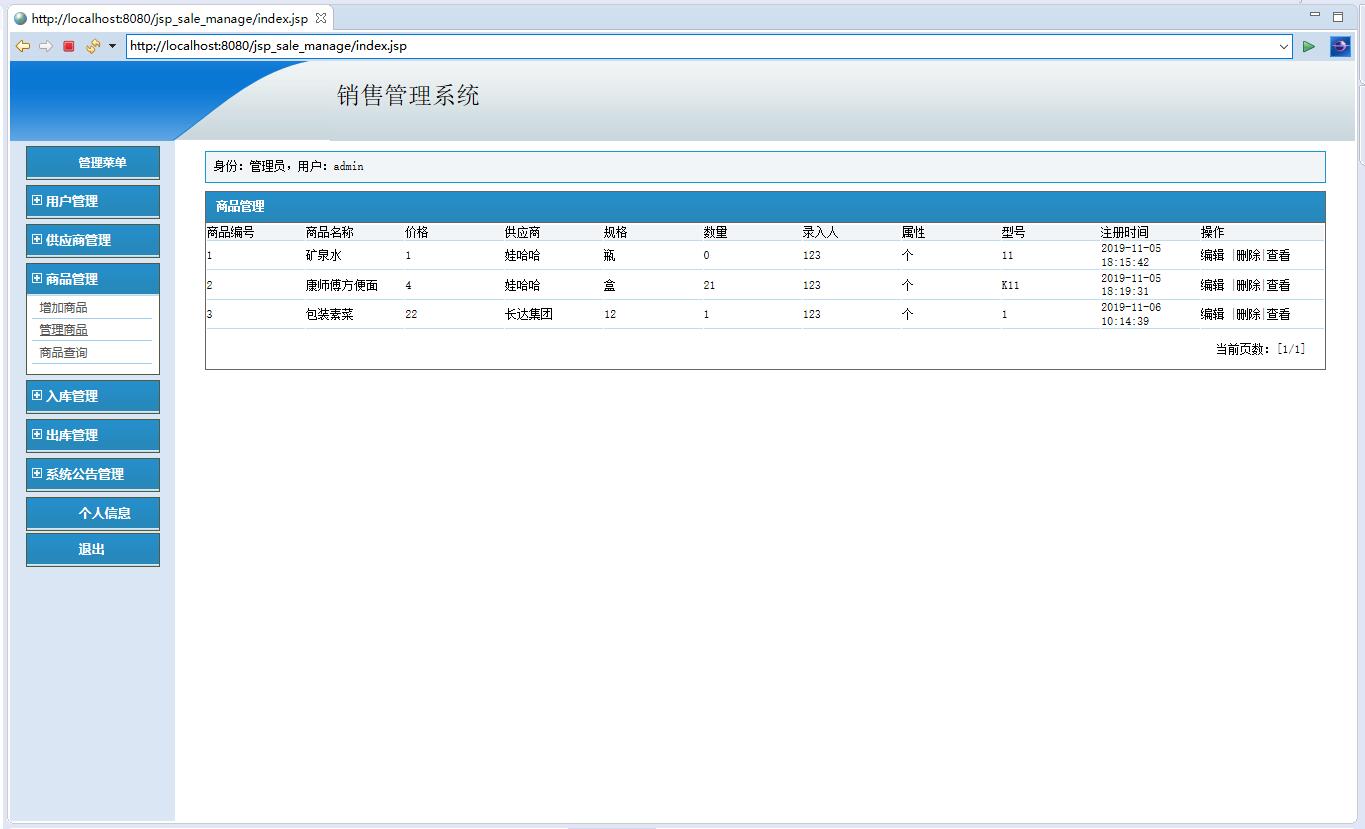 商品管理界面,支持对商品信息的增删改查和按条件筛选。
2. 销售出库与事务一致性处理
销售出库是系统的核心业务流程,它涉及销售记录的创建和商品库存的扣减,必须在一个数据库事务中完成,以确保数据一致性。
销售出库Servlet (SaleOutboundServlet)
@WebServlet("/user/saleOutbound")
public class SaleOutboundServlet extends HttpServlet {
    private OutboundService outboundService = new OutboundServiceImpl();

    protected void doPost(HttpServletRequest request, HttpServletResponse response) throws ServletException, IOException {
        String productIdStr = request.getParameter("productId");
        String quantityStr = request.getParameter("quantity");
        String salePriceStr = request.getParameter("salePrice");
        HttpSession session = request.getSession();
        User operator = (User) session.getAttribute("user");

        try {
            int productId = Integer.parseInt(productIdStr);
            int quantity = Integer.parseInt(quantityStr);
            BigDecimal salePrice = new BigDecimal(salePriceStr);

            // 生成唯一的出库单号
            String orderNumber = "SO" + System.currentTimeMillis();

            // 创建出库单对象
            OutboundOrder order = new OutboundOrder();
            order.setOrderNumber(orderNumber);
            order.setProductId(productId);
            order.setQuantity(quantity);
            order.setSalePrice(salePrice);
            order.setTotalAmount(salePrice.multiply(new BigDecimal(quantity)));
            order.setOperatorId(operator.getId());
            order.setSaleTime(new Date());

            // 调用服务层完成出库(包含事务)
            boolean success = outboundService.executeSaleOutbound(order);
            if (success) {
                session.setAttribute("message", "销售出库成功!单号:" + orderNumber);
            } else {
                session.setAttribute("message", "销售出库失败!");
            }
        } catch (Exception e) {
            e.printStackTrace();
            session.setAttribute("message", "系统错误:" + e.getMessage());
        }
        response.sendRedirect("outbound.jsp");
    }
}
服务层事务控制 (OutboundServiceImpl)
服务层的方法封装了完整的业务逻辑,并管理数据库事务的边界。
public class OutboundServiceImpl implements OutboundService {
    private OutboundDao outboundDao = new OutboundDaoImpl();
    private ProductDao productDao = new ProductDaoImpl();

    @Override
    public boolean executeSaleOutbound(OutboundOrder order) throws SQLException {
        Connection conn = null;
        try {
            conn = DBUtil.getConnection();
            conn.setAutoCommit(false); // 开启事务

            // 1. 插入销售出库记录
            boolean addSuccess = outboundDao.addOutboundOrder(conn, order);
            if (!addSuccess) {
                conn.rollback();
                return false;
            }

            // 2. 扣减商品库存 (changeQuantity为负数,例如 -5)
            boolean updateSuccess = productDao.updateStock(conn, order.getProductId(), -order.getQuantity());
            if (!updateSuccess) {
                conn.rollback();
                return false;
            }

            conn.commit(); // 提交事务
            return true;
        } catch (SQLException e) {
            if (conn != null) conn.rollback();
            throw e;
        } finally {
            DBUtil.closeConnection(conn);
        }
    }
}
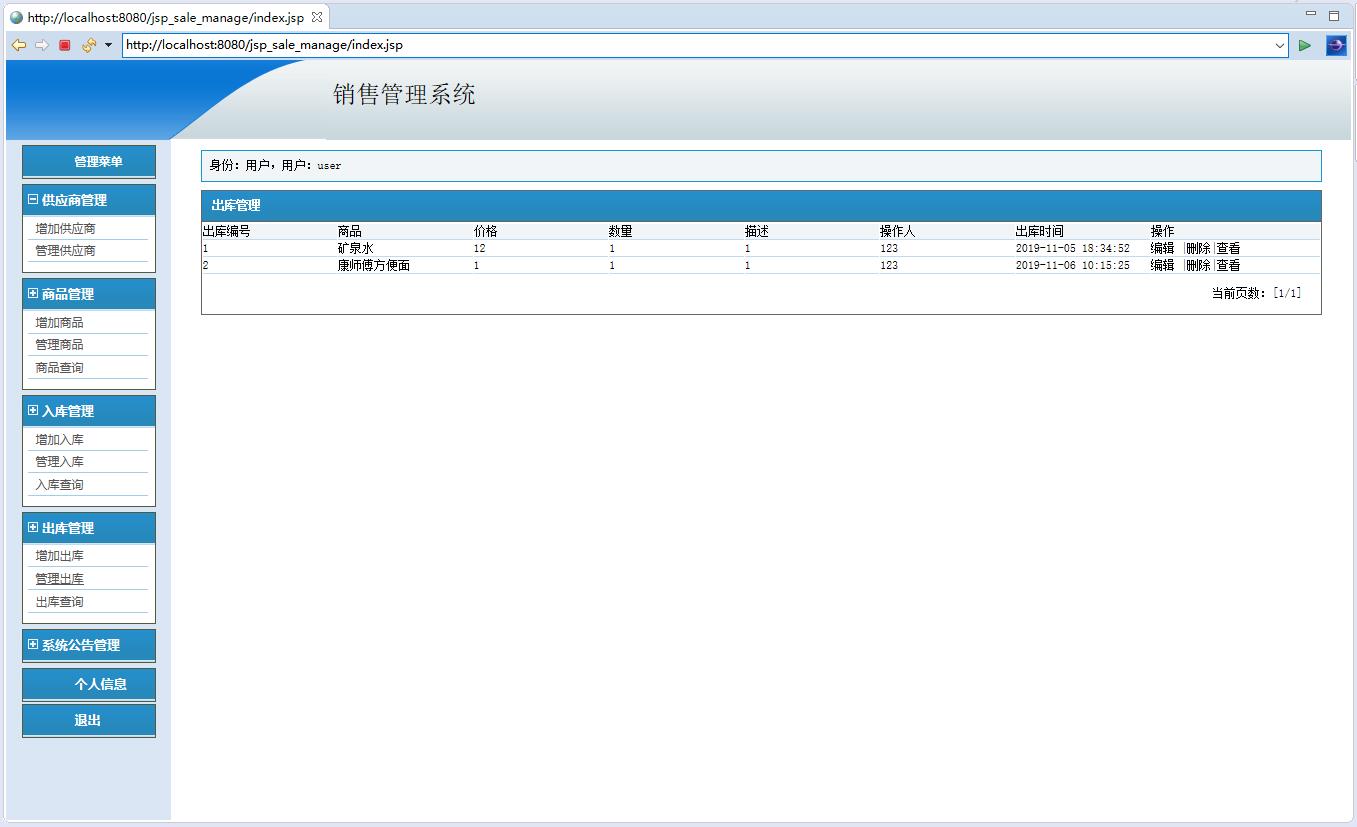 销售出库界面,用户选择商品、输入数量后,系统自动计算金额并完成出库。
3. 销售统计与数据可视化
销售统计功能通过对outbound_order表进行聚合查询,生成各类报表,并以图表形式直观展示。
统计查询Servlet (SalesStatisticsServlet)
@WebServlet("/admin/salesStatistics")
public class SalesStatisticsServlet extends HttpServlet {
    private StatisticsService statsService = new StatisticsServiceImpl();

    protected void doGet(HttpServletRequest request, HttpServletResponse response) throws ServletException, IOException {
        String type = request.getParameter("type"); // daily, monthly, byProduct
        String startDate = request.getParameter("startDate");
        String endDate = request.getParameter("endDate");

        try {
            List<SalesStats> statsList = null;
            if ("daily".equals(type)) {
                statsList = statsService.getDailySalesStats(startDate, endDate);
            } else if ("byProduct".equals(type)) {
                statsList = statsService.getSalesStatsByProduct(startDate, endDate);
            }

            // 将数据转换为JSON格式,供前端图表库(如ECharts)使用
            Gson gson = new Gson();
            String jsonData = gson.toJson(statsList);
            request.setAttribute("chartData", jsonData);
            request.setAttribute("statsList", statsList);
        } catch (SQLException e) {
            e.printStackTrace();
            request.setAttribute("message", "获取统计数据失败");
        }
        request.getRequestDispatcher("/admin/sales_statistics.jsp").forward(request, response);
    }
}
数据访问层统计查询 (StatisticsDaoImpl)
public class StatisticsDaoImpl implements StatisticsDao {
    @Override
    public List<SalesStats> getDailySalesStats(Connection conn, String startDate, String endDate) throws SQLException {
        String sql = "SELECT DATE(sale_time) as stat_date, " +
                     "SUM(quantity) as total_quantity, " +
                     "SUM(total_amount) as total_amount " +
                     "FROM outbound_order " +
                     "WHERE sale_time BETWEEN ? AND ? " +
                     "GROUP BY DATE(sale_time) " +
                     "ORDER BY stat_date ASC";
        return DBUtil.query(conn, sql, new BeanListHandler<>(SalesStats.class), startDate, endDate);
    }

    @Override
    public List<SalesStats> getSalesStatsByProduct(Connection conn, String startDate, String endDate) throws SQLException {
        String sql = "SELECT p.name as product_name, " +
                     "SUM(o.quantity) as total_quantity, " +
                     "SUM(o.total_amount) as total_amount " +
                     "FROM outbound_order o " +
                     "INNER JOIN product p ON o.product_id = p.id " +
                     "WHERE o.sale_time BETWEEN ? AND ? " +
                     "GROUP BY o.product_id, p.name " +
                     "ORDER BY total_amount DESC";
        return DBUtil.query(conn, sql, new BeanListHandler<>(SalesStats.class), startDate, endDate);
    }
}
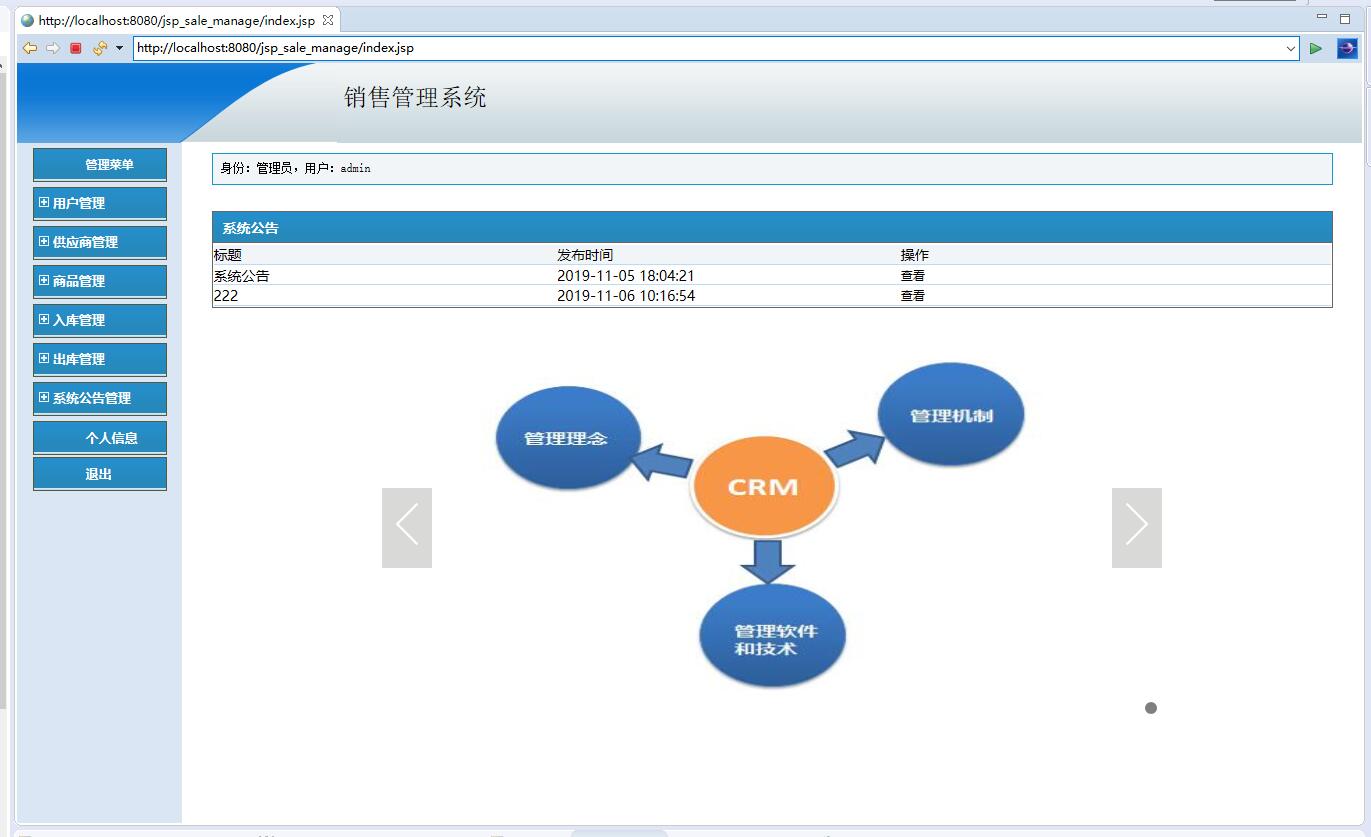 管理员仪表盘,集中展示关键指标和销售趋势图表。
实体模型与数据访问层封装
系统使用JavaBean作为实体模型,与数据库表结构一一对应。数据访问层通过DAO模式封装了所有数据库操作。
商品实体类 (Product.java)
public class Product {
    private Integer id;
    private String name;
    private String specs;
    private Integer supplierId;
    private BigDecimal purchasePrice;
    private BigDecimal retailPrice;
    private Integer stockQuantity;
    private Date createTime;
    private Date updateTime;

    // 标准的Getter和Setter方法
    public Integer getId() { return id; }
    public void setId(Integer id) { this.id = id; }
    // ... 其他Getter/Setter
}
商品DAO接口实现 (ProductDaoImpl.java)
数据访问层使用Apache Commons DbUtils库来简化JDBC编程。
public class ProductDaoImpl implements ProductDao {
    private QueryRunner queryRunner = new QueryRunner();

    @Override
    public Product findById(Connection conn, Integer id) throws SQLException {
        String sql = "SELECT * FROM product WHERE id = ?";
        return queryRunner.query(conn, sql, new BeanHandler<>(Product.class), id);
    }

    @Override
    public List<Product> findAll(Connection conn) throws SQLException {
        String sql = "SELECT * FROM product ORDER BY update_time DESC";
        return queryRunner.query(conn, sql, new BeanListHandler<>(Product.class));
    }

    @Override
    public boolean updateStock(Connection conn, Integer productId, Integer newStock) throws SQLException {
        String sql = "UPDATE product SET stock_quantity = ?, update_time = NOW() WHERE id = ?";
        int affectedRows = queryRunner.update(conn, sql, newStock, productId);
        return affectedRows > 0;
    }
}
功能展望与系统优化方向
引入Redis缓存层:对于商品列表、供应商信息等不常变化但高频访问的数据,可以引入Redis作为缓存。将查询结果缓存起来,设置合理的过期时间,可以显著减轻数据库压力,提升系统响应速度。实现上,可在DAO层加入缓存逻辑,先查缓存,缓存未命中再查数据库并回填缓存。
集成高级图表分析与预测功能:当前的数据可视化侧重于历史数据展示。未来可以集成更强大的分析引擎,利用时间序列分析算法(如ARIMA)对销售趋势进行预测,或使用关联规则挖掘(如Apriori算法)分析商品之间的关联销售情况,为精准营销提供支持。
架构升级至Spring Boot微服务:随着业务复杂