在数字媒体消费日益增长的今天,传统本地音乐管理方式暴露出诸多局限性:文件分散在不同设备、存储空间有限、跨平台访问困难。针对这些痛点,一个基于JSP+Servlet技术栈的Web应用解决方案应运而生。该系统将音乐资源集中托管于服务器端,用户通过浏览器即可实现音乐的统一管理、检索和流媒体播放,有效实现了音乐资源的云端化与访问的便捷化。
系统采用经典的MVC架构模式,Servlet作为控制器负责请求调度,JSP负责视图渲染,JavaBean封装业务逻辑。数据持久层使用MySQL关系型数据库,通过JDBC进行数据操作,确保了系统的高内聚和低耦合。前端界面基于HTML、CSS和JavaScript构建,提供了直观的用户交互体验。

系统架构与技术栈深度解析
整个系统的技术架构分为表现层、控制层、业务逻辑层和数据访问层。表现层由JSP页面和静态资源构成,动态生成用户界面。控制层由多个Servlet组成,每个Servlet对应特定的业务模块,如MusicServlet处理音乐相关请求,UserServlet处理用户管理请求。业务逻辑层包含具体的业务处理类,如音乐上传、信息检索、播放统计等。数据访问层通过DAO模式封装所有数据库操作。
关键技术实现包括:
- Servlet过滤器:用于统一处理字符编码、用户权限验证
- 数据库连接池:提高数据库连接效率,使用DBCP或C3P0实现
- 文件上传组件:基于Apache Commons FileUpload实现音乐文件上传
- AJAX异步交互:提升用户体验,实现无刷新播放控制
// 音乐播放控制的Servlet核心代码
@WebServlet("/music/play")
public class MusicPlayServlet extends HttpServlet {
    protected void doGet(HttpServletRequest request, HttpServletResponse response)
        throws ServletException, IOException {

        String musicId = request.getParameter("id");
        MusicDAO musicDAO = new MusicDAO();

        try {
            Music music = musicDAO.getMusicById(Integer.parseInt(musicId));
            if (music != null) {
                // 更新播放次数
                musicDAO.updatePlayCount(musicId);
                // 返回音乐文件流
                String filePath = getServletContext().getRealPath("/music_files/" + music.getFileName());
                File musicFile = new File(filePath);

                response.setContentType("audio/mpeg");
                response.setContentLength((int) musicFile.length());

                try (InputStream in = new FileInputStream(musicFile);
                     OutputStream out = response.getOutputStream()) {
                    byte[] buffer = new byte[4096];
                    int bytesRead;
                    while ((bytesRead = in.read(buffer)) != -1) {
                        out.write(buffer, 0, bytesRead);
                    }
                }
            }
        } catch (Exception e) {
            response.sendError(HttpServletResponse.SC_NOT_FOUND);
        }
    }
}
数据库设计亮点分析
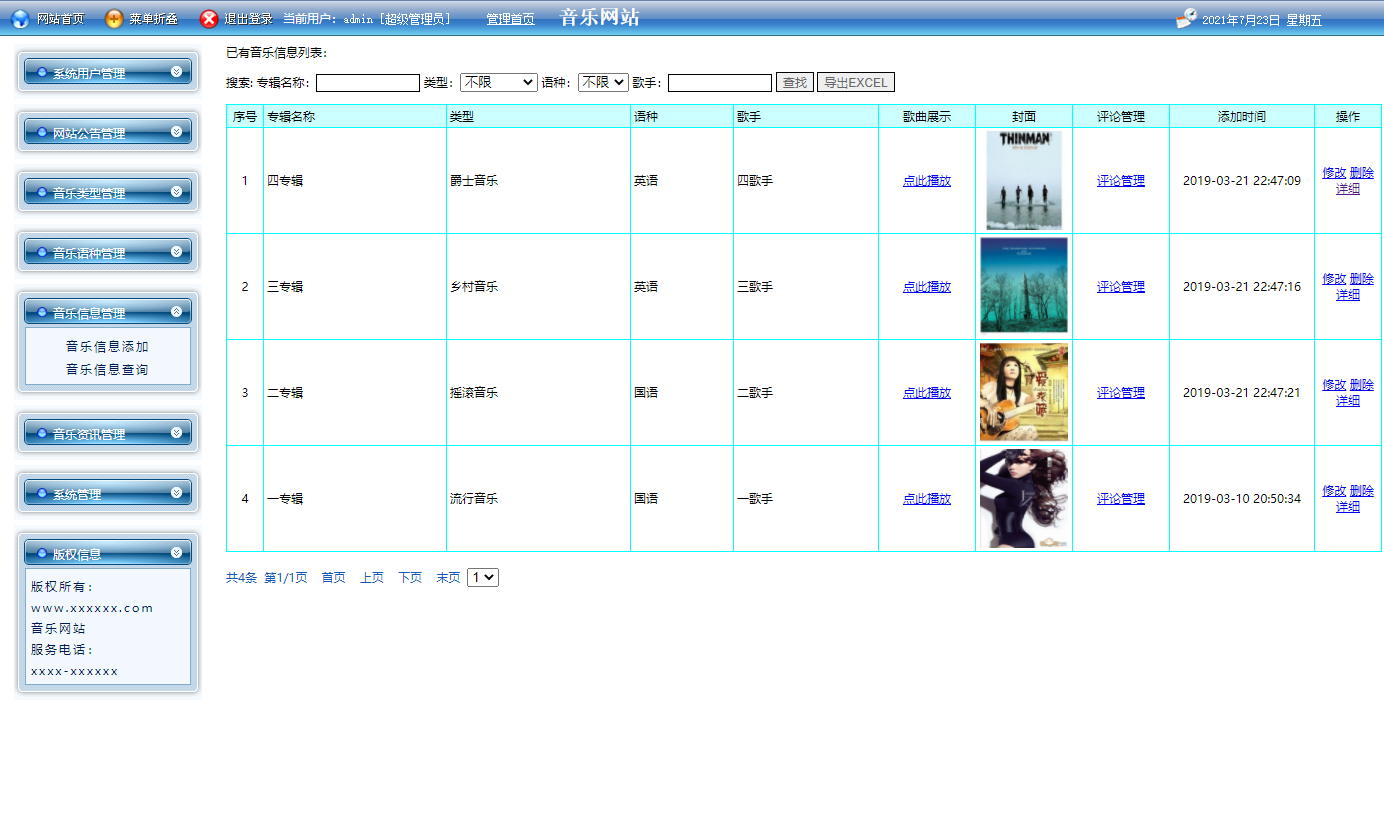
系统设计了15张数据表来支持复杂的业务逻辑,以下是几个核心表的设计分析:
音乐信息表(music) 的设计体现了完整的信息管理需求:
CREATE TABLE music (
    music_id INT PRIMARY KEY AUTO_INCREMENT,
    title VARCHAR(200) NOT NULL,
    artist VARCHAR(100) NOT NULL,
    album VARCHAR(150),
    genre_id INT,
    language_id INT,
    duration INT COMMENT '时长(秒)',
    file_name VARCHAR(255) NOT NULL,
    file_size BIGINT,
    upload_time DATETIME DEFAULT CURRENT_TIMESTAMP,
    play_count INT DEFAULT 0,
    status TINYINT DEFAULT 1 COMMENT '1-正常, 0-下架',
    FOREIGN KEY (genre_id) REFERENCES music_genre(genre_id),
    FOREIGN KEY (language_id) REFERENCES music_language(language_id)
);
该表设计具有以下技术亮点:
- 外键约束:通过genre_id和language_id与分类表、语言表建立关联,确保数据完整性
- 业务字段完备:包含duration、file_size等元数据,支持丰富的查询和统计功能
- 状态管理:status字段实现软删除功能,保留历史数据的同时控制显示状态
- 性能优化:play_count字段支持热门音乐排行,upload_time支持按时间排序
用户收藏关系表(user_favorite) 采用典型的多对多关系设计:
CREATE TABLE user_favorite (
    favorite_id INT PRIMARY KEY AUTO_INCREMENT,
    user_id INT NOT NULL,
    music_id INT NOT NULL,
    create_time DATETIME DEFAULT CURRENT_TIMESTAMP,
    UNIQUE KEY uk_user_music (user_id, music_id),
    FOREIGN KEY (user_id) REFERENCES user(user_id),
    FOREIGN KEY (music_id) REFERENCES music(music_id)
);
独特设计包括:
- 复合唯一约束:防止用户重复收藏同一首音乐
- 时间戳记录:支持按收藏时间排序和统计分析
- 级联操作考虑:合理的外键约束保证数据一致性
核心功能实现深度解析
1. 智能音乐检索系统 系统实现了基于多条件的复合搜索功能,支持按歌名、歌手、专辑、流派等关键词搜索。搜索逻辑采用数据库模糊查询结合结果排序算法:
public class MusicSearchService {
    public List<Music> searchMusic(String keyword, String searchType,
                                  Integer genreId, String language) {
        StringBuilder sql = new StringBuilder(
            "SELECT * FROM music WHERE status = 1 AND (");

        List<Object> params = new ArrayList<>();
        String[] searchFields = determineSearchFields(searchType);

        for (int i = 0; i < searchFields.length; i++) {
            if (i > 0) sql.append(" OR ");
            sql.append(searchFields[i]).append(" LIKE ?");
            params.add("%" + keyword + "%");
        }
        sql.append(")");

        if (genreId != null) {
            sql.append(" AND genre_id = ?");
            params.add(genreId);
        }
        if (language != null) {
            sql.append(" AND language_id IN (SELECT language_id FROM music_language WHERE language_name = ?)");
            params.add(language);
        }

        sql.append(" ORDER BY play_count DESC, upload_time DESC");

        return jdbcTemplate.query(sql.toString(), params.toArray(), new MusicRowMapper());
    }

    private String[] determineSearchFields(String searchType) {
        switch (searchType) {
            case "title": return new String[]{"title"};
            case "artist": return new String[]{"artist"};
            case "album": return new String[]{"album"};
            default: return new String[]{"title", "artist", "album"};
        }
    }
}
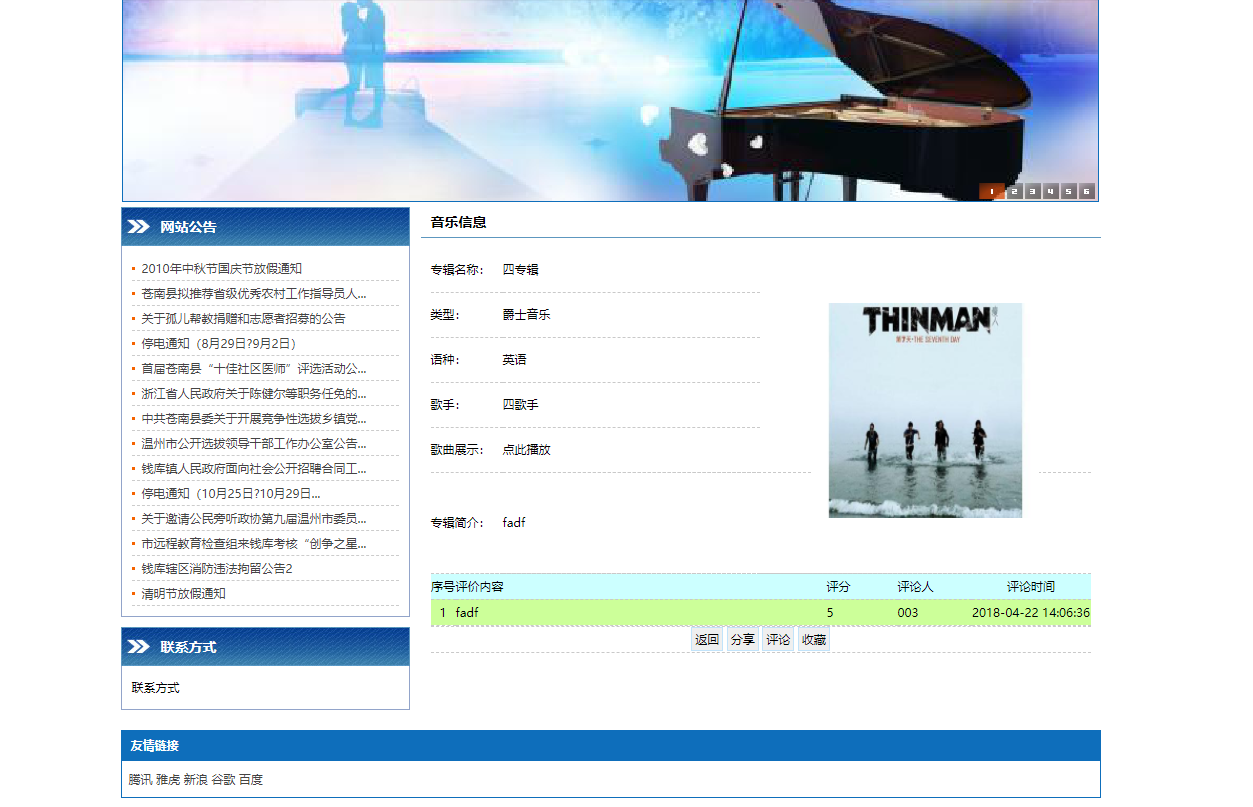
2. 流媒体播放引擎 播放功能的核心在于实现音乐的流式传输,支持进度拖拽和连续播放:
// 前端音频播放器控制逻辑
class MusicPlayer {
    constructor() {
        this.audio = new Audio();
        this.currentMusicId = null;
        this.playlist = [];
        this.currentIndex = 0;

        this.initializeEventListeners();
    }

    initializeEventListeners() {
        this.audio.addEventListener('loadedmetadata', () => {
            this.updateDurationDisplay();
        });

        this.audio.addEventListener('timeupdate', () => {
            this.updateProgressBar();
        });

        this.audio.addEventListener('ended', () => {
            this.playNext();
        });
    }

    playMusic(musicId, autoPlay = true) {
        this.currentMusicId = musicId;
        this.audio.src = `/music/play?id=${musicId}`;

        if (autoPlay) {
            this.audio.play().catch(e => {
                console.error('播放失败:', e);
            });
        }

        // 更新播放界面
        this.updatePlayerUI(musicId);
    }

    seekTo(percent) {
        if (this.audio.duration) {
            this.audio.currentTime = percent * this.audio.duration;
        }
    }

    setPlaylist(musicList) {
        this.playlist = musicList;
        this.currentIndex = 0;
    }

    playNext() {
        if (this.playlist.length > 0) {
            this.currentIndex = (this.currentIndex + 1) % this.playlist.length;
            this.playMusic(this.playlist[this.currentIndex].musicId);
        }
    }
}
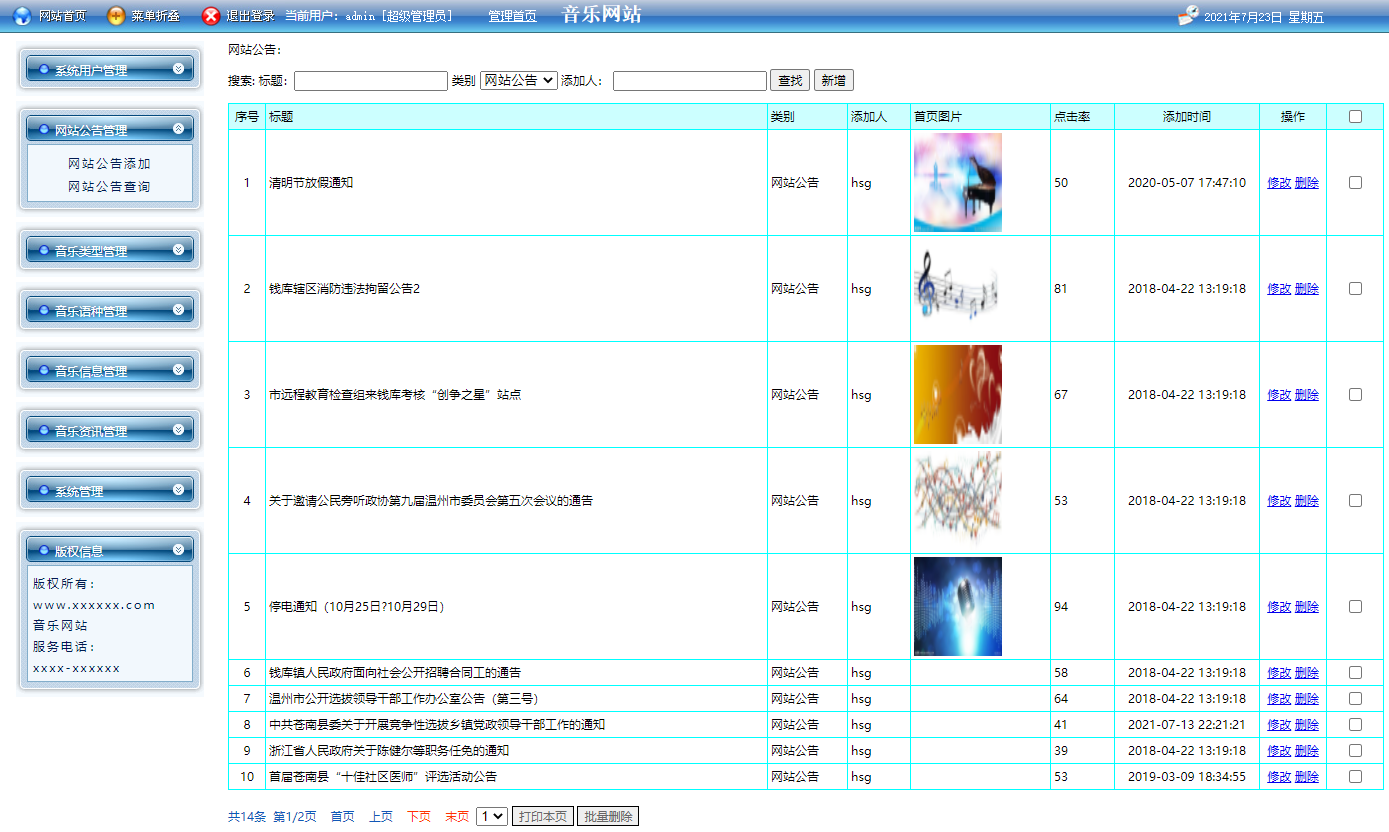
3. 用户权限管理系统 系统采用基于角色的访问控制(RBAC)模型,实现管理员和普通用户的分权管理:
// 权限验证过滤器
@WebFilter("/*")
public class AuthenticationFilter implements Filter {
    private static final Set<String> PUBLIC_URLS = Set.of(
        "/login", "/register", "/css/", "/js/", "/images/", "/music/play"
    );

    public void doFilter(ServletRequest request, ServletResponse response,
                        FilterChain chain) throws IOException, ServletException {

        HttpServletRequest httpRequest = (HttpServletRequest) request;
        HttpServletResponse httpResponse = (HttpServletResponse) response;
        String path = httpRequest.getRequestURI().substring(httpRequest.getContextPath().length());

        // 检查是否为公开资源
        if (isPublicResource(path)) {
            chain.doFilter(request, response);
            return;
        }

        HttpSession session = httpRequest.getSession(false);
        if (session == null || session.getAttribute("user") == null) {
            httpResponse.sendRedirect(httpRequest.getContextPath() + "/login");
            return;
        }

        User user = (User) session.getAttribute("user");
        if (!hasPermission(user, path)) {
            httpResponse.sendError(HttpServletResponse.SC_FORBIDDEN);
            return;
        }

        chain.doFilter(request, response);
    }

    private boolean hasPermission(User user, String path) {
        if (path.startsWith("/admin/")) {
            return "admin".equals(user.getRole());
        }
        return true;
    }
}
4. 音乐上传与处理流水线 音乐上传功能包含文件验证、元数据提取和数据库记录等多个步骤:
public class MusicUploadService {
    private static final Set<String> ALLOWED_FORMATS = Set.of("mp3", "wav", "flac");
    private static final long MAX_FILE_SIZE = 50 * 1024 * 1024; // 50MB

    public UploadResult uploadMusic(FileItem fileItem, int uploaderId) {
        // 文件格式验证
        String fileName = fileItem.getName();
        String fileExtension = getFileExtension(fileName).toLowerCase();

        if (!ALLOWED_FORMATS.contains(fileExtension)) {
            return UploadResult.error("不支持的文件格式");
        }

        if (fileItem.getSize() > MAX_FILE_SIZE) {
            return UploadResult.error("文件大小超过限制");
        }

        try {
            // 保存文件
            String savedFileName = generateUniqueFileName(fileExtension);
            String savePath = getSavePath(savedFileName);
            File savedFile = new File(savePath);
            fileItem.write(savedFile);

            // 提取音乐元数据
            MusicMetadata metadata = extractMetadata(savedFile);

            // 保存到数据库
            Music music = new Music();
            music.setTitle(metadata.getTitle() != null ? metadata.getTitle() :
                          fileName.substring(0, fileName.lastIndexOf('.')));
            music.setArtist(metadata.getArtist() != null ? metadata.getArtist() : "未知艺术家");
            music.setDuration(metadata.getDuration());
            music.setFileName(savedFileName);
            music.setFileSize(fileItem.getSize());

            int musicId = musicDAO.save(music);

            return UploadResult.success(musicId);

        } catch (Exception e) {
            return UploadResult.error("上传失败: " + e.getMessage());
        }
    }
}
实体模型与业务逻辑设计
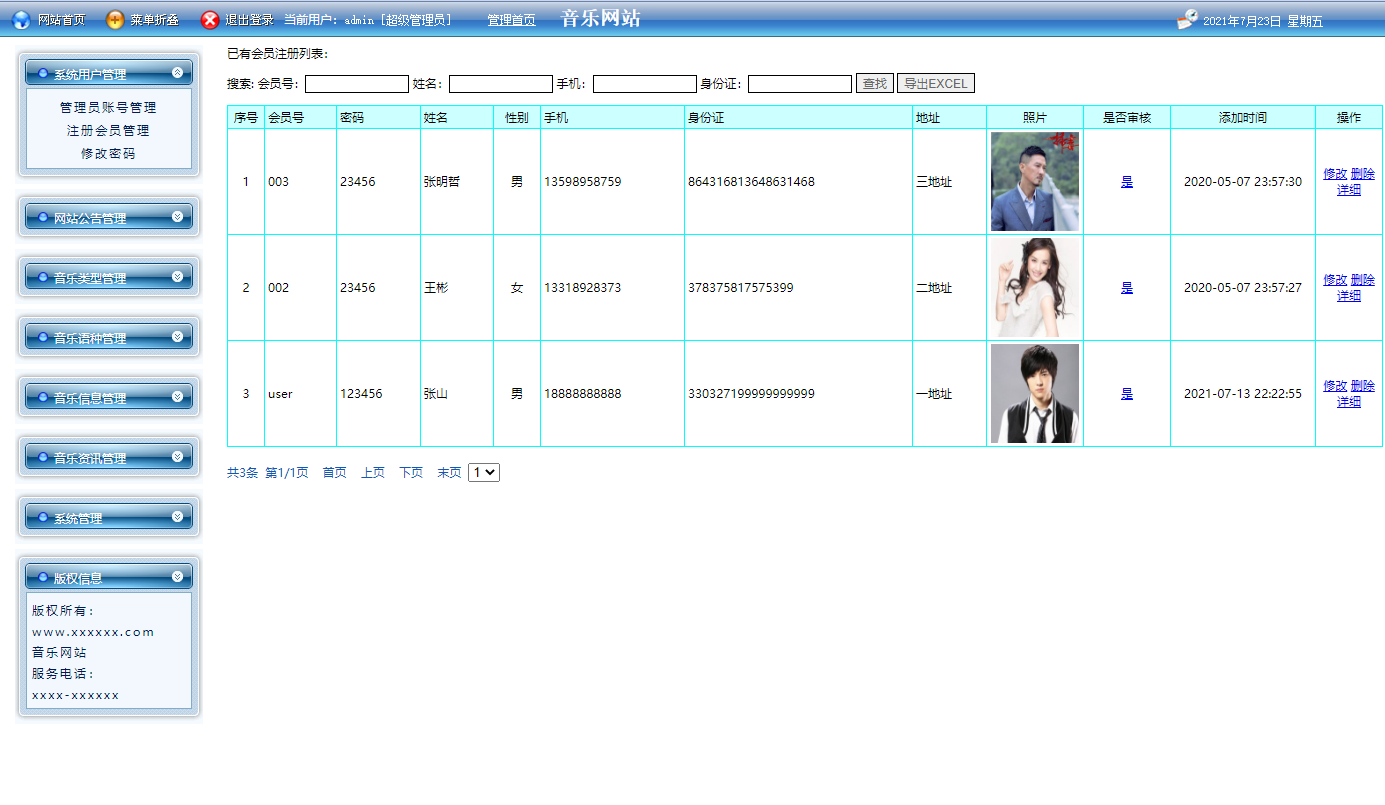
系统的核心实体模型包括用户、音乐、专辑、收藏等,它们之间通过精心设计的关联关系支持复杂的业务场景:
// 音乐实体类设计
public class Music {
    private Integer musicId;
    private String title;
    private String artist;
    private String album;
    private Integer genreId;
    private Integer languageId;
    private Integer duration; // 秒
    private String fileName;
    private Long fileSize;
    private Date uploadTime;
    private Integer playCount;
    private Boolean status;

    // 关联属性
    private String genreName;
    private String languageName;
    private Boolean isFavorited; // 当前用户是否收藏

    // 业务方法
    public String getFormattedDuration() {
        int minutes = duration / 60;
        int seconds = duration % 60;
        return String.format("%d:%02d", minutes, seconds);
    }

    public String getFileSizeFormatted() {
        if (fileSize < 1024) {
            return fileSize + " B";
        } else if (fileSize < 1024 * 1024) {
            return String.format("%.1f KB", fileSize / 1024.0);
        } else {
            return String.format("%.1f MB", fileSize / (1024.0 * 1024));
        }
    }
}
性能优化与安全考量
系统在性能和安全方面进行了多重优化:
- 数据库查询优化:对频繁查询的字段建立索引,使用连接查询减少数据库访问次数
CREATE INDEX idx_music_title ON music(title);
CREATE INDEX idx_music_artist ON music(artist);
CREATE INDEX idx_music_upload_time ON music(upload_time);
- 缓存策略:对热门音乐列表、分类信息等静态数据实施缓存
public class MusicCache {
    private static Map<String, Object> cache = new ConcurrentHashMap<>();
    private static final long CACHE_DURATION = 30 * 60 * 1000; // 30分钟

    public static List<Music> getHotMusic() {
        String cacheKey = "hot_music";
        CacheItem item = (CacheItem) cache.get(cacheKey);

        if (item != null && System.currentTimeMillis() - item.getTimestamp() < CACHE_DURATION) {
            return (List<Music>) item.getData();
        }

        List<Music> hotMusic = musicDAO.getHotMusic(20);
        cache.put(cacheKey, new CacheItem(hotMusic, System.currentTimeMillis()));
        return hotMusic;
    }
}
- 安全防护:防止SQL注入、XSS攻击等安全威胁
public class SecurityUtil {
public static String escapeHtml(String input) {
if (input == null) return null;
return input.replace("&", "&")
.replace("<", "<")
.replace(">", ">")
.replace("\"", """)
.replace("'", "'");
}
public static boolean isValidMusicId(String id) {
return id != null && id.matches("\\d+");
}
}
功能展望与系统优化方向
个性化推荐引擎 基于用户播放历史、收藏行为和相似用户偏好,构建协同过滤推荐算法。实现思路:收集用户行为数据,建立用户-音乐评分矩阵,使用Slope One或矩阵分解算法生成个性化推荐列表。
移动端适配与PWA支持 开发响应式设计,支持移动设备访问。通过Service Worker实现离线缓存,将系统升级为渐进式Web应用,提供近似原生应用的体验。
社交功能扩展 增加音乐评论、分享、歌单创建和协作编辑功能。技术实现:建立评论表、分享记录表,使用WebSocket实现实时消息通知。
音频处理增强 集成音频分析库(如Essentia),自动提取音乐特征(BPM、调性、情绪),支持基于音乐内容的智能分类和检索。
微服务架构改造 将单体应用拆分为用户服务、音乐服务、推荐服务等微服务,使用Spring Cloud等技术栈实现服务治理,提高系统可扩展性和维护性。
该系统通过严谨的架构设计和细致的功能实现,构建了一个功能完备的在线音乐管理平台。其模块化设计为后续功能扩展奠定了良好基础,而性能优化和安全考量确保了系统的稳定运行。随着技术的不断发展,该系统有望通过引入人工智能、大数据分析等先进技术,进一步提升用户体验和管理效率。