离散数学作为计算机科学的核心基础课程,其抽象概念和形式化证明方法往往成为学生的学习难点。传统教学模式中,练习资源分散、学习反馈滞后、知识点掌握不牢等问题长期存在。针对这一教学痛点,我们设计并实现了名为"离散数学智能学习平台"的在线教学系统,通过整合课程内容与习题资源,构建结构化的知识学习路径和即时反馈机制。
系统采用经典的JSP+Servlet+JavaBean三层架构,后端使用JDBC直接连接MySQL数据库,前端通过JSP页面动态渲染教学内容。该架构确保了系统的稳定性和可扩展性,同时降低了开发复杂度。在教学功能设计上,平台覆盖了集合论、图论、逻辑代数等核心章节,为学生提供从理论学习到实践练习的完整闭环。
系统架构与技术栈
平台采用MVC设计模式,将业务逻辑、数据展示和用户交互清晰分离。Servlet作为控制器层处理所有业务请求,JavaBean封装业务实体和数据访问逻辑,JSP负责视图渲染。这种分层架构使得系统具有良好的可维护性和可扩展性。
数据库连接池配置通过JDBC实现,采用连接池技术优化数据库访问性能。以下展示核心的数据库连接管理代码:
public class DBUtil {
    private static DataSource dataSource;

    static {
        try {
            Context context = new InitialContext();
            dataSource = (DataSource) context.lookup("java:comp/env/jdbc/discrete_math");
        } catch (NamingException e) {
            e.printStackTrace();
        }
    }

    public static Connection getConnection() throws SQLException {
        return dataSource.getConnection();
    }
}
用户会话管理通过HttpSession实现,系统能够跟踪用户的学习进度和练习记录:
public class UserSessionFilter implements Filter {
    @Override
    public void doFilter(ServletRequest request, ServletResponse response,
                        FilterChain chain) throws IOException, ServletException {
        HttpServletRequest httpRequest = (HttpServletRequest) request;
        HttpSession session = httpRequest.getSession(false);

        if (session != null && session.getAttribute("user") != null) {
            chain.doFilter(request, response);
        } else {
            ((HttpServletResponse) response).sendRedirect("login.jsp");
        }
    }
}
数据库设计解析
系统共设计14张数据表,涵盖用户管理、题目管理、学习记录等核心模块。其中题目表的设计体现了对离散数学多种题型的良好支持:
题目表设计
CREATE TABLE question (
    question_id INT PRIMARY KEY AUTO_INCREMENT,
    chapter_id INT NOT NULL,
    question_type ENUM('single_choice', 'multiple_choice', 'true_false', 'calculation') NOT NULL,
    question_content TEXT NOT NULL,
    options JSON,
    correct_answer VARCHAR(500) NOT NULL,
    difficulty_level ENUM('easy', 'medium', 'hard') DEFAULT 'medium',
    explanation TEXT,
    points INT DEFAULT 1,
    created_time DATETIME DEFAULT CURRENT_TIMESTAMP,
    updated_time DATETIME DEFAULT CURRENT_TIMESTAMP ON UPDATE CURRENT_TIMESTAMP,
    FOREIGN KEY (chapter_id) REFERENCES chapter(chapter_id)
);
题目表采用JSON格式存储选择题选项,有效支持不同题型的灵活扩展。难度分级机制为个性化推荐提供了数据基础,而详细的解析内容字段确保学生能够理解解题思路。
学习记录表设计
CREATE TABLE study_record (
    record_id INT PRIMARY KEY AUTO_INCREMENT,
    user_id INT NOT NULL,
    question_id INT NOT NULL,
    user_answer VARCHAR(500),
    is_correct BOOLEAN,
    time_spent INT COMMENT '答题耗时(秒)',
    created_time DATETIME DEFAULT CURRENT_TIMESTAMP,
    INDEX idx_user_question (user_id, question_id),
    INDEX idx_user_time (user_id, created_time),
    FOREIGN KEY (user_id) REFERENCES user(user_id),
    FOREIGN KEY (question_id) REFERENCES question(question_id)
);
学习记录表通过索引优化查询性能,记录详细的答题数据,为学习分析提供数据支撑。时间花费统计帮助识别学生的学习难点。
核心功能实现
智能组卷与练习系统
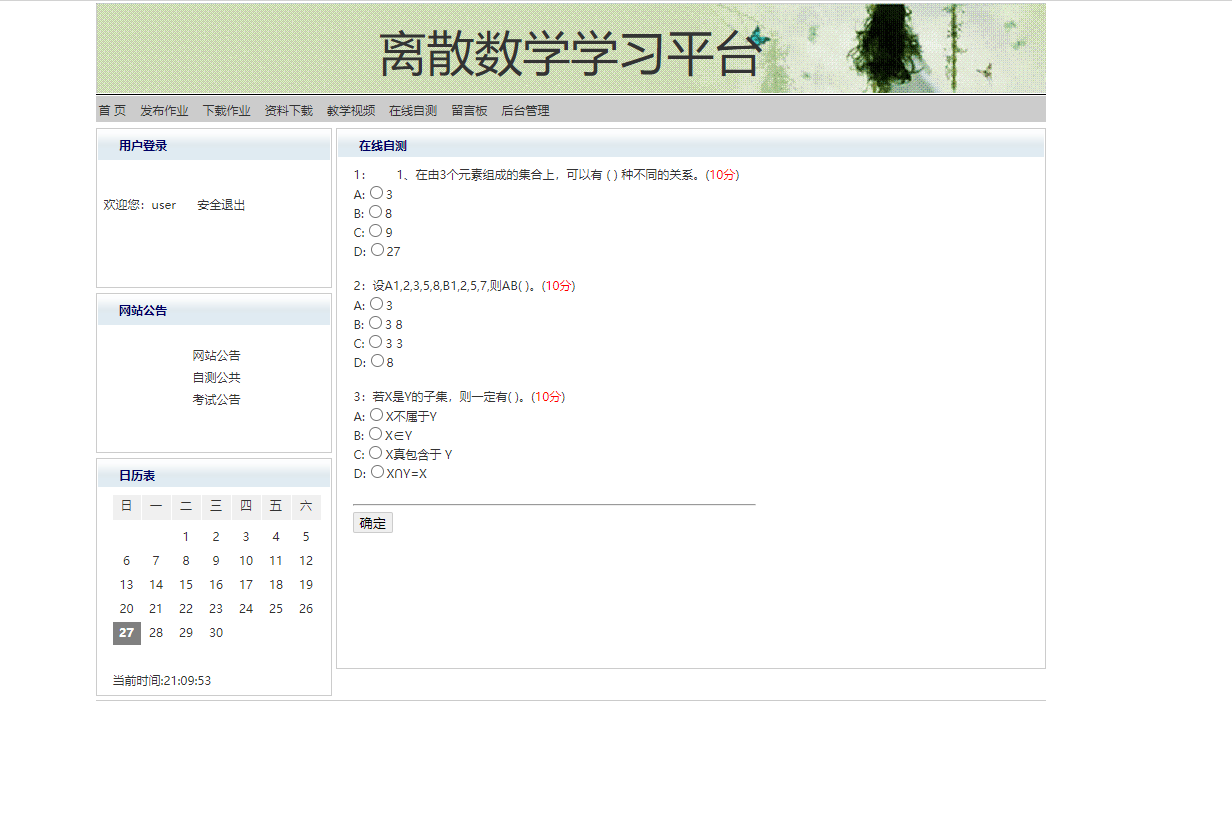
平台的核心功能之一是智能组卷系统,能够根据章节、难度等参数动态生成练习试卷。以下代码展示组卷逻辑的实现:
public class ExamGenerator {
    public List<Question> generateExam(int chapterId, int questionCount,
                                      String difficulty) {
        List<Question> examQuestions = new ArrayList<>();
        String sql = "SELECT * FROM question WHERE chapter_id = ? AND difficulty_level = ? "
                   + "ORDER BY RAND() LIMIT ?";

        try (Connection conn = DBUtil.getConnection();
             PreparedStatement stmt = conn.prepareStatement(sql)) {

            stmt.setInt(1, chapterId);
            stmt.setString(2, difficulty);
            stmt.setInt(3, questionCount);

            ResultSet rs = stmt.executeQuery();
            while (rs.next()) {
                Question question = extractQuestionFromResultSet(rs);
                examQuestions.add(question);
            }
        } catch (SQLException e) {
            e.printStackTrace();
        }

        return examQuestions;
    }

    private Question extractQuestionFromResultSet(ResultSet rs) throws SQLException {
        Question question = new Question();
        question.setId(rs.getInt("question_id"));
        question.setContent(rs.getString("question_content"));
        question.setType(QuestionType.valueOf(rs.getString("question_type").toUpperCase()));
        question.setDifficulty(DifficultyLevel.valueOf(rs.getString("difficulty_level").toUpperCase()));

        // 解析JSON格式的选项
        String optionsJson = rs.getString("options");
        if (optionsJson != null) {
            question.setOptions(parseOptions(optionsJson));
        }

        return question;
    }
}
实时答题与批改系统
学生完成练习后,系统立即进行答案批改并提供详细解析。批改逻辑根据题型采用不同的判断策略:
public class AnswerChecker {
    public CheckResult checkAnswer(Question question, String userAnswer) {
        CheckResult result = new CheckResult();
        String correctAnswer = question.getCorrectAnswer();

        switch (question.getType()) {
            case SINGLE_CHOICE:
                result.setCorrect(userAnswer.equals(correctAnswer));
                break;

            case MULTIPLE_CHOICE:
                result.setCorrect(checkMultipleChoice(userAnswer, correctAnswer));
                break;

            case TRUE_FALSE:
                result.setCorrect(userAnswer.equalsIgnoreCase(correctAnswer));
                break;

            case CALCULATION:
                result.setCorrect(checkCalculationAnswer(userAnswer, correctAnswer));
                break;
        }

        result.setExplanation(question.getExplanation());
        return result;
    }

    private boolean checkMultipleChoice(String userAnswer, String correctAnswer) {
        // 多选题答案比较逻辑
        Set<String> userAnswers = splitAnswers(userAnswer);
        Set<String> correctAnswers = splitAnswers(correctAnswer);
        return userAnswers.equals(correctAnswers);
    }

    private boolean checkCalculationAnswer(String userAnswer, String correctAnswer) {
        // 计算题答案容错比较
        try {
            double userValue = Double.parseDouble(userAnswer);
            double correctValue = Double.parseDouble(correctAnswer);
            return Math.abs(userValue - correctValue) < 0.001;
        } catch (NumberFormatException e) {
            return userAnswer.trim().equalsIgnoreCase(correctAnswer.trim());
        }
    }
}
错题本与学习进度跟踪
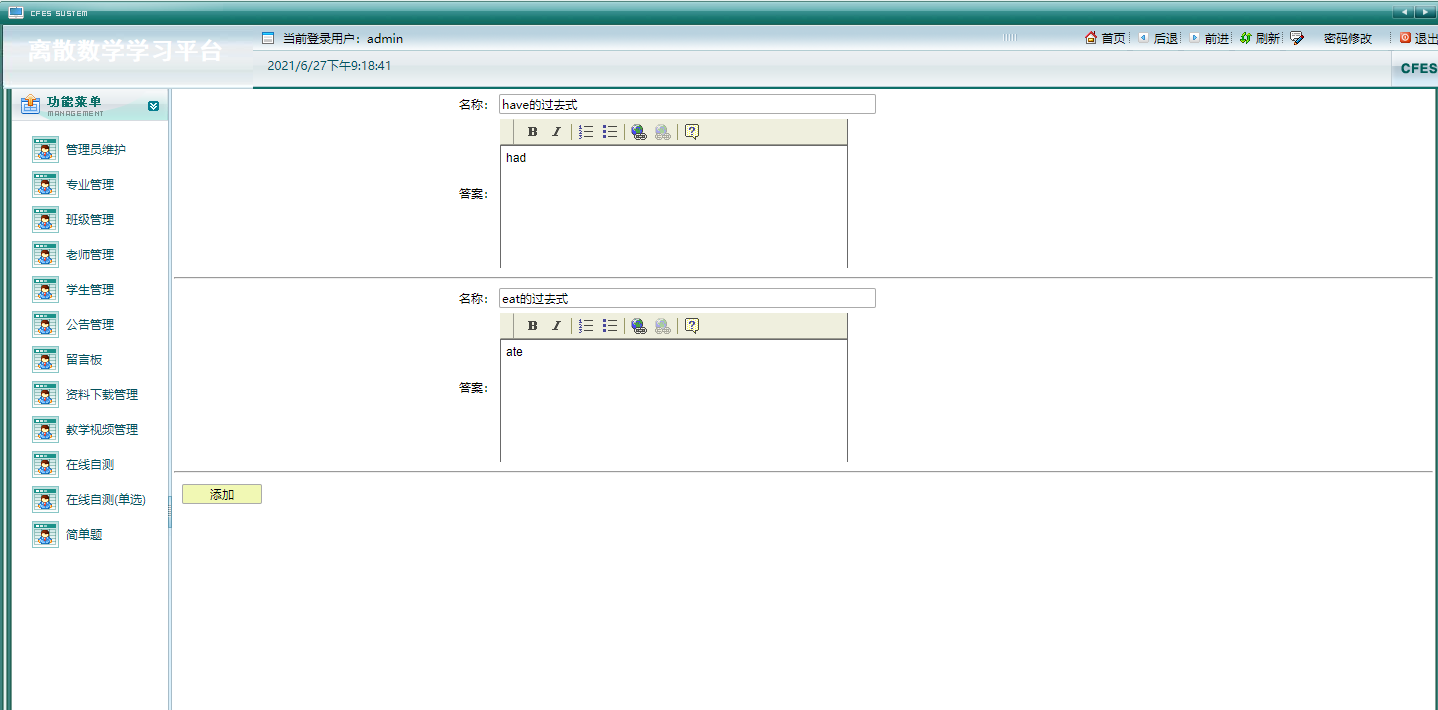
系统自动收集学生的错题记录,形成个人错题本,帮助学生针对性复习:
public class MistakeBookService {
    public void recordMistake(int userId, int questionId, String userAnswer) {
        String sql = "INSERT INTO mistake_record (user_id, question_id, user_answer, record_time) "
                   + "VALUES (?, ?, ?, NOW()) ON DUPLICATE KEY UPDATE "
                   + "user_answer = VALUES(user_answer), record_time = NOW()";

        try (Connection conn = DBUtil.getConnection();
             PreparedStatement stmt = conn.prepareStatement(sql)) {

            stmt.setInt(1, userId);
            stmt.setInt(2, questionId);
            stmt.setString(3, userAnswer);
            stmt.executeUpdate();

        } catch (SQLException e) {
            e.printStackTrace();
        }
    }

    public List<MistakeRecord> getMistakeRecords(int userId, Date startDate, Date endDate) {
        List<MistakeRecord> records = new ArrayList<>();
        String sql = "SELECT mr.*, q.question_content, q.correct_answer, q.explanation "
                   + "FROM mistake_record mr JOIN question q ON mr.question_id = q.question_id "
                   + "WHERE mr.user_id = ? AND mr.record_time BETWEEN ? AND ? "
                   + "ORDER BY mr.record_time DESC";

        // 执行查询并封装结果
        return records;
    }
}
教学视频与资料管理
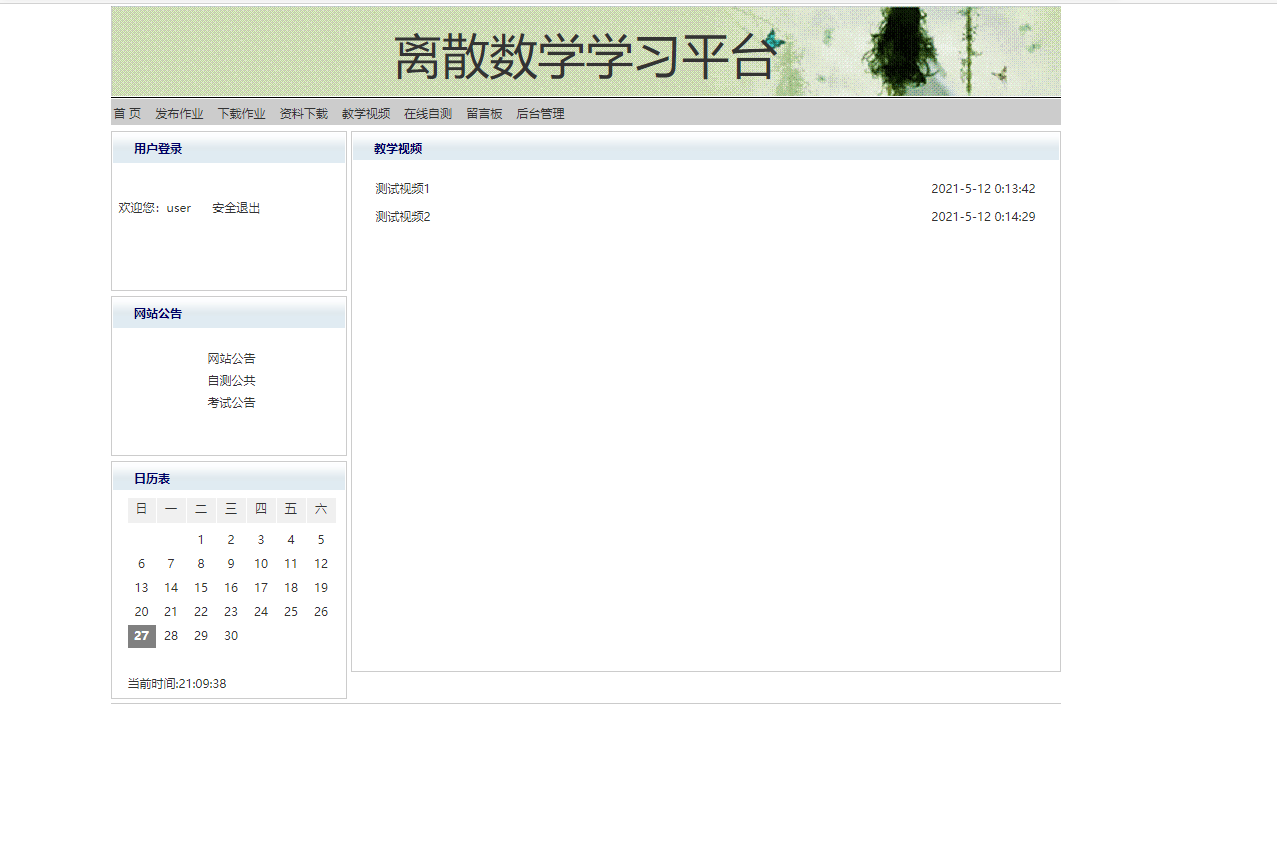
平台集成多媒体学习资源,支持视频播放和资料下载:
<%@ page contentType="text/html;charset=UTF-8" language="java" %>
<div class="video-container">
    <c:forEach var="video" items="${videoList}">
        <div class="video-item">
            <h4>${video.title}</h4>
            <video controls width="100%">
                <source src="${video.url}" type="video/mp4">
                您的浏览器不支持视频播放
            </video>
            <p>${video.description}</p>
            <div class="video-meta">
                <span>时长: ${video.duration}</span>
                <span>上传时间: <fmt:formatDate value="${video.uploadTime}" pattern="yyyy-MM-dd"/></span>
            </div>
        </div>
    </c:forEach>
</div>
实体模型设计
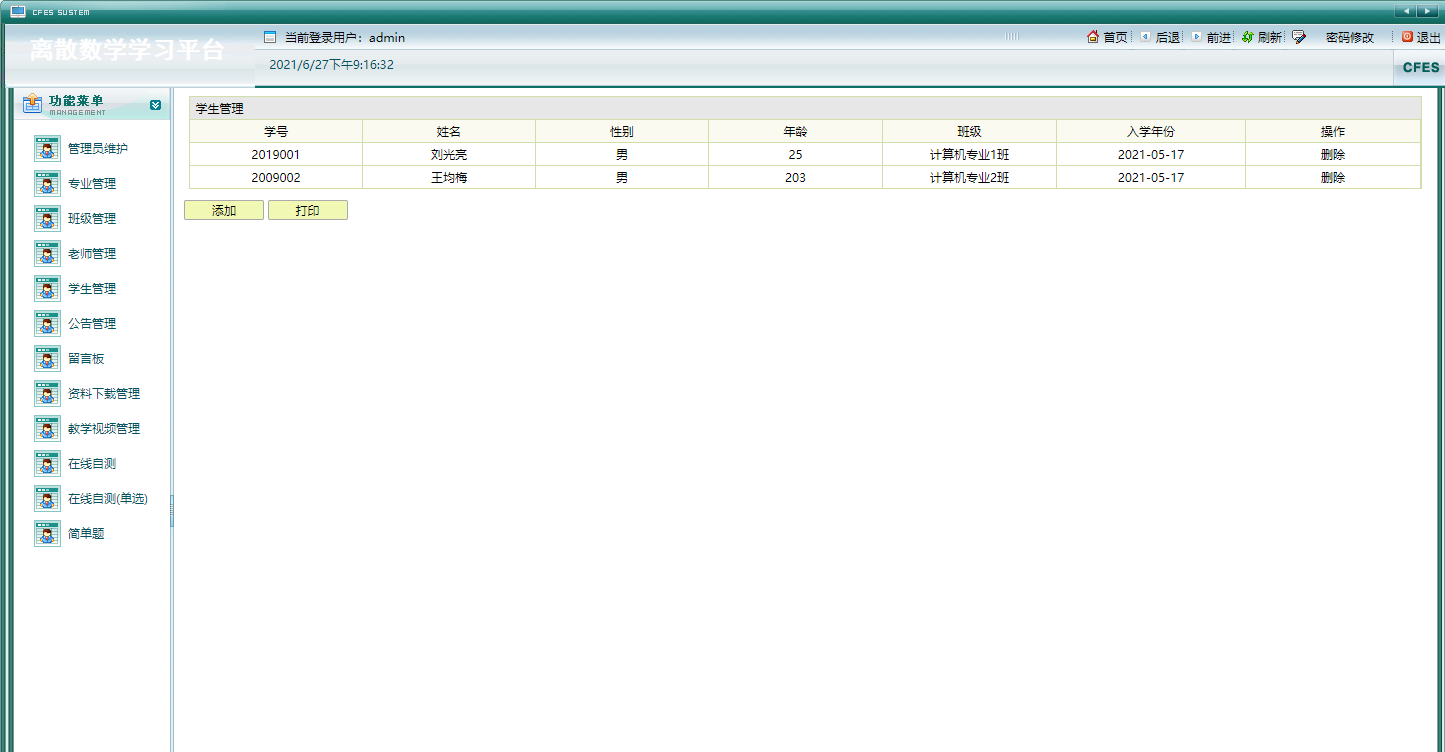
系统采用面向对象的设计思想,核心实体模型包括用户、题目、章节等:
public class User {
    private int userId;
    private String username;
    private String password;
    private UserRole role;
    private String email;
    private String realName;
    private String className;
    private Date createTime;
    private Date lastLoginTime;

    // 枚举定义
    public enum UserRole {
        STUDENT, TEACHER, ADMIN
    }
}

public class Question {
    private int questionId;
    private int chapterId;
    private QuestionType type;
    private String content;
    private Map<String, String> options;
    private String correctAnswer;
    private DifficultyLevel difficulty;
    private String explanation;
    private int points;

    public enum QuestionType {
        SINGLE_CHOICE, MULTIPLE_CHOICE, TRUE_FALSE, CALCULATION
    }

    public enum DifficultyLevel {
        EASY, MEDIUM, HARD
    }
}
系统安全与性能优化
平台在安全性方面采用多层防护措施。用户密码通过加盐哈希处理:
public class SecurityUtil {
    private static final int SALT_LENGTH = 16;
    private static final int HASH_ITERATIONS = 1000;

    public static String hashPassword(String password) {
        byte[] salt = generateSalt();
        byte[] hash = pbkdf2(password.toCharArray(), salt, HASH_ITERATIONS, 32);
        return Base64.getEncoder().encodeToString(salt) + ":"
             + Base64.getEncoder().encodeToString(hash);
    }

    public static boolean verifyPassword(String password, String storedHash) {
        String[] parts = storedHash.split(":");
        byte[] salt = Base64.getDecoder().decode(parts[0]);
        byte[] expectedHash = Base64.getDecoder().decode(parts[1]);

        byte[] testHash = pbkdf2(password.toCharArray(), salt,
                               HASH_ITERATIONS, expectedHash.length);
        return Arrays.equals(testHash, expectedHash);
    }
}
数据库查询性能通过连接池和预处理语句优化:
public class QuestionDAO {
    private static final String FIND_BY_CHAPTER_SQL =
        "SELECT * FROM question WHERE chapter_id = ? AND difficulty_level = ?";

    private Map<String, PreparedStatement> statementCache = new ConcurrentHashMap<>();

    public List<Question> findByChapter(int chapterId, String difficulty) {
        String key = "chapter_" + chapterId + "_" + difficulty;
        PreparedStatement stmt = statementCache.computeIfAbsent(key, k -> {
            try {
                return connection.prepareStatement(FIND_BY_CHAPTER_SQL);
            } catch (SQLException e) {
                throw new RuntimeException(e);
            }
        });

        // 设置参数并执行查询
    }
}
功能扩展与优化方向
基于当前系统架构,未来可从以下几个方向进行功能扩展和性能优化:
- 智能推荐算法集成 实现基于协同过滤和内容推荐的学习路径个性化。通过分析学生的学习行为数据,构建推荐模型:
public class RecommendationEngine {
    public List<Question> recommendQuestions(int userId, int limit) {
        // 基于用户历史表现和题目特征计算推荐分数
        String sql = "SELECT q.*, "
                   + "CASE WHEN mr.record_id IS NOT NULL THEN 0.3 "
                   + "ELSE (1 - COALESCE(sr.correct_rate, 0.5)) END as recommendation_score "
                   + "FROM question q "
                   + "LEFT JOIN mistake_record mr ON q.question_id = mr.question_id AND mr.user_id = ? "
                   + "LEFT JOIN (SELECT question_id, AVG(is_correct) as correct_rate "
                   + "           FROM study_record GROUP BY question_id) sr ON q.question_id = sr.question_id "
                   + "ORDER BY recommendation_score DESC LIMIT ?";
        // 执行推荐查询
    }
}
实时学习分析看板 为教师提供学生学习情况的实时可视化分析,包括知识点掌握热力图、学习进度跟踪等。
移动端适配与PWA支持 采用响应式设计重构前端界面,支持Progressive Web App技术,提升移动学习体验。
自动化题目生成引擎 基于模板和规则引擎,实现特定类型题目的自动生成,减轻教师题目录入负担。
分布式架构改造 将单体应用拆分为微服务架构,提高系统可扩展性和容错能力。
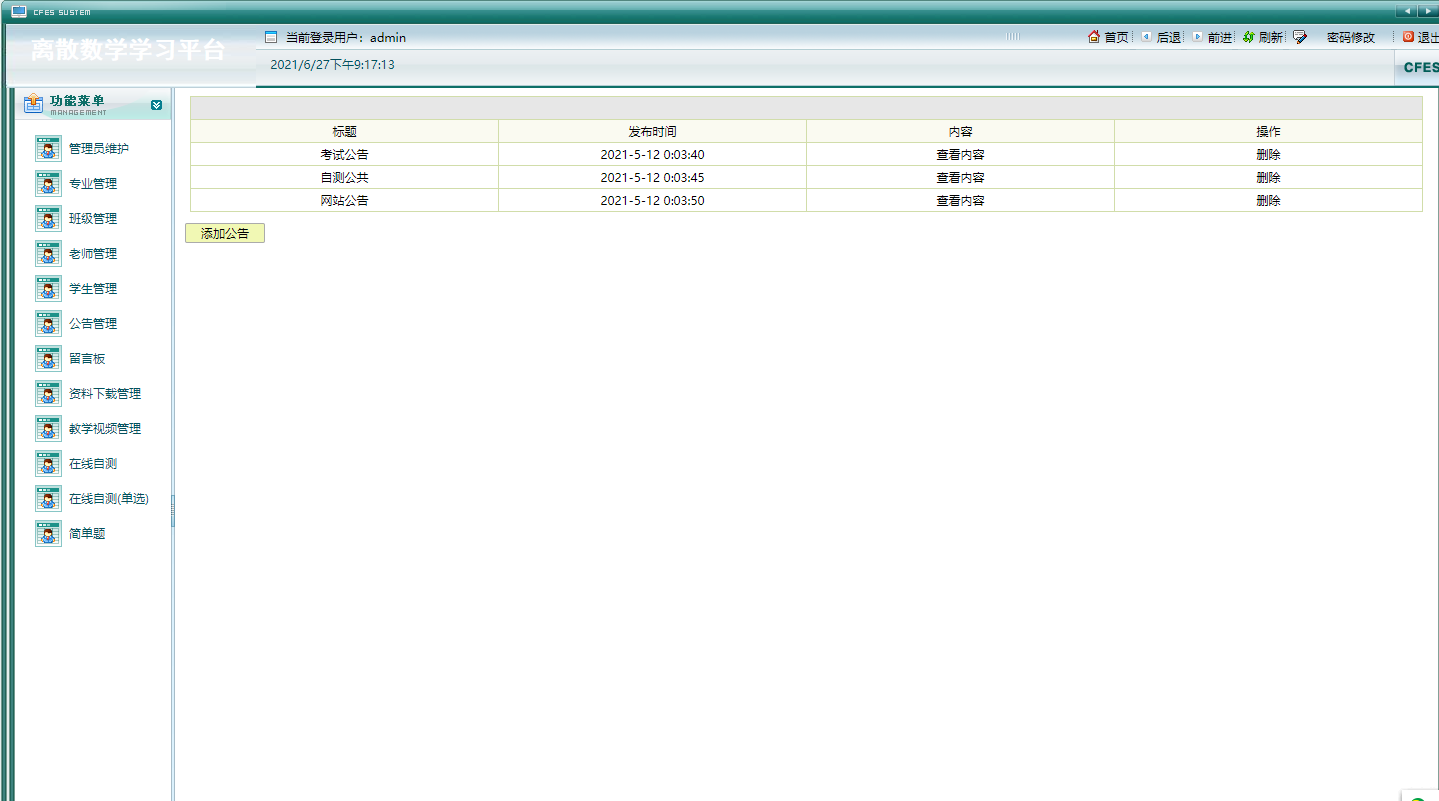
离散数学智能学习平台通过系统化的功能设计和稳健的技术实现,有效解决了传统离散数学教学中的多个痛点。平台不仅提供了丰富的练习资源,更重要的是通过智能化的学习跟踪和反馈机制,帮助学生建立系统的知识体系。基于JSP+Servlet的经典架构确保了系统的稳定运行,而模块化的设计为后续功能扩展奠定了良好基础。随着教育信息化的深入发展,此类专业化的在线学习平台将在高等教育中发挥越来越重要的作用。