在高校环境中,信息流通与资源循环存在着显著的现实需求。毕业生离校时大量闲置物品难以处理,新生入学又面临购置生活学习用品的压力;同时,校园卡、钥匙等个人物品的遗失与找寻效率低下,传统公告栏方式覆盖面有限。针对这些痛点,一个整合了二手交易与失物招领功能的线上平台显得尤为必要。该系统采用成熟稳定的SSM框架进行构建,旨在为校园社区提供一个高效、便捷、可信赖的综合服务空间。
技术架构上,平台严格遵循经典的三层架构模式,确保了系统的高内聚、低耦合。表现层由Spring MVC框架负责,它清晰地分离了Web请求的控制逻辑。通过DispatcherServlet作为前端控制器,统一接收所有HTTP请求,并依据配置的映射关系分发给对应的@Controller处理。控制器处理用户输入,调用业务逻辑,并最终返回一个ModelAndView对象,其中包含了模型数据与视图名称。视图层使用JSP技术结合JSTL标签库,动态渲染页面,同时集成jQuery库,负责前端的交互逻辑与异步数据请求,实现了无刷新搜索、表单验证等流畅体验。
业务逻辑层是系统的核心,由Spring框架的IoC容器进行管理。Spring通过依赖注入将各个业务组件(Service Bean)关联起来,例如,二手商品服务会依赖用户服务和消息服务。这种设计使得业务对象无需自行创建或查找其依赖对象,降低了代码的复杂性。同时,Spring的AOP功能被用于处理横切关注点,最典型的是声明式事务管理。通过@Transactional注解,可以轻松地为方法添加事务边界,确保例如“发布商品并减少用户积分”这样的复合操作具备原子性。
数据持久层选用MyBatis框架,它提供了极大的SQL编写灵活性。与Hibernate等全自动ORM框架不同,MyBatis要求开发者手动编写SQL语句,这对于需要进行复杂查询优化或高度依赖存储过程的场景非常有利。平台中,每个实体类都对应一个Mapper接口,其方法通过XML映射文件或@Select、@Insert等注解与具体的SQL语句绑定。MyBatis会自动将查询结果集映射到Java对象,或将Java对象参数设置到SQL中,大大简化了JDBC的繁琐操作。
数据库选用开源且性能优异的MySQL,共设计了9张表来支撑整个平台的业务逻辑。其中,user表是系统的核心基础,它存储了所有用户的基本信息。其设计考虑了扩展性与安全性,除了基本的用户名、密码、邮箱、手机号外,还包含了role字段用于区分普通用户与管理员,status字段用于控制账户的启用与禁用状态。密码字段采用MD5等散列算法进行加密存储,而非明文,这是保障用户账户安全的基本措施。create_time和update_time字段使用TIMESTAMP类型,由数据库自动维护,便于追踪用户生命周期。
CREATE TABLE `user` (
  `id` int(11) NOT NULL AUTO_INCREMENT,
  `username` varchar(50) NOT NULL,
  `password` varchar(100) NOT NULL,
  `email` varchar(100) DEFAULT NULL,
  `phone` varchar(20) DEFAULT NULL,
  `role` varchar(20) DEFAULT 'user',
  `status` int(11) DEFAULT '1',
  `create_time` timestamp NULL DEFAULT CURRENT_TIMESTAMP,
  `update_time` timestamp NULL DEFAULT CURRENT_TIMESTAMP ON UPDATE CURRENT_TIMESTAMP,
  PRIMARY KEY (`id`),
  UNIQUE KEY `username` (`username`)
) ENGINE=InnoDB DEFAULT CHARSET=utf8;
used_goods表管理所有二手商品信息。其结构设计细致地描述了商品属性,如标题、描述、价格、图片URL、分类ID等。user_id作为外键关联到user表,明确了商品的归属。status字段至关重要,它定义了商品的生命周期状态,例如“待审核”、“已发布”、“已售出”、“已下架”等,系统后台的任务调度或管理员操作会驱动状态的变迁。view_count字段用于记录商品浏览量,可作为热度排序的依据。
CREATE TABLE `used_goods` (
  `id` int(11) NOT NULL AUTO_INCREMENT,
  `title` varchar(200) NOT NULL,
  `description` text,
  `price` decimal(10,2) NOT NULL,
  `img_url` varchar(500) DEFAULT NULL,
  `category_id` int(11) DEFAULT NULL,
  `user_id` int(11) NOT NULL,
  `status` varchar(50) DEFAULT 'pending',
  `view_count` int(11) DEFAULT '0',
  `create_time` timestamp NULL DEFAULT CURRENT_TIMESTAMP,
  `update_time` timestamp NULL DEFAULT CURRENT_TIMESTAMP ON UPDATE CURRENT_TIMESTAMP,
  PRIMARY KEY (`id`),
  KEY `user_id` (`user_id`),
  KEY `category_id` (`category_id`),
  CONSTRAINT `used_goods_ibfk_1` FOREIGN KEY (`user_id`) REFERENCES `user` (`id`),
  CONSTRAINT `used_goods_ibfk_2` FOREIGN KEY (`category_id`) REFERENCES `category` (`id`)
) ENGINE=InnoDB DEFAULT CHARSET=utf8;
lost_found表的结构与used_goods类似,但字段含义针对失物招领场景。item_name、lost_place、lost_time、contact_info等字段精确描述了失物/拾物的关键信息。type字段用于区分此条目是“丢失”还是“捡到”,这是失物匹配算法的基础。is_returned字段是一个布尔标记,当失物被成功认领后,此标记被更新,该条目则会在前台默认查询中被过滤,避免信息干扰。
平台的核心功能之一是实现高效的二手商品浏览与搜索。用户进入首页或二手市场板块后,系统会分页加载商品列表。前端通过Ajax请求调用后端的商品查询接口,后端GoodsController接收分页参数、分类ID、关键词等,调用GoodsService进行查询。
@Controller
@RequestMapping("/goods")
public class GoodsController {
    @Autowired
    private GoodsService goodsService;

    @RequestMapping("/list")
    @ResponseBody
    public PageInfo<UsedGoods> getGoodsList(
            @RequestParam(defaultValue = "1") Integer pageNum,
            @RequestParam(defaultValue = "10") Integer pageSize,
            @RequestParam(required = false) Integer categoryId,
            @RequestParam(required = false) String keyword) {
        return goodsService.getGoodsByPage(pageNum, pageSize, categoryId, keyword);
    }
}
对应的GoodsServiceImpl利用MyBatis的动态SQL功能,构建灵活的查询条件。PageHelper插件简化了分页逻辑,只需在查询方法前调用PageHelper.startPage,即可自动将随后的查询进行分页。
@Service
public class GoodsServiceImpl implements GoodsService {
    @Autowired
    private UsedGoodsMapper usedGoodsMapper;

    @Override
    public PageInfo<UsedGoods> getGoodsByPage(Integer pageNum, Integer pageSize, Integer categoryId, String keyword) {
        PageHelper.startPage(pageNum, pageSize);
        Example example = new Example(UsedGoods.class);
        Example.Criteria criteria = example.createCriteria();
        criteria.andEqualTo("status", "published"); // 只查询已发布的商品
        if (categoryId != null) {
            criteria.andEqualTo("categoryId", categoryId);
        }
        if (StringUtils.isNotBlank(keyword)) {
            criteria.andLike("title", "%" + keyword + "%");
        }
        example.setOrderByClause("create_time DESC"); // 按发布时间倒序
        List<UsedGoods> goodsList = usedGoodsMapper.selectByExample(example);
        return new PageInfo<>(goodsList);
    }
}
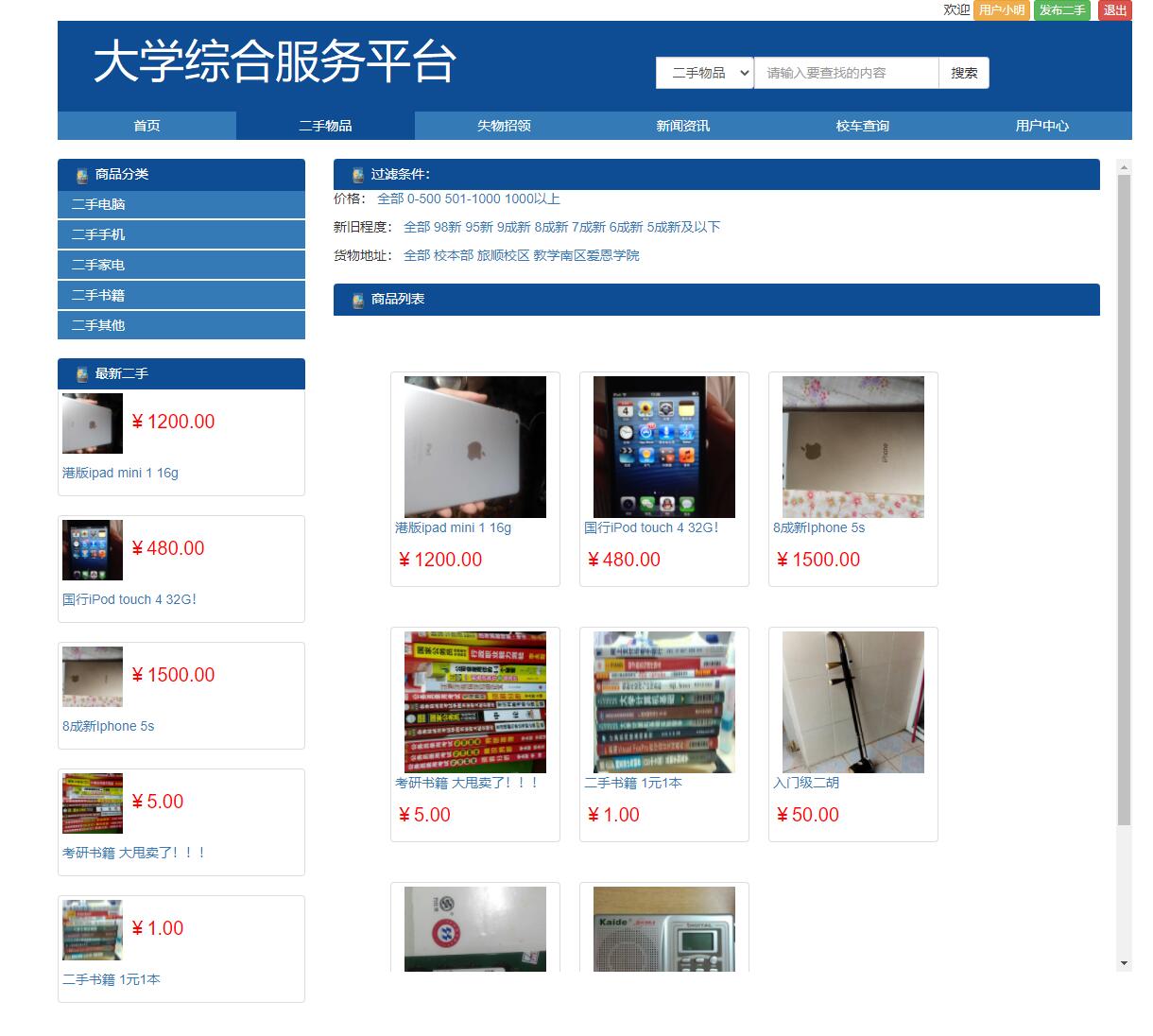
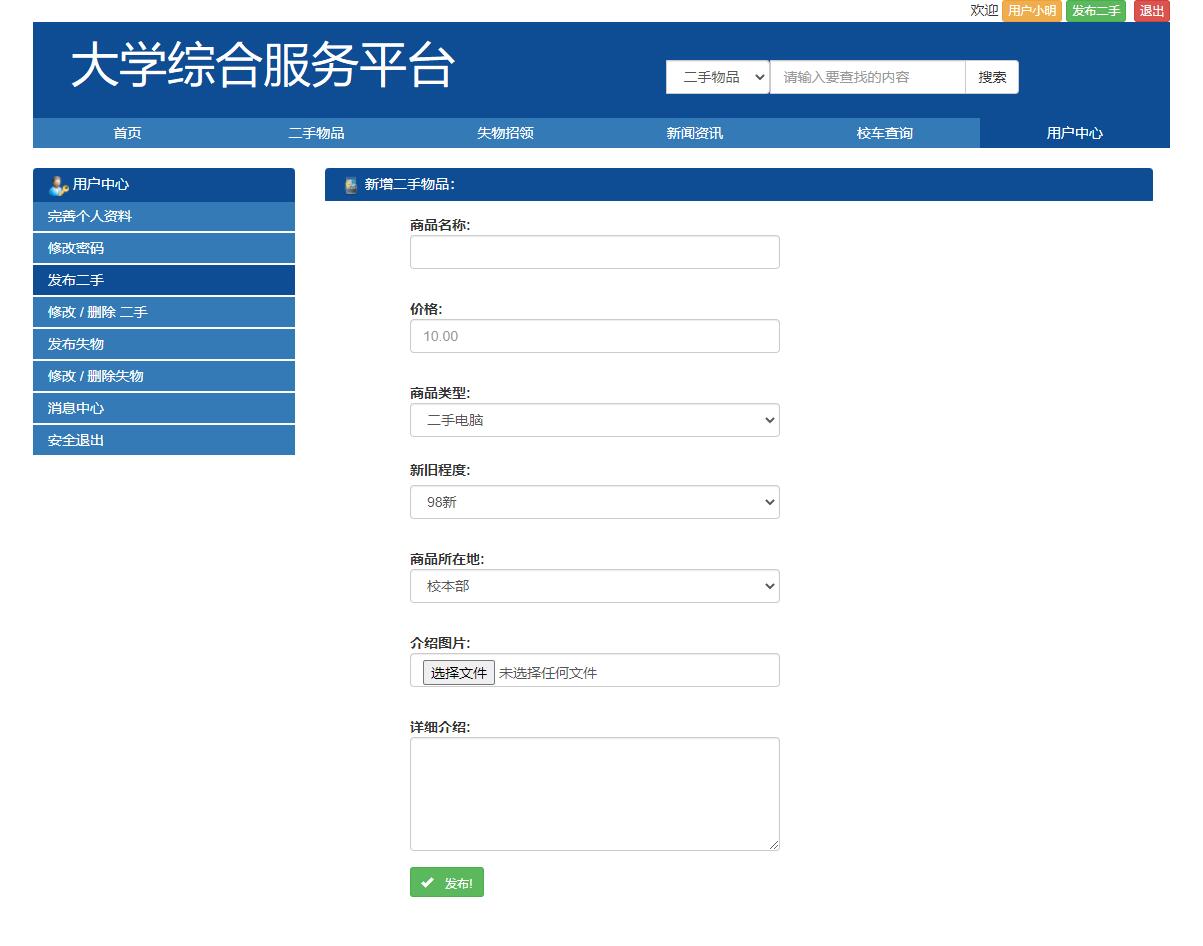
商品发布功能涉及表单数据处理、图片上传和事务管理。用户填写商品信息表单后,提交到后端。GoodsController的发布方法使用@RequestParam接收表单数据,并使用@Transactional注解确保发布的原子性。
@PostMapping("/publish")
@Transactional
public String publishGoods(@RequestParam String title,
                           @RequestParam String description,
                           @RequestParam BigDecimal price,
                           @RequestParam Integer categoryId,
                           @RequestParam("imageFile") MultipartFile imageFile,
                           HttpSession session) {
    // 1. 从session中获取当前用户ID
    User currentUser = (User) session.getAttribute("currentUser");
    if (currentUser == null) {
        return "redirect:/login";
    }

    // 2. 处理图片上传
    String imgUrl = null;
    if (!imageFile.isEmpty()) {
        try {
            imgUrl = fileStorageService.storeFile(imageFile);
        } catch (IOException e) {
            throw new RuntimeException("文件上传失败", e);
        }
    }

    // 3. 构建商品对象并保存
    UsedGoods goods = new UsedGoods();
    goods.setTitle(title);
    goods.setDescription(description);
    goods.setPrice(price);
    goods.setCategoryId(categoryId);
    goods.setUserId(currentUser.getId());
    goods.setImgUrl(imgUrl);
    goods.setStatus("pending"); // 初始状态为待审核

    usedGoodsMapper.insert(goods);

    // 4. 可能涉及的其他业务,如扣减积分,在此同样受事务保护
    // userService.deductPoints(currentUser.getId(), POINTS_FOR_PUBLISHING);

    return "redirect:/goods/my";
}
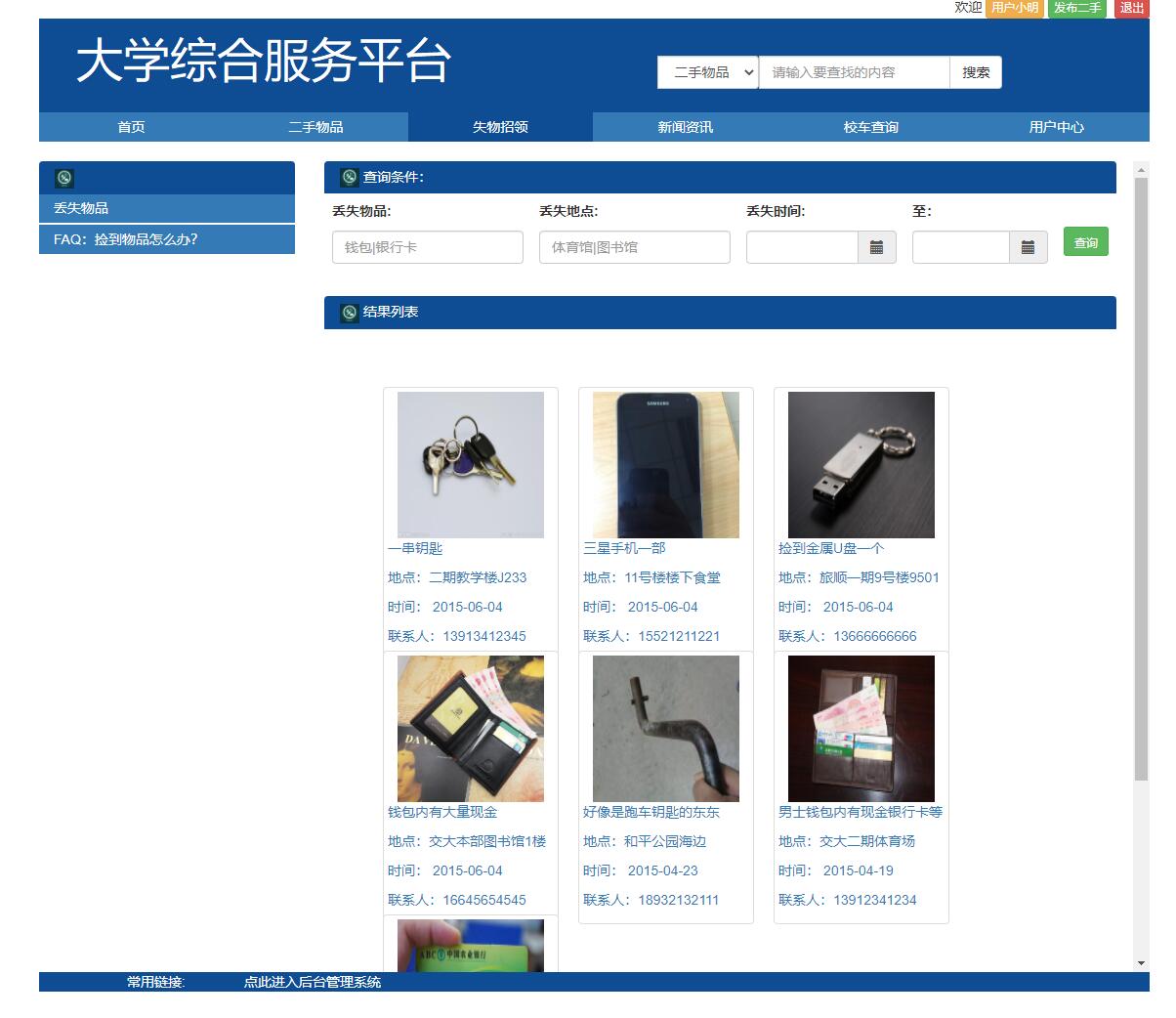
失物招领的匹配与认领流程是另一个核心功能。当用户发布一条“捡到”信息后,系统可以根据物品名称、地点、时间等关键词,自动或手动匹配已有的“丢失”信息。后台的LostFoundService提供了根据条件搜索失物信息的方法。
@Service
public class LostFoundServiceImpl implements LostFoundService {
    @Autowired
    private LostFoundMapper lostFoundMapper;

    @Override
    public List<LostFound> searchLostItems(String itemName, String place, Date lostDate, String type) {
        Example example = new Example(LostFound.class);
        Example.Criteria criteria = example.createCriteria();
        criteria.andEqualTo("type", "lost") // 查找丢失物品
                .andEqualTo("isReturned", false); // 未找回的
        if (StringUtils.isNotBlank(itemName)) {
            criteria.andLike("itemName", "%" + itemName + "%");
        }
        if (StringUtils.isNotBlank(place)) {
            criteria.andLike("lostPlace", "%" + place + "%");
        }
        if (lostDate != null) {
            criteria.andEqualTo("lostTime", lostDate);
        }
        return lostFoundMapper.selectByExample(example);
    }

    @Override
    @Transactional
    public boolean claimItem(Integer lostFoundId, Integer claimantUserId, String contactInfo) {
        LostFound lostFound = lostFoundMapper.selectByPrimaryKey(lostFoundId);
        if (lostFound == null || lostFound.getIsReturned()) {
            return false; // 物品不存在或已归还
        }
        // 更新认领状态和认领人信息
        lostFound.setIsReturned(true);
        lostFound.setClaimantUserId(claimantUserId);
        lostFound.setClaimTime(new Date());
        lostFoundMapper.updateByPrimaryKey(lostFound);

        // 可以在此添加通知原发布者的逻辑
        // notificationService.notifyPublisher(lostFound.getUserId(), "您的失物已被认领");
        return true;
    }
}
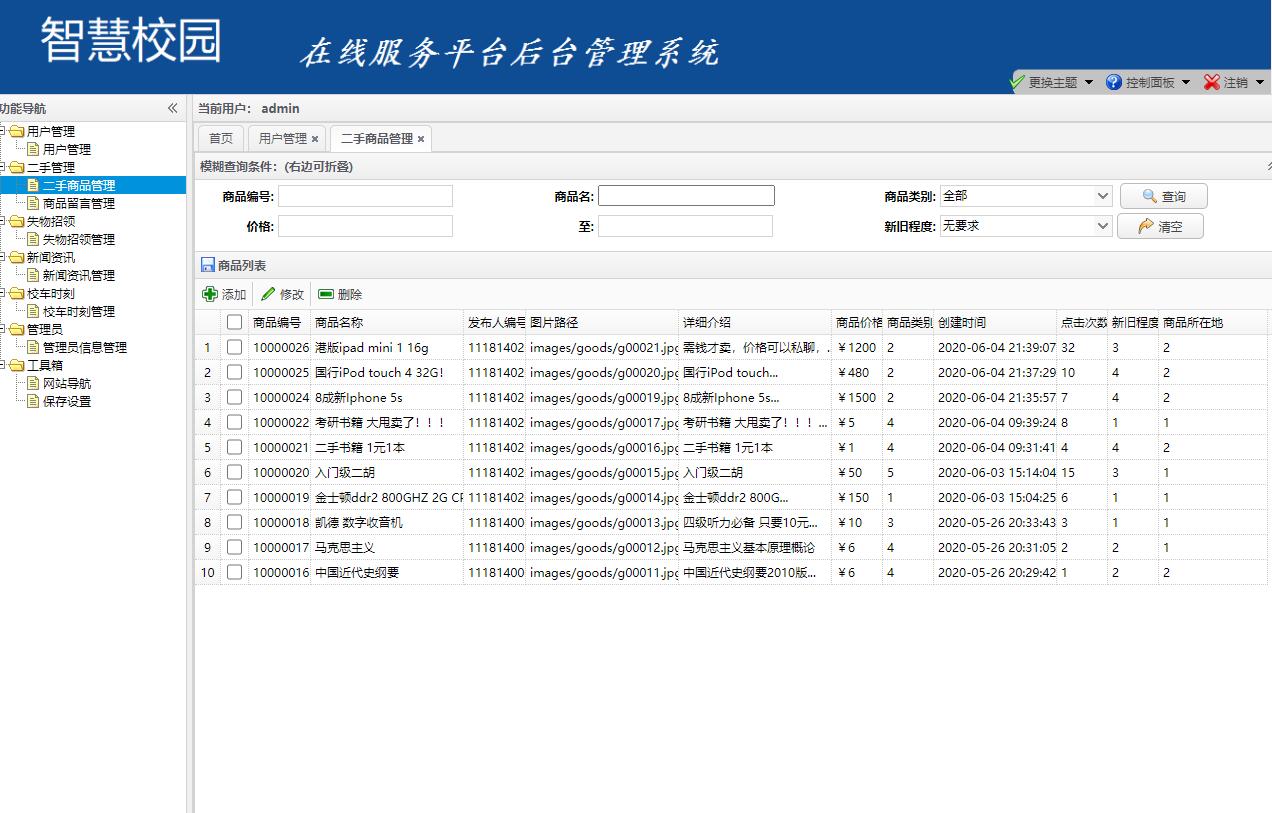
管理员功能集中在对平台内容的审核与管理上。例如,对于新发布的二手商品,管理员需要在后台管理界面进行审核,确保信息合规。AdminGoodsController提供了商品列表查询和状态更新接口。
@Controller
@RequestMapping("/admin/goods")
public class AdminGoodsController {
    @Autowired
    private GoodsService goodsService;

    @GetMapping("/manage")
    public String goodsManage(Model model,
                             @RequestParam(defaultValue = "1") Integer pageNum,
                             @RequestParam(defaultValue = "pending") String status) {
        PageInfo<UsedGoods> pageInfo = goodsService.getGoodsForAdmin(pageNum, 10, status);
        model.addAttribute("pageInfo", pageInfo);
        model.addAttribute("status", status);
        return "admin/goods_manage";
    }

    @PostMapping("/audit")
    @ResponseBody
    public ResponseEntity<String> auditGoods(@RequestParam Integer goodsId,
                                            @RequestParam String operation) { // operation: "pass" or "reject"
        UsedGoods goods = new UsedGoods();
        goods.setId(goodsId);
        if ("pass".equals(operation)) {
            goods.setStatus("published");
        } else if ("reject".equals(operation)) {
            goods.setStatus("rejected");
            // 可附加拒绝原因,需要扩展表结构
            // goods.setRejectReason(reason);
        }
        goodsService.updateGoodsStatus(goods);
        return ResponseEntity.ok("操作成功");
    }
}
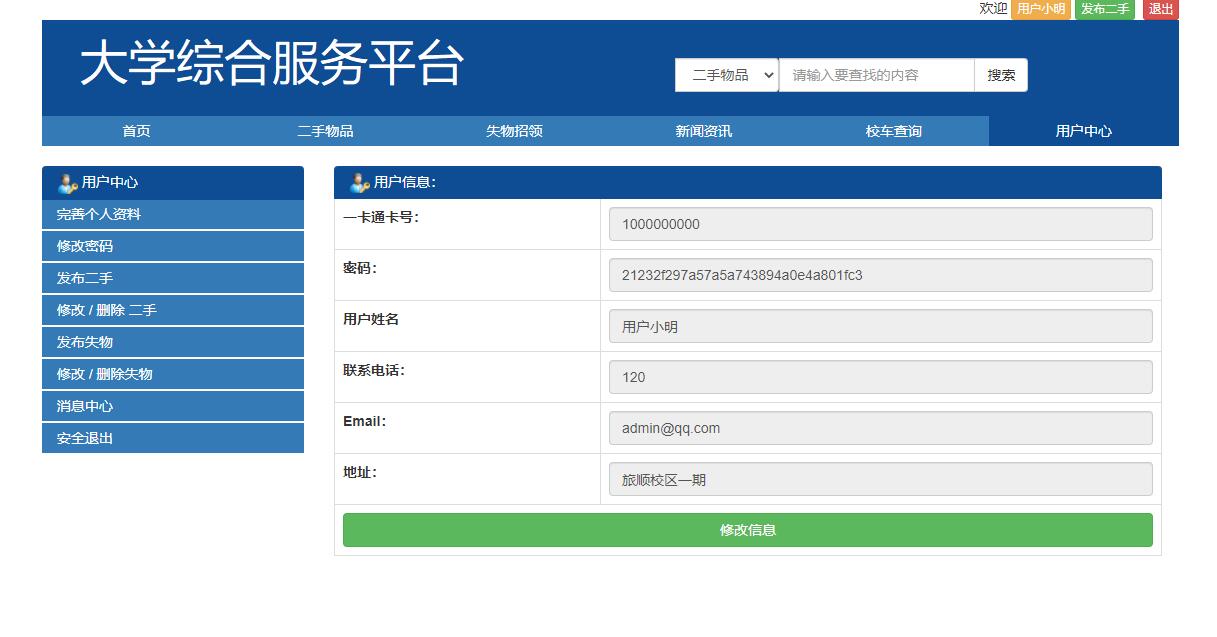
用户个人中心整合了用户的基本信息管理、已发布商品、失物招领记录以及站内信等功能。UserController中对应的方法会查询当前用户的各类数据并渲染到页面。
@Controller
@RequestMapping("/user")
public class UserController {
    @Autowired
    private UserService userService;
    @Autowired
    private GoodsService goodsService;
    @Autowired
    private LostFoundService lostFoundService;

    @GetMapping("/profile")
    public String profile(Model model, HttpSession session) {
        User currentUser = (User) session.getAttribute("currentUser");
        if (currentUser == null) {
            return "redirect:/login";
        }
        // 获取用户发布的商品
        List<UsedGoods> myGoods = goodsService.getGoodsByUserId(currentUser.getId());
        // 获取用户发布的失物招领
        List<LostFound> myLostFounds = lostFoundService.getLostFoundByUserId(currentUser.getId());

        model.addAttribute("user", currentUser);
        model.addAttribute("myGoods", myGoods);
        model.addAttribute("myLostFounds", myLostFounds);
        return "user/profile";
    }
}
实体模型的设计充分体现了面向对象的思想与数据库表结构的映射关系。以UsedGoods实体为例,它包含了与数据库表字段对应的属性,以及用于关联查询的相关对象引用。
public class UsedGoods {
    private Integer id;
    private String title;
    private String description;
    private BigDecimal price;
    private String imgUrl;
    private Integer categoryId;
    private Integer userId;
    private String status;
    private Integer viewCount;
    private Date createTime;
    private Date updateTime;

    // 非数据库字段,用于关联查询显示
    private String categoryName;
    private String userNickname;

    // getters and setters...
}
对应的MyBatis Mapper接口定义了数据操作的方法,其SQL实现可以在XML映射文件中找到。
<!-- UsedGoodsMapper.xml -->
<?xml version="1.0" encoding="UTF-8" ?>
<!DOCTYPE mapper PUBLIC "-//mybatis.org//DTD Mapper 3.0//EN" "http://mybatis.org/dtd/mybatis-3-mapper.dtd">
<mapper namespace="com.campusplatform.dao.UsedGoodsMapper">
    <resultMap id="BaseResultMap" type="com.campusplatform.pojo.UsedGoods">
        <id column="id" property="id" />
        <result column="title" property="title" />
        <result column="description" property="description" />
        <result column="price" property="price" />
        <result column="img_url" property="imgUrl" />
        <result column="category_id" property="categoryId" />
        <result column="user_id" property="userId" />
        <result column="status" property="status" />
        <result column="view_count" property="viewCount" />
        <result column="create_time" property="createTime" />
        <result column="update_time" property="updateTime" />
    </resultMap>

    <select id="selectGoodsWithDetail" resultMap="GoodsDetailMap">
        SELECT ug.*, c.name as category_name, u.nickname as user_nickname
        FROM used_goods ug
        LEFT JOIN category c ON ug.category_id = c.id
        LEFT JOIN user u ON ug.user_id = u.id
        WHERE ug.status = 'published'
        ORDER BY ug.create_time DESC
    </select>
</mapper>
对于“校园服务通”的未来发展,有几个可行的优化方向。首先,引入基于Elasticsearch的全文搜索引擎可以极大提升商品和失物信息的检索速度与准确度,支持拼音、错别字纠正等高级搜索特性。其次,集成WebSocket协议实现实时通信功能,让买家和卖家、失主和拾主能够在线即时沟通,提升交易和认领效率。第三,构建一个基于用户行为的推荐系统,利用协同过滤或内容过滤算法,向用户推荐可能感兴趣的商品或相关的失物信息。第四,开发独立的移动端APP(采用React Native或Flutter等技术),提供比Web端更便捷的拍照发布、位置服务(LBS)和推送通知功能。最后,引入更严格的信用评价体系,用户完成交易或失物认领后可以互相评价,积累信用积分,这对于构建可信的校园社区环境至关重要。
该平台的实现展示了SSM框架在构建中小型Web应用中的强大能力。通过清晰的分层架构、灵活的MyBatis数据访问以及Spring强大的事务和Bean管理,成功打造了一个功能完善、性能稳定、易于维护的校园综合服务系统,为封闭的校园环境构建了一个安全、便捷、实用的数字化社区。